










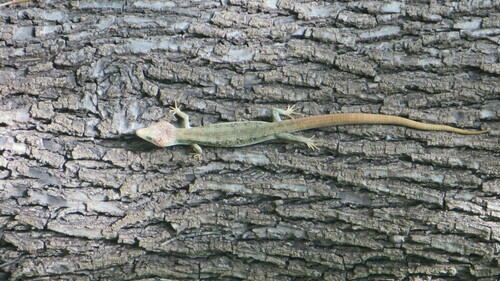


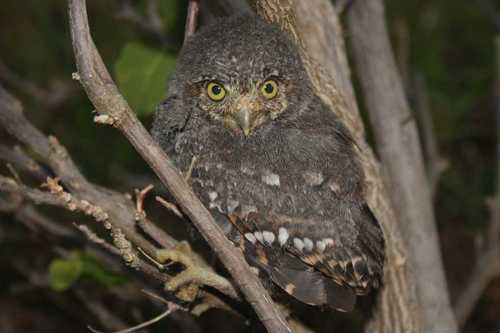




All 3 in 3 days here: <5%
Big Bend National Park
🇺🇸 United States
Chihuahuan Desert, United States 784 spp. recorded
Big Bend National Park sits in the Chihuahuan Desert of western Texas, United States. The landscape is a mix of rugged canyons, river‑cut valleys and stretches of dry scrub dotted with mesquite and cactus. Its isolation and stark relief set it apart from more vegetated parks.
29.226° N 103.234° W
🦜 Nature

437 Species sighted
165,711 Verified sightings From 2019 to 2026
Sep Best month
⭐ Iconic Species
📊 Most Spotted
⭐ Iconic Species
📊 Most Spotted
⭐ Iconic Species
📊 Most Spotted
⭐ Iconic Species
📊 Most Spotted
📊 Most Spotted
📊 Most Spotted
🌙 Most active after dark
+ 415 more species with insufficient data
Challenges you can complete here
Recent sightings in Big Bend National Park
LIVEiNaturalistSighting Calendar
How many species you'd see in a day
32Jan
33Feb
46Mar
67Apr
72May
68Jun
68Jul
72Aug
107Sep
68Oct
52Nov
41Dec
Sighting Zones
Warmer areas are where all species together are recorded most often.
-
Dugout Wells
Daily sight. prob.vs avg Western Diamondback Rattlesnake~70%+30%
 Greater Earless Lizard~70%+20%
 Northern Mockingbird~70%+10%
 Marbled Whiptail~70%+30%
 Common Side-blotched Lizard~70%+30%
 White-winged Dove~60%-10%
 Pyrrhuloxia~50%+10%
 Desert Cottontail~50%+30%
 Bobcat~50%+40%
 Ladder-backed Woodpecker~50%-10%
 Red-spotted Toad~40%+20%
 Trans-pecos Ratsnake~40%+20%
-
Rio Grande Village
Daily sight. prob.vs avg Collared Peccary~90%+40%
 Coyote~70%+30%
- Marbled Whiptail~60%+30%
 Turkey Vulture~60%-10%
- Common Side-blotched Lizard~60%+20%
 Spiny Softshell Turtle~60%+30%
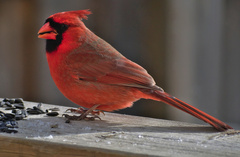 Northern Cardinal~60%≈
- White-winged Dove~50%-20%
 Greater Roadrunner~50%-10%
- Desert Cottontail~40%+20%
 American Bullfrog~40%+30%
 Yellow-rumped Warbler~40%-10%
-
Cottonwood Campground
Daily sight. prob.vs avg -
Chisos Mountains Lodge area
Daily sight. prob.vs avg -
Panther Junction
Daily sight. prob.vs avg




🏕️ Experience
Essentials
Entrance
Paid
Tourism
High
Typical stay
2–3
daysTrails
Easy
World Heritage
No
Climate
Temp °C Rain mm
JanFebMarAprMayJunJulAugSepOctNovDec
0.0 Good
Wallace's Line Score
How good is this park for seeing wildlife? 🦜
Biodiversity
Very goodHow rich is the wildlife?
4.5
Species by taxon
🦅 Birds 508
🐒 Mammals 126
🦎 Reptiles 115
🐸 Amphibians 35
784 Total Species
828 Global average across 316 parks
21 Threatened 19 Endemic
🔭
Sighting
GoodHow likely to see animals?
3.1
🎯
Top-12 Avg Probability
59% 📊
Coverage (200 species at ≥5% of 784 in the inventory)
26% 🔀
Taxon variety in top 12 (10 bird, 1 reptile, 1 mammal)
39% 🔭
Species per 10 outings (distinct species a visitor would meet over 10 outings — effort held equal across parks)
117 🌟
Iconic-group species (≥15%) (every species from the 19 iconic groups — monkeys, cats, toucans, macaws, sloths, crocodilians… — not just the 4 highlighted above)
8 ⭐
High-prob species (>40%)
25 🏕️
Experience
Very goodHow easy and pleasant is the visit?
3.6
Climate Mixed Medium
Entrance Paid Low
Tourism High Low
Trails Easy High
World Heritage No —
What visitors say
In other parts of the park, we heard northern cardinals, pyrrhuloxia, and cactus wrens calling endlessly.
The next morning while we sat outside our cabin, enjoying the cooler morning temperatures and drinking coffee, we observed a Lark Bunting foraging nearby.
While on our way to the park, we saw a gray fox run across the road.
In Big Bend National Park, we camped at Rio Grande Village Campground, where burros and horses from the Mexican side of the river graze freely throughout the campground on grass so short it is hard to believe this activity is worth the energy required.
Before you go
What animals can you see in Big Bend National Park?
784 species
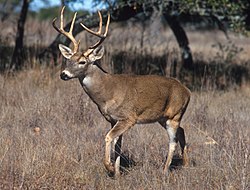
Big Bend National Park has 784 recorded vertebrate species. The ones wildlife watchers report most often on a given day are White-winged Dove (about 70%), Common Raven (about 70%), Turkey Vulture (about 70%), Northern Mockingbird (about 60%) and Greater Roadrunner (about 60%). Among mammals, the most-seen is White-tailed Deer (about 60%); among reptiles, Greater Earless Lizard (about 60%); among amphibians, Red-spotted Toad (about 30%).
When is the best time to visit Big Bend National Park for wildlife?
March–July and September–October
In those months the park's 12 most-seen species average about 60% on a given day, against about 40% in January.
Can you see an American Black Bear in Big Bend National Park?
Yes
About 40% of wildlife watchers report an American Black Bear sighting in Big Bend National Park on a given day, based on 253 verified sightings from GBIF citizen-science data from 2019 to 2026. The best time is August (about 70%).
Can you see a Greater Roadrunner in Big Bend National Park?
Yes
About 60% of wildlife watchers report a Greater Roadrunner sighting in Big Bend National Park on a given day, based on 4,298 verified sightings from GBIF citizen-science data from 2019 to 2026. The best time is July and December (about 70%).
Can you see a Collared Peccary in Big Bend National Park?
Yes
About 40% of wildlife watchers report a Collared Peccary sighting in Big Bend National Park on a given day, based on 229 verified sightings from GBIF citizen-science data from 2019 to 2026. The best time is February and April (about 50%).
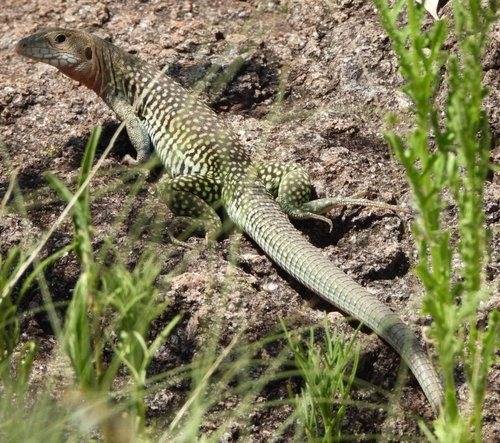
Can you see a Greater Earless Lizard in Big Bend National Park?
Yes
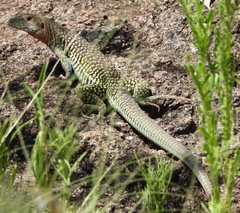
About 60% of wildlife watchers report a Greater Earless Lizard sighting in Big Bend National Park on a given day, based on 514 verified sightings from GBIF citizen-science data from 2019 to 2026. The best time is April–May and October (about 70%).
Where in Big Bend National Park is wildlife easiest to see?
Around Dugout Wells
The richest sighting zone is around Dugout Wells, followed by Rio Grande Village and Cottonwood Campground, ranked by how many of the park's headline animals visitors can expect to see in each. See the zones on the map.
Is Big Bend National Park good for wildlife watching?
3.5 out of 5
On the Wallace's Line Score, Big Bend National Park rates 3.5/5: 196th of 316 parks worldwide and 28th in North America. 32 of its species are reported by about 40% or more of wildlife watchers on a given day.