Colima Warbler

Colima Warbler

Leiothlypis crissalis

Silhouette: Andy Wilson · PhyloPic

LCLeast ConcernNTVUENCR
Daily sighting probability ~10% · With luck
at Big Bend National Park

In 3 days ~40% in a week ~70%

845 Verified sightings at Big Bend National Park From 2019 to 2026
854 In all 2 parks
May Best month
☀️ Diurnal When it's spotted

About the Colima Warbler

The Colima warbler (Leiothlypis crissalis) is a New World warbler. It is mainly found in the Sierra Madre Occidental and Oriental mountains of central Mexico, though its range just barely extends into adjacent southwestern Texas in the Chisos Mountains of Big Bend National Park.

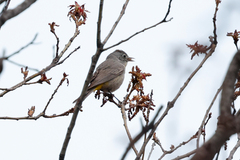
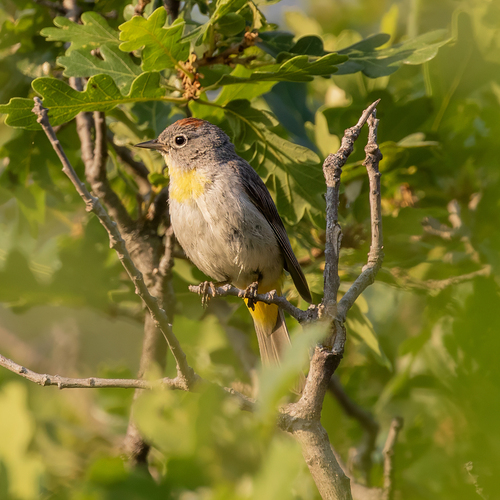
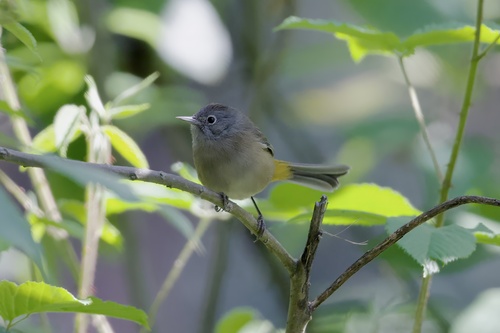
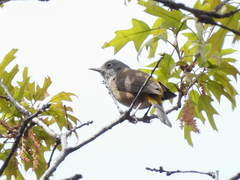
The Colima warbler is about 4.5 to 5 inches (11 to 13 cm) long. They are mainly dark gray and brownish in coloration, with a pale underside. Their rump and the feathers below their tail are yellow. They have a white ring around their eye and a tinge of pale color on their breasts. Males have a spot of orange on the top of their heads.

In appearance, the Colima warbler is very similar to Virginia's warbler, but is larger in size, more robust, and heavier billed. Virginia's warbler has much more yellow or pale color on their breasts, which is grayer in the Colima warbler. The yellow above and below the tail is also more orange-yellow than the Colima warbler, and more greenish-yellow in Virginia's warblers.

Nesting is done on the ground. Forming a loose cup-shaped nest of grass, leaves, and moss the Colima warbler hides its nest among the mountain rocks. It usually lays four eggs, which are white... Wikipedia →
Sounds

Call0:28

Mexico · 2020

© Manuel Grosselet · XC588023 · CC BY-NC-SA 4.0

Song0:18

United States · 2010

© Mary Beth Stowe · XC71050 · CC BY-NC-ND 2.5

Call0:40

United States · 2011

© Paul Marvin · XC109425 · CC BY-NC-ND 2.5

Global Distribution

Parks Where Found

# Park Country Daily sighting probability
1 Big Bend National Park 🇺🇸 United States
~10%
2 Cumbres de Monterrey National Park 🇲🇽 Mexico
<5%

Cities Where Found

# City Country Daily sighting probability
1 Mexico City 🇲🇽 México
<5%

Before you go

What are the chances of seeing a Colima Warbler in Big Bend National Park?

With luck

About 10% of wildlife watchers report a Colima Warbler sighting in Big Bend National Park on a given day, based on 845 verified sightings from GBIF citizen-science data from 2019 to 2026. It is the 59th most-seen of the 270 birds we can rate there. Over three days the chance rises to about 40%, and over a week to about 70%, if each day is a fresh chance.

When is the best time to see a Colima Warbler in Big Bend National Park?

May and June

In those months about 30% of wildlife watchers report a Colima Warbler in Big Bend National Park on a given day, against under 5% in September to March, the lowest months.

What time of day is best to see a Colima Warbler?

Between 9 am and noon

Across all the parks we cover, that three-hour window holds the most Colima Warbler sightings with a recorded time, and about 9 in 10 of them come between 6 am and 6 pm: it is a daytime animal.

Is Big Bend National Park the best place to see a Colima Warbler?

Yes

Of the 2 parks where we can rate Colima Warbler sightings, Big Bend National Park has the highest daily chance: about 10%. Next come Cumbres de Monterrey National Park (Mexico, under 5%).

Which relatives of the Colima Warbler live in Big Bend National Park?

Same genus: Leiothlypis

The closest relatives of the Colima Warbler that you can see in Big Bend National Park (genus Leiothlypis, Leiothlypis Warblers) are Orange-crowned Warbler (about 10%), Nashville Warbler (about 10%) and Lucy's Warbler (about 10%), with each one's daily chance of a sighting.

Where does the Colima Warbler sighting chance come from?

GBIF citizen-science records

It is estimated from how often the Colima Warbler is recorded against all the birds logged in Big Bend National Park (845 verified sightings from 2019 to 2026), calibrated against known sighting rates. Figures are rounded to the nearest 10% because citizen-science data supports honest approximations, not decimals, and months with records from fewer than five people show "—". How it works.

← Back to Big Bend National Park