Glorious Jewel Scarab

Glorious Jewel Scarab

Chrysina gloriosa

Daily sighting probability ~10% · With luck
at Big Bend National Park

In 3 days ~20% in a week ~40%

10 Verified sightings at Big Bend National Park From 2019 to 2026
16 In all 2 parks
September Best month
☀️🌙 Day & Night When it's spotted

About the Glorious Jewel Scarab

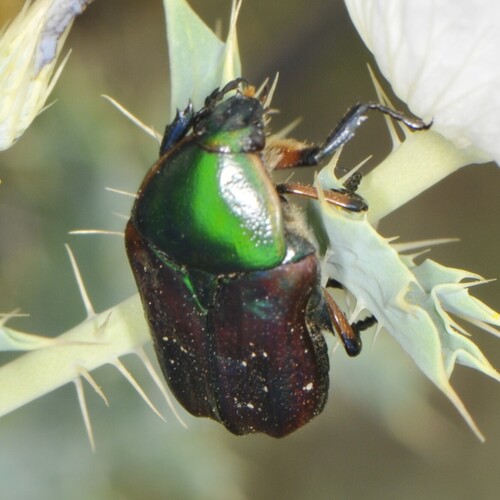
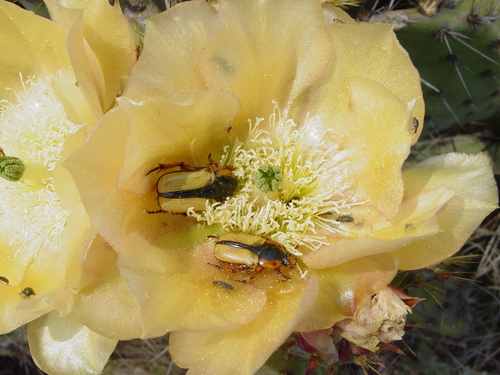
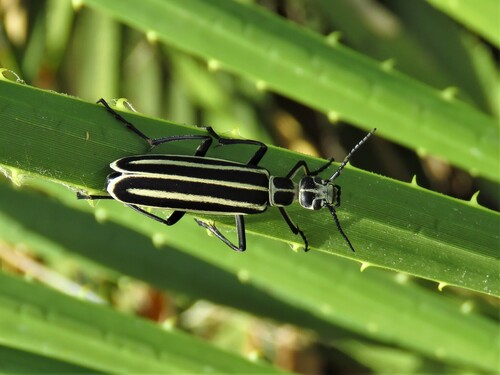
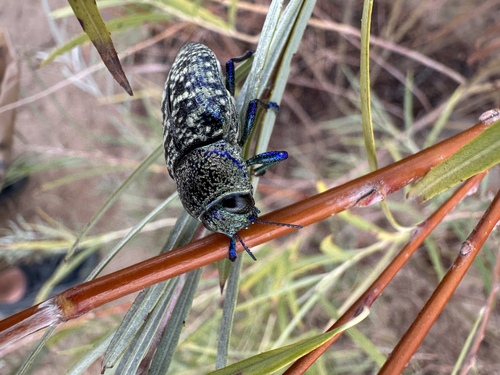
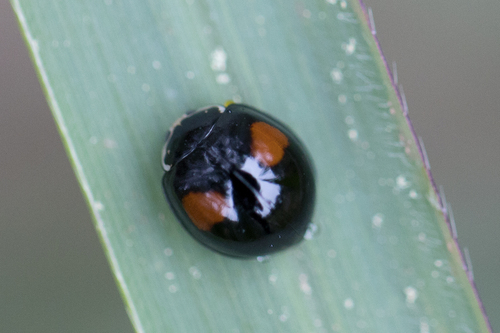
Chrysina gloriosa is a species of scarab whose common names are glorious beetle and glorious scarab. It is found only in southern United States (southeastern Arizona, southern New Mexico and southwestern Texas) and northern Mexico (Chihuahua and Sonora). The adult beetles, which are active both day and night and primarily seen from June to August, eat juniper leaves and the larvae feed on decaying wood from Arizona sycamore. Although adults feed mainly on juniper leaves, they also visit flowers and can act as incidental pollinators, transferring pollen as they move between blooms.

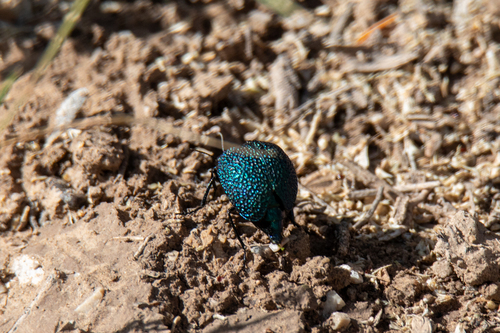
A synonym formerly used for the species is Plusiotis gloriosa. The adult beetles are 20 to 30 millimetres (0.8–1.2 in) long, and are bright green with silver stripes on the elytra (red and purple color forms occur but are very rare). These iridescent stripes on the cuticle of the elytra are a result of cholesteric liquid crystal organization of chitin molecules. The differences in color are a result of the microscopic structure of each section, with green reflected from cusp-like structures and silver reflected from flat layers parallel to the surface of the elytra. As established through Mueller matrix spectroscopic ellipsometry, the optical properties change with the incidence angle of the propagating light. The polygonal cells in the green stripes generate self-healing Bessel beams.

The species is sometimes incorrectly thought to have been officially recognized as endangered, but it has never been rated by the IUCN or listed under the United States Endangered Species Act. It can be locally abundant. Wikipedia →

Global Distribution

Parks Where Found

# Park Country Daily sighting probability
1 Big Bend National Park 🇺🇸 United States
~10%
2 Saguaro National Park 🇺🇸 United States
<5%

Before you go

What are the chances of seeing a Glorious Jewel Scarab in Big Bend National Park?

With luck

About 10% of wildlife watchers report a Glorious Jewel Scarab sighting in Big Bend National Park on a given day, based on 10 verified sightings from GBIF citizen-science data from 2019 to 2026. It is the 193rd most-seen of the 329 insects we can rate there. Over three days the chance rises to about 20%, and over a week to about 40%, if each day is a fresh chance.

When is the best time to see a Glorious Jewel Scarab in Big Bend National Park?

September

In that month about 20% of wildlife watchers report a Glorious Jewel Scarab in Big Bend National Park on a given day, against under 5% in August and November–May, the lowest months. That is one of Big Bend National Park's wettest months, with about 50 mm of rain against 10 mm in April.

What time of day is best to see a Glorious Jewel Scarab?

Between 11 pm and 2 am

Across all the parks we cover, that three-hour window holds the most Glorious Jewel Scarab sightings with a recorded time, and about 7 in 10 of them come between 6 pm and 6 am: it is seen both by day and at night.

Is Big Bend National Park the best place to see a Glorious Jewel Scarab?

Yes

Of the 2 parks where we can rate Glorious Jewel Scarab sightings, Big Bend National Park has the highest daily chance: about 10%. Next come Saguaro National Park (United States, under 5%).

Which relatives of the Glorious Jewel Scarab live in Big Bend National Park?

Same family: Scarabaeidae

The closest relatives of the Glorious Jewel Scarab that you can see in Big Bend National Park (family Scarabaeidae, Scarabs) are Kern's Flower Scarab (about 10%) and Emerald Euphoria (about 10%), with each one's daily chance of a sighting.

Where does the Glorious Jewel Scarab sighting chance come from?

GBIF citizen-science records

It is estimated from how often the Glorious Jewel Scarab is recorded against all the insects logged in Big Bend National Park (10 verified sightings from 2019 to 2026), calibrated against known sighting rates. Figures are rounded to the nearest 10% because citizen-science data supports honest approximations, not decimals, and months with records from fewer than five people show "—". How it works.

← Back to Big Bend National Park