American Grass Mantis

American Grass Mantis

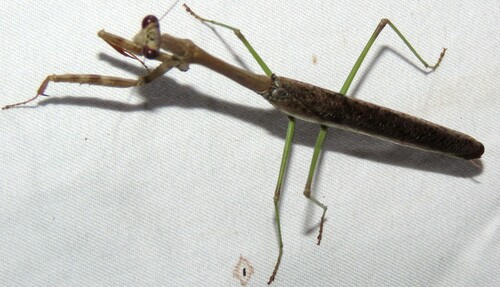
Thesprotia graminis

Endemic
Daily sighting probability ~10% · With luck
at Big Cypress National Preserve

In 3 days ~30% in a week ~60%

14 Verified sightings at Big Cypress National Preserve From 2019 to 2026
23 In all 2 parks
April Best month
☀️🌙 Day & Night When it's spotted

About the American Grass Mantis

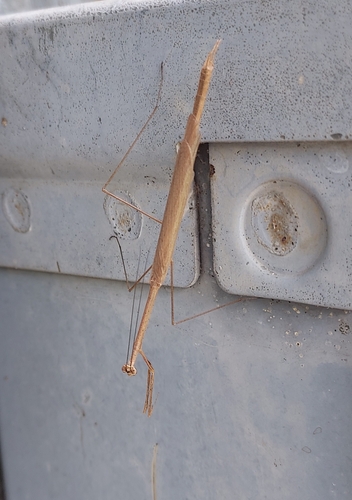
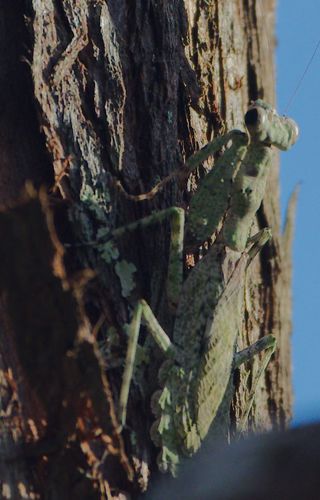
Thesprotia graminis, the American grass mantis or grass-like mantis, is a species of mantis native to the Southern United States. T. graminis have been found in Florida, Georgia, South Carolina, Alabama, Mississippi, Louisiana, and Texas. This species can reproduce parthenogenetically or through sexual reproduction. T. graminis are similar in appearance to Brunneria borealis and typically are light brown in color.

Mantids undergo hemimetabolism, a type of insect development that involves going through three life stages: egg, nymph (juvenile), and adult. Previously poorly documented, the reproductive ecology of T. graminis has recently been expanded upon. In a Master's Thesis conducted at Texas A&M University San Antonio, T. graminis captured from the wild were recently documented exhibiting a pseudo-iteroparous reproductive strategy as a semelparous species, with individuals either laying only once or laying additional egg cases before their death.

The eggs are laid in an oothecae. The female deposits a frothy material into which she places two rows of eggs. After deposition, the froth hardens, forming a protective structure that guards against predators... Wikipedia →
Global Distribution

Parks Where Found

# Park Country Daily sighting probability
1 Big Cypress National Preserve 🇺🇸 United States
~10%
2 Everglades National Park 🇺🇸 United States
<5%

Cities Where Found

# City Country Daily sighting probability
1 Houston 🇺🇸 United States
<5%
2 Miami 🇺🇸 United States
<5%

Before you go

What are the chances of seeing an American Grass Mantis in Big Cypress National Preserve?

With luck

About 10% of wildlife watchers report an American Grass Mantis sighting in Big Cypress National Preserve on a given day, based on 14 verified sightings from GBIF citizen-science data from 2019 to 2026. It is the 83rd most-seen of the 262 insects we can rate there. Over three days the chance rises to about 30%, and over a week to about 60%, if each day is a fresh chance.

When is the best time to see an American Grass Mantis in Big Cypress National Preserve?

April–May and August

In those months about 20% of wildlife watchers report an American Grass Mantis in Big Cypress National Preserve on a given day, against under 5% in September and November–January, the lowest months.

What time of day is best to see an American Grass Mantis?

Between 10 pm and 1 am

Across all the parks we cover, that three-hour window holds the most American Grass Mantis sightings with a recorded time, and about half of them come between 6 pm and 6 am: it is seen both by day and at night.

Is Big Cypress National Preserve the best place to see an American Grass Mantis?

Yes

Of the 2 parks where we can rate American Grass Mantis sightings, Big Cypress National Preserve has the highest daily chance: about 10%. Next come Everglades National Park (United States, under 5%).

Which relatives of the American Grass Mantis live in Big Cypress National Preserve?

Same order: Mantodea

The closest relatives of the American Grass Mantis that you can see in Big Cypress National Preserve (order Mantodea, Mantises) are Grizzled Mantis (about 10%) and Larger Florida Mantis (about 10%), with each one's daily chance of a sighting.

Where does the American Grass Mantis sighting chance come from?

GBIF citizen-science records

It is estimated from how often the American Grass Mantis is recorded against all the insects logged in Big Cypress National Preserve (14 verified sightings from 2019 to 2026), calibrated against known sighting rates. Figures are rounded to the nearest 10% because citizen-science data supports honest approximations, not decimals, and months with records from fewer than five people show "—". How it works.

← Back to Big Cypress National Preserve