Brown Watersnake

Brown Watersnake

Nerodia taxispilota

Silhouette: Beth Reinke · PhyloPic

LCLeast ConcernNTVUENCR Endemic
Daily sighting probability ~50% · Likely
at Big Cypress National Preserve

In 3 days ~90% in a week >90%

205 Verified sightings at Big Cypress National Preserve From 2019 to 2026
525 In all 3 parks
June Best month
☀️🌙 Day & Night When it's spotted

About the Brown Watersnake

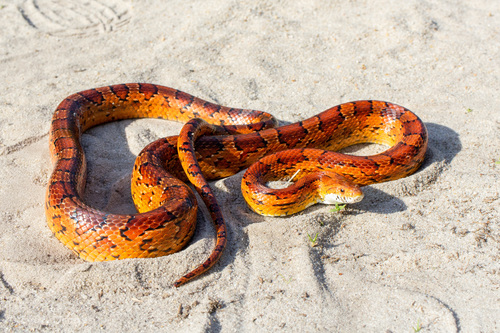
The brown water snake (Nerodia taxispilota) is a large species of nonvenomous natricine snake endemic to the southeastern United States. This snake is often one of the most abundant species of snakes found in rivers and streams of the southeastern United States, yet many aspects of its natural history are poorly known. Due to abundance and distribution throughout its biological range, this species could be used to investigate anthropogenic impacts on aquatic ecosystems by studying their movements.

Lycodonomorphus rufulus is sometimes also called the brown water snake, but L. rufulus is found in South Africa. Its common names include brown water snake, water-pilot, aspic, false moccasin, great water snake, pied water snake, southern water snake, and water rattle. Nerodia taxispilota is found in lower coastal regions from southeastern Virginia, through North Carolina, South Carolina, and Georgia, to northern and western Florida (Gulf Coast), then west through Alabama, and Mississippi, to Louisiana, normally from sea level to 500 ft. (150 m) elevation.

The brown water snake is very heavy-bodied, and its neck is distinctly narrower... Wikipedia →

Global Distribution

Parks Where Found

# Park Country Daily sighting probability
1 Congaree National Park 🇺🇸 United States
~60%
2 Big Cypress National Preserve 🇺🇸 United States
~50%
3 Everglades National Park 🇺🇸 United States
~20%

Cities Where Found

# City Country Daily sighting probability
1 Miami 🇺🇸 United States
~10%
2 Orlando 🇺🇸 United States
~10%

Zoos & Centres Where Found

# Zoo / Centre Country
1 Edisto Island Serpentarium 🇺🇸 United States In captivity

Before you go

What are the chances of seeing a Brown Watersnake in Big Cypress National Preserve?

Likely

About 50% of wildlife watchers report a Brown Watersnake sighting in Big Cypress National Preserve on a given day, based on 205 verified sightings from GBIF citizen-science data from 2019 to 2026. It is the 6th most-seen of the 37 reptiles we can rate there. Over three days the chance rises to about 90%, and over a week to over 90%, if each day is a fresh chance.

When is the best time to see a Brown Watersnake in Big Cypress National Preserve?

May–June and September

In those months about 60% of wildlife watchers report a Brown Watersnake in Big Cypress National Preserve on a given day, against about 40% in January and October–November, the lowest months. Those are among Big Cypress National Preserve's wettest months, with about 210 mm of rain a month against 40 mm in March.

What time of day is best to see a Brown Watersnake?

Between 8 and 11 pm

Across all the parks we cover, that three-hour window holds the most Brown Watersnake sightings with a recorded time, and about half of them come between 6 am and 6 pm: it is seen both by day and at night.

Is Big Cypress National Preserve the best place to see a Brown Watersnake?

2nd of 3

Of the 3 parks where we can rate Brown Watersnake sightings, Big Cypress National Preserve ranks 2nd at about 50%. The best odds are in Congaree National Park (United States, about 60%).

Which relatives of the Brown Watersnake live in Big Cypress National Preserve?

Same genus: Nerodia

The closest relatives of the Brown Watersnake that you can see in Big Cypress National Preserve (genus Nerodia, Watersnakes) are Banded Water Snake (about 60%) and Florida Green Watersnake (about 40%), with each one's daily chance of a sighting.

Where does the Brown Watersnake sighting chance come from?

GBIF citizen-science records

It is estimated from how often the Brown Watersnake is recorded against all the reptiles logged in Big Cypress National Preserve (205 verified sightings from 2019 to 2026), calibrated against known sighting rates. Figures are rounded to the nearest 10% because citizen-science data supports honest approximations, not decimals, and months with records from fewer than five people show "—". How it works.

← Back to Big Cypress National Preserve