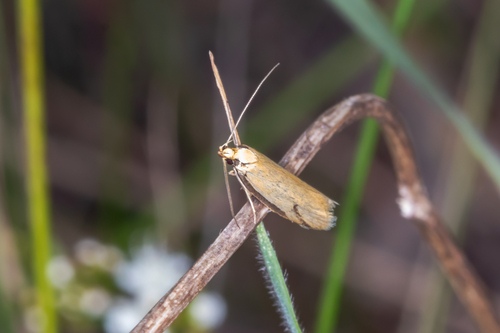
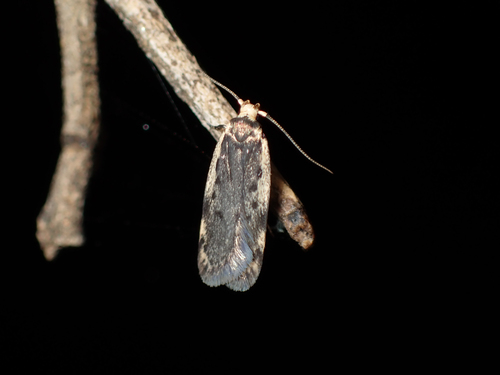
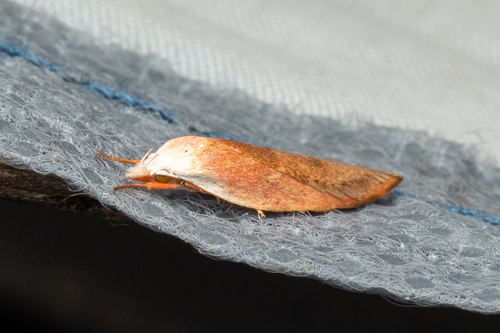
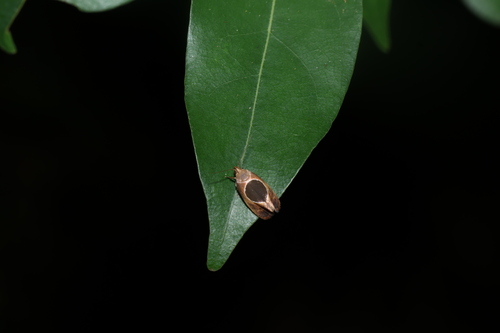
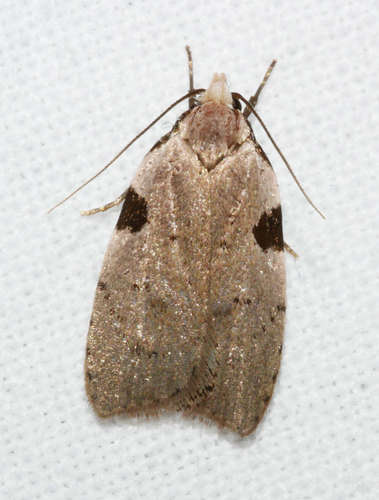
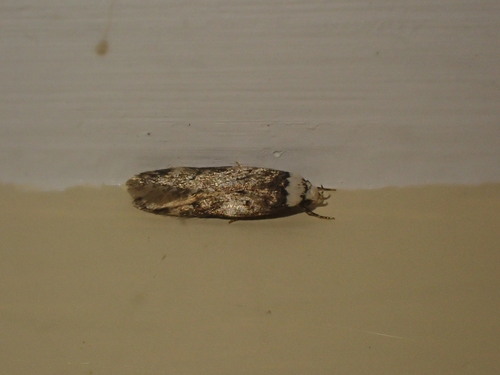
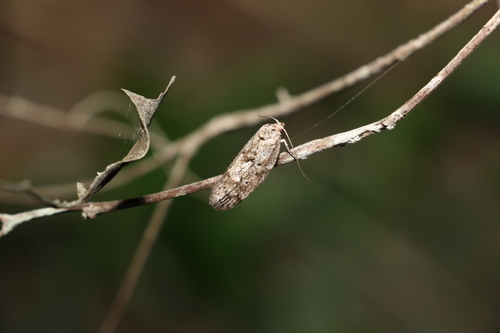
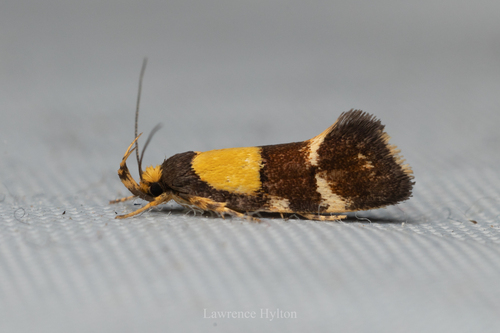
Garrha costimacula

Garrha costimacula

Garrha costimacula

Daily sighting probability ~10% · With luck
at Blue Mountains National Park

In 3 days ~10% in a week ~30%

8 Verified sightings at Blue Mountains National Park From 2019 to 2026
14 In all 2 parks
January Best month
☀️🌙 Day & Night When it's spotted

About the Garrha costimacula

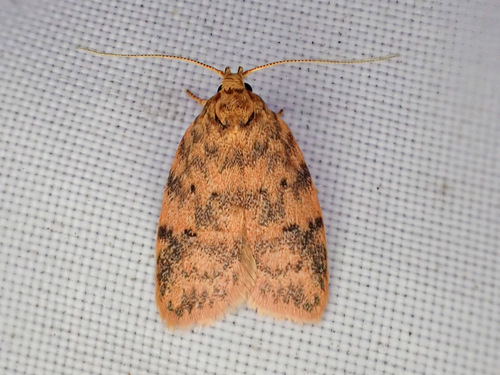
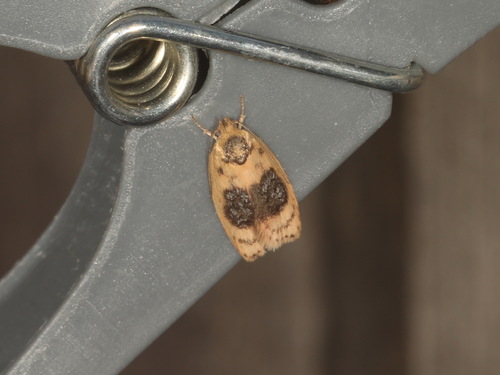
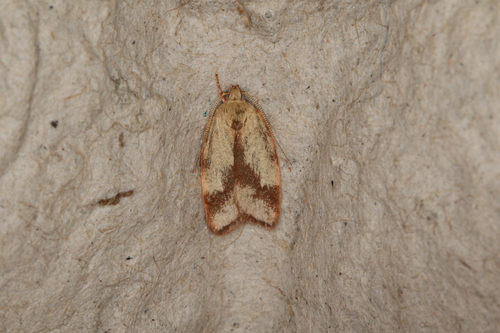
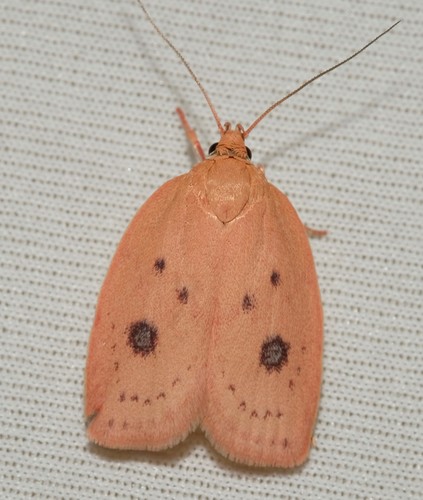
Garrha costimacula is a moth in the family Oecophoridae. It was described by Edward Meyrick in 1883. It is found in Australia, where it has been recorded from Queensland and New South Wales. The wingspan is 18–21 mm. The forewings are ochreous carmine pink, strewn with whitish-ochreous scales. The costa is narrowly deeper pink and the tips of the scales are whitish ochreous. There is a dark fuscous dot in the disc before the middle, a second, rather larger and sometimes distinctly double in the disc beyond the middle and a third obliquely beyond the first on the fold. There is a very irregular cloudy grey transverse line close to the base, which is darker on the costa and there is a distinct cloudy strongly and irregularly dentate transverse grey line from the costa to the inner margin, and another more strongly dentate from the costa to the middle of the inner margin, both forming small dark grey spots on the costa. There is also a slenderer and more distinct dark grey sinuate or dentate line from the costa obliquely outwards, thence curved strongly round to the inner margin before the anal angle, thickened and darker near the costa, as well as a cloudy grey shade from the costa to the inner margin before the anal angle, considerably broader towards the costa. A small cloudy grey spot is found towards the middle of the hindmargin and a row of distinct dark grey dots is placed along the hindmargin and apical fourth of the costa. The hindwings are ochreous grey, the costa and base more whitish ochreous. Wikipedia →

Global Distribution

Parks Where Found

# Park Country Daily sighting probability
1 Lamington National Park 🇦🇺 Australia
~10%
2 Blue Mountains National Park 🇦🇺 Australia
~10%

Cities Where Found

# City Country Daily sighting probability
1 Brisbane 🇦🇺 Australia
~10%

Before you go

What are the chances of seeing a Garrha costimacula in Blue Mountains National Park?

With luck

About 10% of wildlife watchers report a Garrha costimacula sighting in Blue Mountains National Park on a given day, based on 8 verified sightings from GBIF citizen-science data from 2019 to 2026. It is the 456th most-seen of the 789 insects we can rate there. Over three days the chance rises to about 10%, and over a week to about 30%, if each day is a fresh chance.

When is the best time to see a Garrha costimacula in Blue Mountains National Park?

January–March and November

In those months about 10% of wildlife watchers report a Garrha costimacula in Blue Mountains National Park on a given day, against under 5% in April–October and December, the lowest months. Those are among Blue Mountains National Park's wettest months, with about 130 mm of rain a month against 40 mm in May.

What time of day is best to see a Garrha costimacula?

Between 8 and 11 pm

Across all the parks we cover, that three-hour window holds the most Garrha costimacula sightings with a recorded time, and about 6 in 10 of them come between 6 pm and 6 am: it is seen both by day and at night.

Is Blue Mountains National Park the best place to see a Garrha costimacula?

Among the best

Of the 2 parks where we can rate Garrha costimacula sightings, Blue Mountains National Park ranks 2nd at about 10%, level with the leaders once rounded. The best odds are in Lamington National Park (Australia, about 10%).

Where does the Garrha costimacula sighting chance come from?

GBIF citizen-science records

It is estimated from how often the Garrha costimacula is recorded against all the insects logged in Blue Mountains National Park (8 verified sightings from 2019 to 2026), calibrated against known sighting rates. Figures are rounded to the nearest 10% because citizen-science data supports honest approximations, not decimals, and months with records from fewer than five people show "—". How it works.

← Back to Blue Mountains National Park