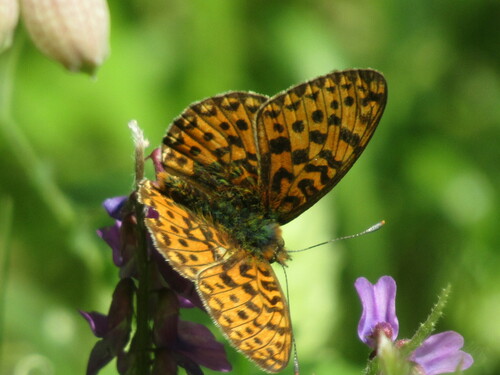
Large Heath

Large Heath

Coenonympha tullia

Daily sighting probability ~10% · With luck
at Cairngorms National Park

In 3 days ~20% in a week ~40%

9 Verified sightings at Cairngorms National Park From 2019 to 2026
38 In all 3 parks
July Best month
☀️ Diurnal When it's spotted

About the Large Heath

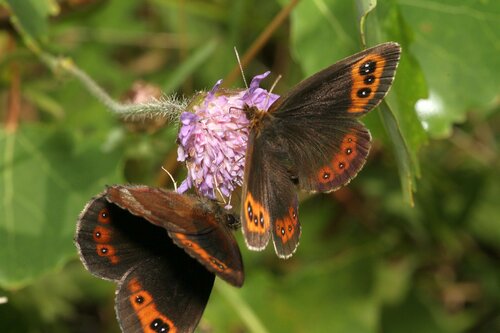
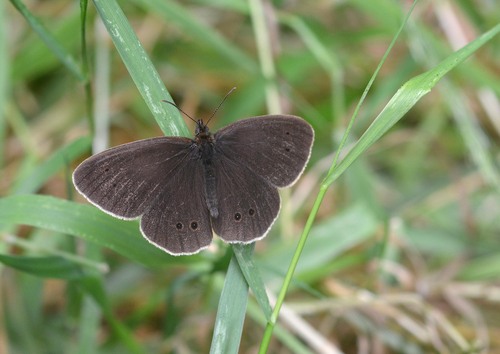
Coenonympha tullia, the large heath or common ringlet, is a butterfly in the family Nymphalidae. It flies in a variety of grassy habitats, including roadsides, woodland edges and clearings, prairies, bogs, and arctic and alpine taiga and tundra. It is a poor flyer, but can sometimes be found along ditches seeking new grounds. It is a holarctic species found in northern Europe, east across the Palearctic and across North America. The species was first described by Otto Friedrich Müller in 1764.

Successful reintroductions of the species to North West England took place in 2020, 2022 and 2023. C. tiphon Rott. (— davus F., tullia Hbn.) (48h). Upperside sandy yellow, similar to Coenonympha symphita, rather duller; male without markings, female with the ocelli shining through. On the underside of the hindwing whitish smears are joined forming a more or less incomplete median band, beyond which there are some ocelli in the male and often a complete row in the female. In Central Europe, especially in the Alps, Central and Southern Germany and the Danube countries. — philoxenus Esp. (= rothliebi Stgr.) (48 h) is a rather large northern form, dulled with grey above... Wikipedia →
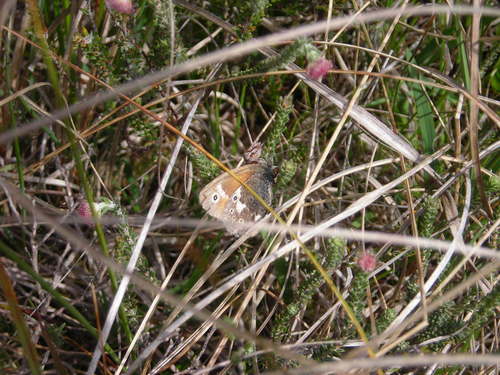

Global Distribution

Parks Where Found

# Park Country Daily sighting probability
1 Wrangell-St. Elias National Park 🇺🇸 United States
~30%
2 Denali National Park 🇺🇸 United States
~20%
3 Cairngorms National Park 🇬🇧 United Kingdom
~10%

Before you go

What are the chances of seeing a Large Heath in Cairngorms National Park?

With luck

About 10% of wildlife watchers report a Large Heath sighting in Cairngorms National Park on a given day, based on 9 verified sightings from GBIF citizen-science data from 2019 to 2026. It is the 165th most-seen of the 300 insects we can rate there. Over three days the chance rises to about 20%, and over a week to about 40%, if each day is a fresh chance.

When is the best time to see a Large Heath in Cairngorms National Park?

June to August

In those months about 10% of wildlife watchers report a Large Heath in Cairngorms National Park on a given day, against under 5% in September to May, the lowest months.

What time of day is best to see a Large Heath?

Between 11 am and 2 pm

Across all the parks we cover, that three-hour window holds the most Large Heath sightings with a recorded time, and about 9 in 10 of them come between 6 am and 6 pm: it is a daytime animal.

Is Cairngorms National Park the best place to see a Large Heath?

3rd of 3

Of the 3 parks where we can rate Large Heath sightings, Cairngorms National Park ranks 3rd at about 10%. The best odds are in Wrangell-St. Elias National Park (United States, about 30%) and Denali National Park (United States, about 20%).

Where does the Large Heath sighting chance come from?

GBIF citizen-science records

It is estimated from how often the Large Heath is recorded against all the insects logged in Cairngorms National Park (9 verified sightings from 2019 to 2026), calibrated against known sighting rates. Figures are rounded to the nearest 10% because citizen-science data supports honest approximations, not decimals, and months with records from fewer than five people show "—". How it works.

← Back to Cairngorms National Park