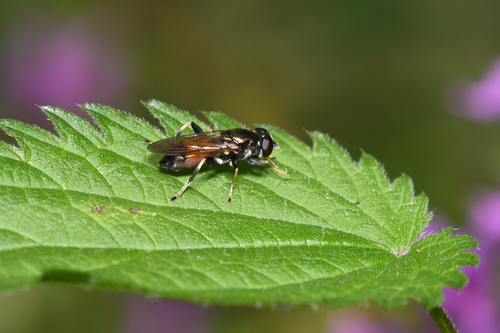
Red Spotted Parasite Fly

Red Spotted Parasite Fly

Eriothrix rufomaculatus

Daily sighting probability ~10% · With luck
at Cairngorms National Park

In 3 days ~30% in a week ~50%

16 Verified sightings at Cairngorms National Park From 2019 to 2026
40 In all 3 parks
July Best month
☀️ Diurnal When it's spotted

About the Red Spotted Parasite Fly

Eriothrix rufomaculatus is a species of fly in the family Tachinidae. Turkmenistan, Uzbekistan, China, British Isles, Czech Republic, Estonia, Hungary, Latvia, Moldova, Poland, Romania, Slovakia, Ukraine, Denmark, Finland, Norway, Sweden, Bosnia and Herzegovina, Bulgaria, Croatia, Greece, Italy, Macedonia, Portugal, Serbia, Slovenia, Spain, Turkey, Austria, Belgium, Channel Islands, France, Germany, Netherlands, Switzerland, Kazakhstan, North Korea, Iran, Israel, Palestine, Russia, Azerbaijan.

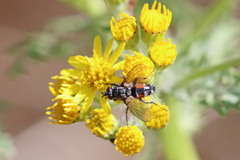
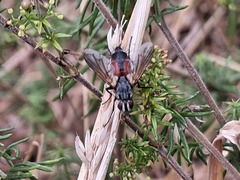
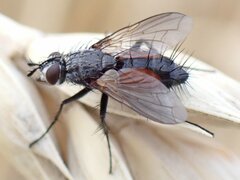
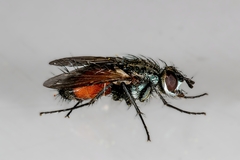
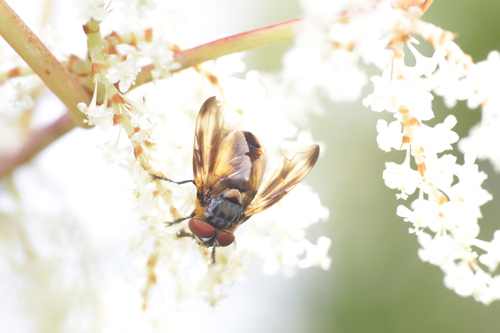
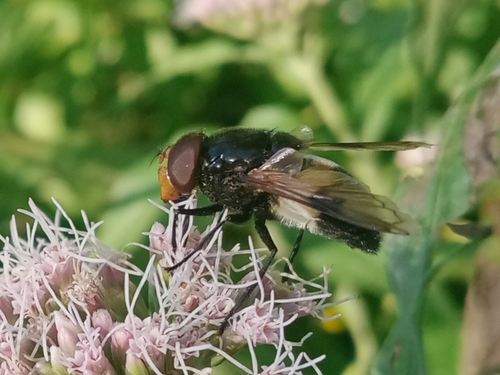
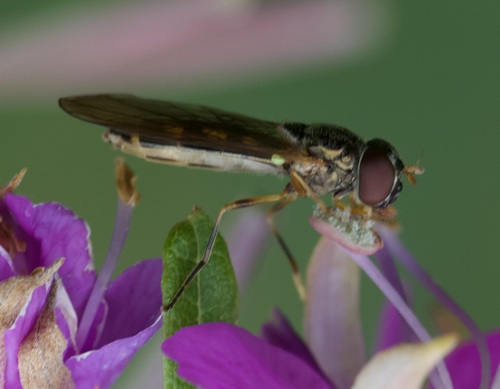
These rather common flies mainly inhabit hedge rows, grasslands or sunny rough ground, meadows, ruderal areas and fields. Eriothrix rufomaculatus can reach a length of 5–10 millimetres (0.20–0.39 in) and a wingspan of 13–15 mm. This bristly species shows a greyish thorax with four narrow black stripes and a prominent but quite variable orange patches on the sides of its cylindrical abdomen, separated by a dorsal black line. Its face is silvery, with a protruding mouth edge. The legs are black. Wings are slightly shaded, yellowish at the base. Vein-m is petiolate and costal spine is longer than vein r-m.

Eriothrix rufomaculatus is... Wikipedia →
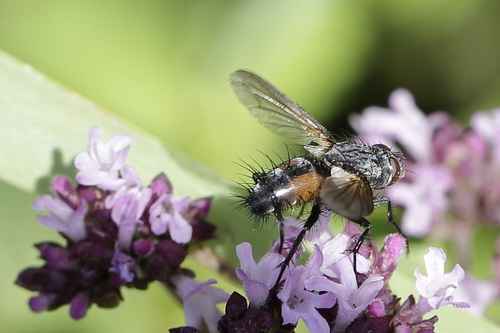
Global Distribution

Parks Where Found

# Park Country Daily sighting probability
1 Cairngorms National Park 🇬🇧 United Kingdom
~10%
2 Bavarian Forest National Park 🇩🇪 Germany
~10%
3 Wadden Sea National Park 🇩🇪 Germany
<5%

Cities Where Found

# City Country Daily sighting probability
1 Birmingham 🇬🇧 United Kingdom
~10%
2 Liverpool 🇬🇧 United Kingdom
~10%
3 London 🇬🇧 United Kingdom
~10%
4 Manchester 🇬🇧 United Kingdom
~10%
5 Helsinki 🇫🇮 Finland
~10%
6 Hamburg 🇩🇪 Germany
~10%
7 Copenhagen 🇩🇰 Denmark
~10%
8 Warsaw 🇵🇱 Poland
~10%
9 Essen 🇩🇪 Germany
~10%
10 Munich 🇩🇪 Germany
<5%

Before you go

What are the chances of seeing a Red Spotted Parasite Fly in Cairngorms National Park?

With luck

About 10% of wildlife watchers report a Red Spotted Parasite Fly sighting in Cairngorms National Park on a given day, based on 16 verified sightings from GBIF citizen-science data from 2019 to 2026. It is the 114th most-seen of the 300 insects we can rate there. Over three days the chance rises to about 30%, and over a week to about 50%, if each day is a fresh chance.

When is the best time to see a Red Spotted Parasite Fly in Cairngorms National Park?

July

In that month about 20% of wildlife watchers report a Red Spotted Parasite Fly in Cairngorms National Park on a given day, against under 5% in September to June, the lowest months.

What time of day is best to see a Red Spotted Parasite Fly?

Between 2 and 5 pm

Across all the parks we cover, that three-hour window holds the most Red Spotted Parasite Fly sightings with a recorded time, and about 9 in 10 of them come between 6 am and 6 pm: it is a daytime animal.

Is Cairngorms National Park the best place to see a Red Spotted Parasite Fly?

Yes

Of the 3 parks where we can rate Red Spotted Parasite Fly sightings, Cairngorms National Park has the highest daily chance: about 10%. Next come Bavarian Forest National Park (Germany, about 10%) and Wadden Sea National Park (Germany, under 5%).

Which relatives of the Red Spotted Parasite Fly live in Cairngorms National Park?

Same family: Tachinidae

The closest relatives of the Red Spotted Parasite Fly that you can see in Cairngorms National Park (family Tachinidae, Tachinid Flies) are Yellow-Faced Fly (about 10%) and Phasia hemiptera (about 10%), with each one's daily chance of a sighting.

Where does the Red Spotted Parasite Fly sighting chance come from?

GBIF citizen-science records

It is estimated from how often the Red Spotted Parasite Fly is recorded against all the insects logged in Cairngorms National Park (16 verified sightings from 2019 to 2026), calibrated against known sighting rates. Figures are rounded to the nearest 10% because citizen-science data supports honest approximations, not decimals, and months with records from fewer than five people show "—". How it works.

← Back to Cairngorms National Park