Smoky Wave

Smoky Wave

Scopula ternata

Daily sighting probability ~10% · With luck
at Cairngorms National Park

In 3 days ~20% in a week ~50%

14 Verified sightings at Cairngorms National Park From 2019 to 2026
25 In all 2 parks
July Best month
☀️🌙 Day & Night When it's spotted

About the Smoky Wave

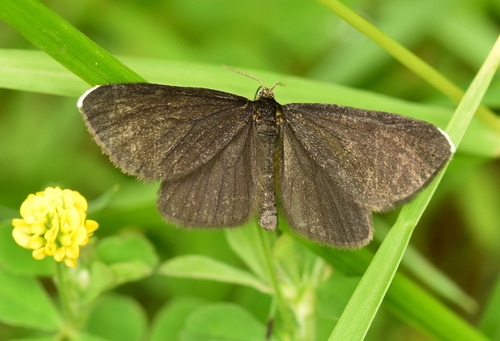
Scopula ternata, the smoky wave, is a moth of the family Geometridae. It was described by Franz von Paula Schrank in 1802. It is mainly found in northern and parts of central Europe and in isolated populations in southern and south-eastern Europe. Its western range is eastern France, eastern Belgium and Scotland, with an isolated population in the Pyrenees. In the north its range extends to the polar regions and in the south it is found up to the Alps. Its eastern range extends through central and northern Russia up to the Ural, through Siberia up to the Yenisei River.

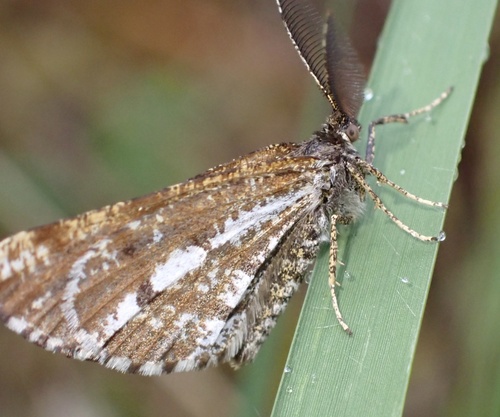
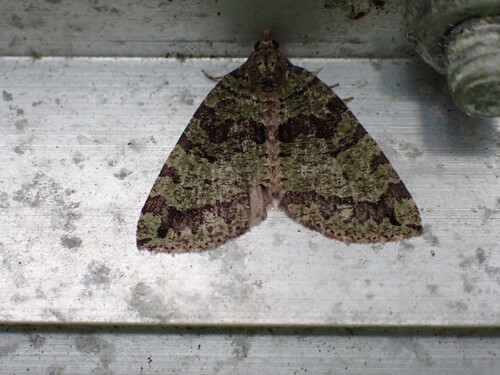
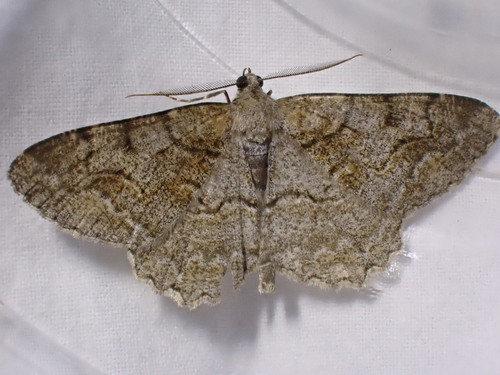
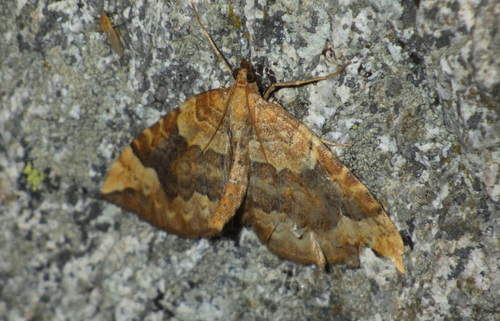
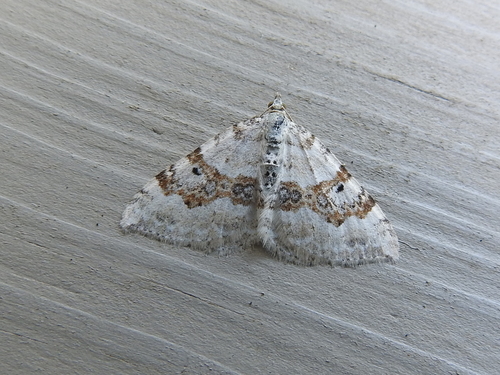
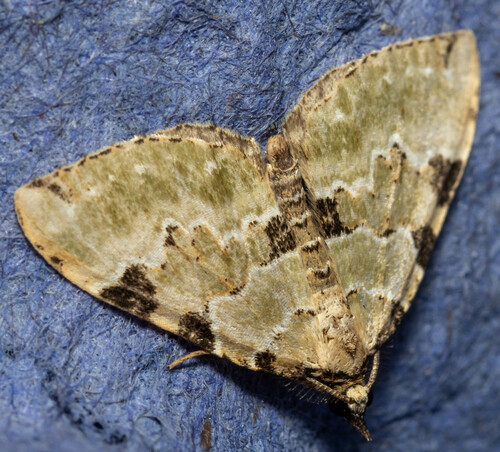
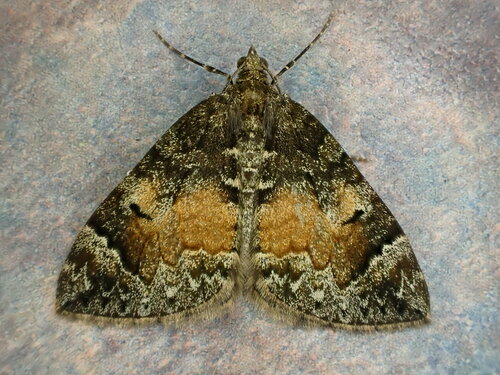
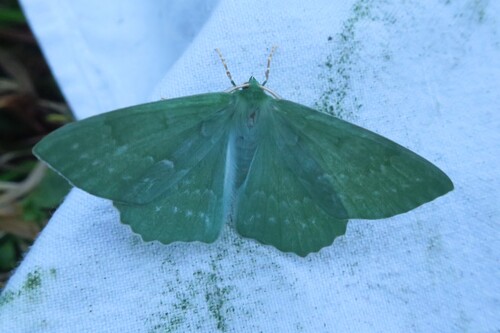
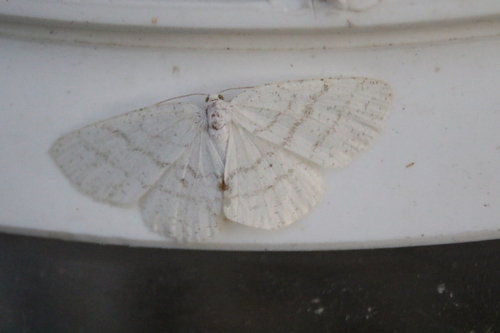
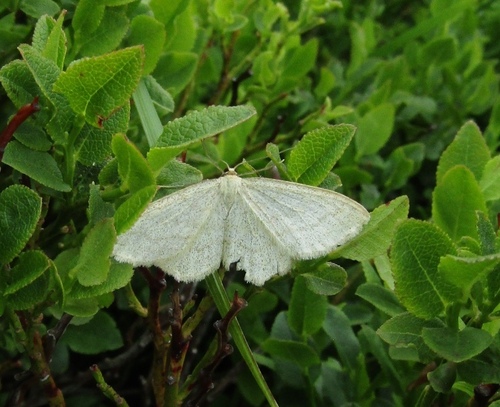
The wingspan is 24–29 millimetres (0.94–1.14 in) for males and 21–25 millimetres (0.83–0.98 in) for females. The base color is pale brown to pale yellowish with grey dusting. Usually the males are more intensely dusted than the females. The cross-lines are developed with little contrast. The inner transverse line is often almost completely extinguished. The middle band and outer transverse line, on the other hand, are usually present, the outer transverse line is usually the most strongly developed. Rarely is also the wavy line pronounced, the marginal line can be indicated in the female by interrupted stripes. Discal spots are missing on the front and rear wings. See also Prout.

The egg is approximately cylindrical with flattened ends. The outside has 17 to 18 longitudinal ribs, which intersect with finer cross ribs. It is initially light yellow and later stained red. The caterpillar is relatively long and slender, and has a lateral skin fold. It is reddish-grey and has a double, dark but interrupted dorsal line. It is slightly wider in the segment incisions. Furthermore, a wide sideline is very striking.

The moth flies from May to July in the warmer regions and from June to August in Northern Europe. The larva preferably feeds on Vaccinium myrtillus, Vaccinium uliginosum, Calluna vulgaris, Lathyrus niger, Salix repens and Erica. Less frequently, they have been recorded on Lonicera tatarica, Stellaria, Polygonum aviculare, Fragaria vesca, Lactuca sativa and Taraxacum officinale. Wikipedia →
Global Distribution

Parks Where Found

# Park Country Daily sighting probability
1 Cairngorms National Park 🇬🇧 United Kingdom
~10%
2 Bavarian Forest National Park 🇩🇪 Germany
~10%

Before you go

What are the chances of seeing a Smoky Wave in Cairngorms National Park?

With luck

About 10% of wildlife watchers report a Smoky Wave sighting in Cairngorms National Park on a given day, based on 14 verified sightings from GBIF citizen-science data from 2019 to 2026. It is the 126th most-seen of the 300 insects we can rate there. Over three days the chance rises to about 20%, and over a week to about 50%, if each day is a fresh chance.

When is the best time to see a Smoky Wave in Cairngorms National Park?

July

In that month about 20% of wildlife watchers report a Smoky Wave in Cairngorms National Park on a given day, against under 5% in August to May, the lowest months.

What time of day is best to see a Smoky Wave?

Between 1 and 4 pm

Across all the parks we cover, that three-hour window holds the most Smoky Wave sightings with a recorded time, and about 7 in 10 of them come between 6 am and 6 pm: it is seen both by day and at night.

Is Cairngorms National Park the best place to see a Smoky Wave?

Yes

Of the 2 parks where we can rate Smoky Wave sightings, Cairngorms National Park has the highest daily chance: about 10%. Next come Bavarian Forest National Park (Germany, about 10%).

Which relatives of the Smoky Wave live in Cairngorms National Park?

Same family: Geometridae

The closest relatives of the Smoky Wave that you can see in Cairngorms National Park (family Geometridae, Geometer Moths) are Chimney-Sweeper (about 20%), Bordered White (about 20%) and Common Heath (about 20%), with each one's daily chance of a sighting.

Where does the Smoky Wave sighting chance come from?

GBIF citizen-science records

It is estimated from how often the Smoky Wave is recorded against all the insects logged in Cairngorms National Park (14 verified sightings from 2019 to 2026), calibrated against known sighting rates. Figures are rounded to the nearest 10% because citizen-science data supports honest approximations, not decimals, and months with records from fewer than five people show "—". How it works.

← Back to Cairngorms National Park