Mottled Beauty

Mottled Beauty

Alcis repandata

Daily sighting probability ~20% · Possible
at Cairngorms National Park

In 3 days ~50% in a week ~80%

60 Verified sightings at Cairngorms National Park From 2019 to 2026
287 In all 12 parks
July Best month
☀️🌙 Day & Night When it's spotted

About the Mottled Beauty

The mottled beauty (Alcis repandata) is a moth of the family Geometridae. The species was first described by Carl Linnaeus in his 1758 10th edition of Systema Naturae. Subspecies and forms include: Alcis repandata muraria

Alcis repandata repandata Alcis repandata sodorensium Alcis repandata f. conversaria Alcis repandata f. nigricata Alcis repandata is a common species of Europe and the Near East, extending throughout Europe to the Urals, in the south over the Mediterranean, Asia Minor, the Caucasus to Kazakhstan and in the north to the Arctic Circle.

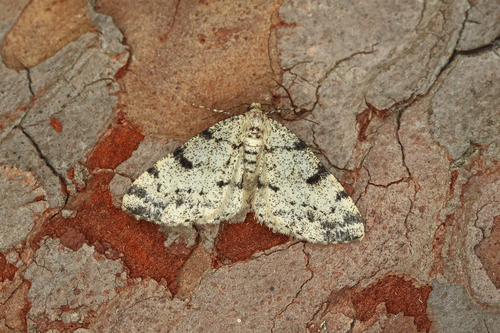
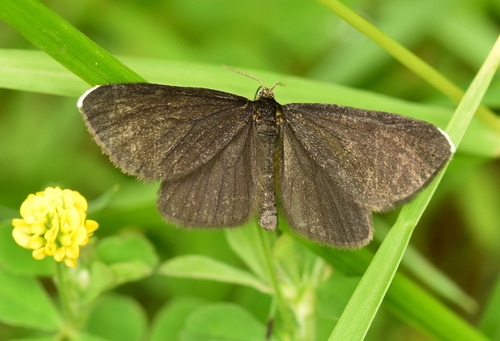
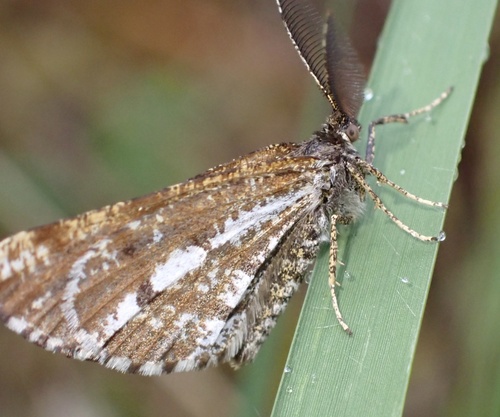
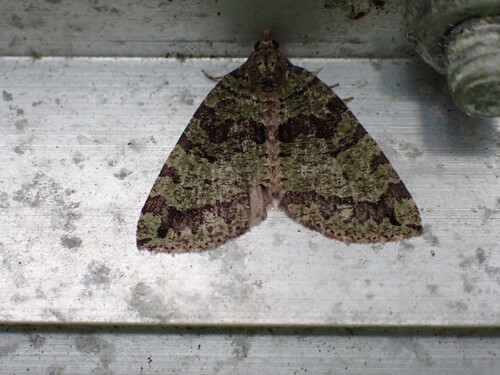
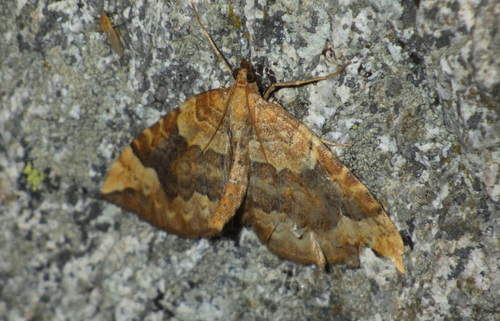
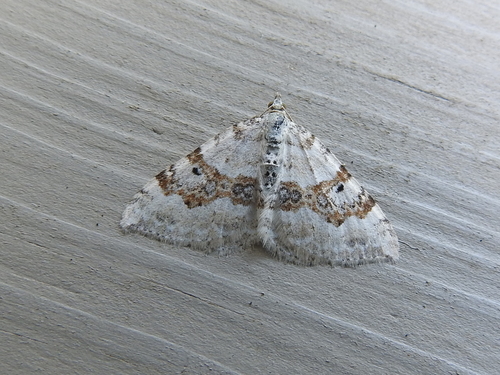
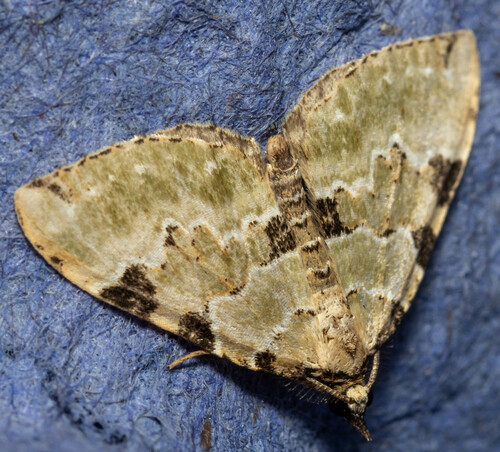
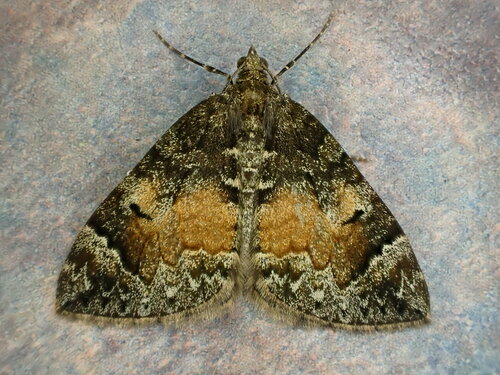
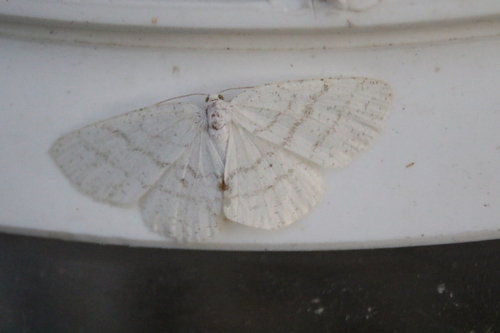
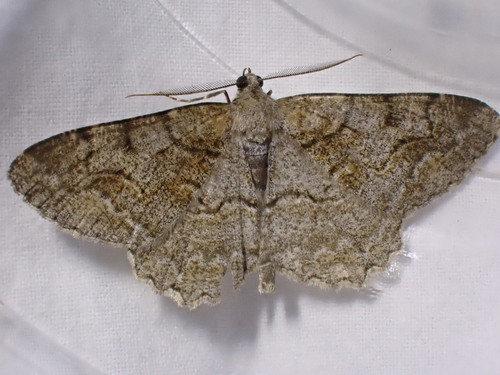
The species inhabits deciduous, mixed and coniferous forests, bushy heaths, meadows, marshes and settlement areas. In the Alps occurs up to 1800 meters. Alcis repandata has a wingspan reaching 30–45 mm. This is an extremely variable species, typically being buff or grey with black bars along the costa, but often with a broad blackish band across the forewings.

Meyrick describes it - The head is grey mixed with whitish and fuscous. The forewings are light ochreous-brown, sprinkled with black and sometimes with whitish. The first line is curved, the median... Wikipedia →
Global Distribution

Parks Where Found

# Park Country Daily sighting probability
1 Vanoise National Park 🇫🇷 France
~20%
2 Aigüestortes National Park 🇪🇸 Spain
~20%
3 Cairngorms National Park 🇬🇧 United Kingdom
~20%
4 Mercantour National Park 🇫🇷 France
~20%
5 Snowdonia National Park 🇬🇧 United Kingdom
~10%
6 Hohe Tauern National Park 🇦🇹 Austria
~10%
7 Triglav National Park 🇸🇮 Slovenia
~10%
8 Ecrins National Park 🇫🇷 France
~10%
9 Tatra National Park 🇸🇰 Slovakia
~10%
10 Bavarian Forest National Park 🇩🇪 Germany
~10%
11 Pyrénées National Park 🇫🇷 France
~10%
12 Cévennes National Park 🇫🇷 France
<5%

Cities Where Found

# City Country Daily sighting probability
1 Liverpool 🇬🇧 United Kingdom
~10%
2 Manchester 🇬🇧 United Kingdom
~10%
3 Helsinki 🇫🇮 Finland
~10%
4 London 🇬🇧 United Kingdom
~10%
5 Birmingham 🇬🇧 United Kingdom
~10%
6 Nizhny Novgorod 🇷🇺 Russia
<5%
7 Moscow 🇷🇺 Russia
<5%

Before you go

What are the chances of seeing a Mottled Beauty in Cairngorms National Park?

Possible

About 20% of wildlife watchers report a Mottled Beauty sighting in Cairngorms National Park on a given day, based on 60 verified sightings from GBIF citizen-science data from 2019 to 2026. It is the 36th most-seen of the 300 insects we can rate there. Over three days the chance rises to about 50%, and over a week to about 80%, if each day is a fresh chance.

When is the best time to see a Mottled Beauty in Cairngorms National Park?

July

In that month about 30% of wildlife watchers report a Mottled Beauty in Cairngorms National Park on a given day, against under 5% in September to May, the lowest months.

What time of day is best to see a Mottled Beauty?

Between 9 pm and midnight

Across all the parks we cover, that three-hour window holds the most Mottled Beauty sightings with a recorded time, and about 6 in 10 of them come between 6 pm and 6 am: it is seen both by day and at night.

Is Cairngorms National Park the best place to see a Mottled Beauty?

Among the best

Of the 12 parks where we can rate Mottled Beauty sightings, Cairngorms National Park ranks 3rd at about 20%, level with the leaders once rounded. The best odds are in Vanoise National Park (France, about 20%) and Aigüestortes National Park (Spain, about 20%).

Where does the Mottled Beauty sighting chance come from?

GBIF citizen-science records

It is estimated from how often the Mottled Beauty is recorded against all the insects logged in Cairngorms National Park (60 verified sightings from 2019 to 2026), calibrated against known sighting rates. Figures are rounded to the nearest 10% because citizen-science data supports honest approximations, not decimals, and months with records from fewer than five people show "—". How it works.

← Back to Cairngorms National Park