
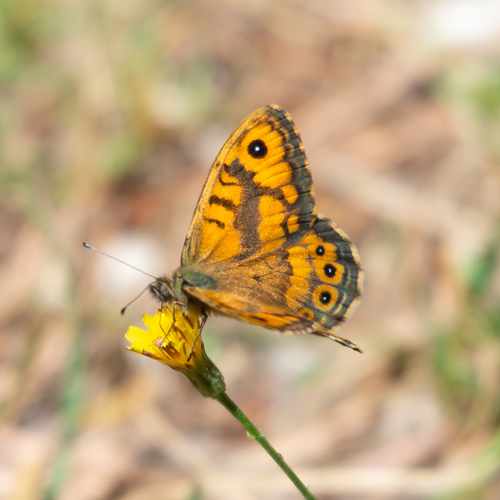
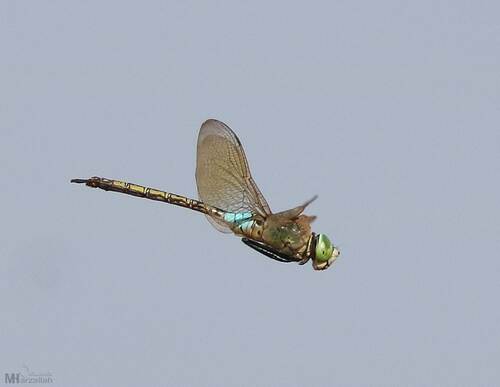
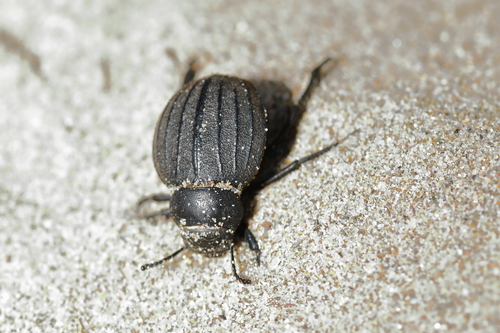
Parabatozonus lacerticida

Parabatozonus lacerticida

Parabatozonus lacerticida

Daily sighting probability ~10% · With luck
at Camargue

In 3 days ~20% in a week ~40%

8 Verified sightings at Camargue From 2019 to 2026
8 In 1 park
August Best month
☀️ Diurnal When it's spotted

About the Parabatozonus lacerticida

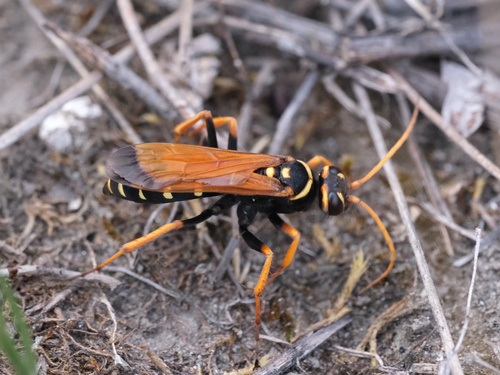
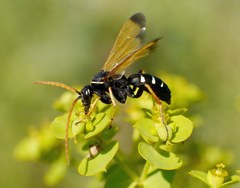
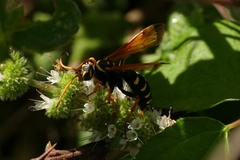
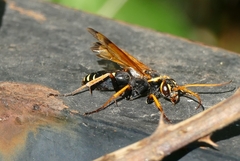
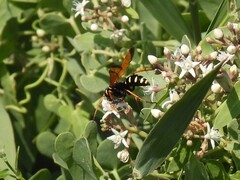
Parabatozonus lacerticida is a species of the spider-hunting wasp of the family Pompilidae. Parabatozonus lacerticida can reach a length of 16–22 millimetres (0.63–0.87 in) in females and 12.5–17 millimetres (0.49–0.67 in) in males. These spider hunting wasps have a mainly black body with orange antennae, orange legs beginning at the apex of the femora, and yellow markings on the orbits, edge of the pronotum, scutum, scutellum, and terga 2-4 of the abdomen. The wings are orange, with a brownish band on the tips of the forewings.

This species hunts large orb weaver spiders (family Araneidae) in the genera Argiope and Araneus. Like other spider wasps, they paralyze these spiders with their venomous stings and drag them into their underground nests. Then they lay an egg into the abdomen of their prey.

This species has a transpalearctic distribution and can be found across Europe as far west as Portugal, North Africa, and Asia as far east as Japan. Batozonellus lacerticida - Biodiversity Heritage Library - Bibliography

Batozonellus lacerticida - NCBI Taxonomy Database Batozonellus lacerticida - Global... Wikipedia →

Global Distribution

Parks Where Found

# Park Country Daily sighting probability
1 Camargue 🇫🇷 France
~10%

More parks will be added in future updates.

Cities Where Found

# City Country Daily sighting probability
1 Vienna 🇦🇹 Austria
<5%

Before you go

What are the chances of seeing a Parabatozonus lacerticida in Camargue?

With luck

About 10% of wildlife watchers report a Parabatozonus lacerticida sighting in Camargue on a given day, based on 8 verified sightings from GBIF citizen-science data from 2019 to 2026. It is the 56th most-seen of the 75 insects we can rate there. Over three days the chance rises to about 20%, and over a week to about 40%, if each day is a fresh chance.

When is the best time to see a Parabatozonus lacerticida in Camargue?

August

In that month about 30% of wildlife watchers report a Parabatozonus lacerticida in Camargue on a given day, against under 5% in July and September–May, the lowest months.

What time of day is best to see a Parabatozonus lacerticida?

Between 1 and 4 pm

Across all the parks we cover, that three-hour window holds the most Parabatozonus lacerticida sightings with a recorded time, and about 9 in 10 of them come between 6 am and 6 pm: it is a daytime animal.

Where else can you see a Parabatozonus lacerticida?

Only Camargue, in our data

Camargue is the only park on Wallace's Line with enough records to rate Parabatozonus lacerticida sightings: about 10% of wildlife watchers there report one on a given day.

Which relatives of the Parabatozonus lacerticida live in Camargue?

Same order: Hymenoptera

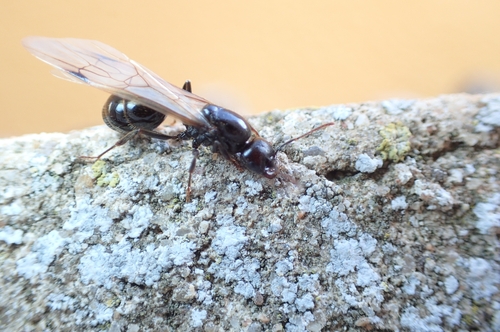
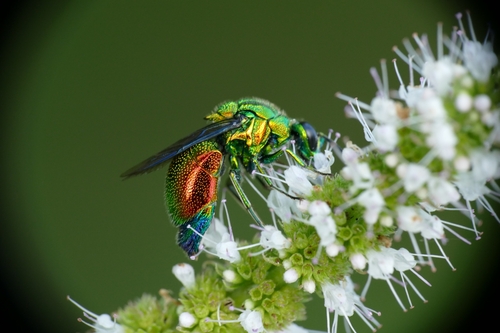
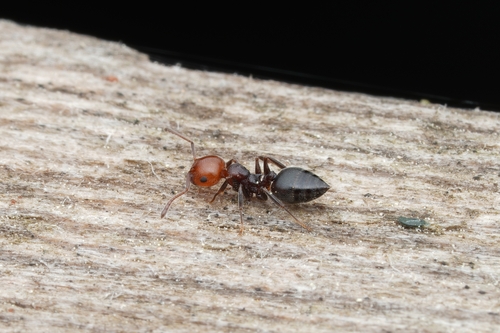
The closest relatives of the Parabatozonus lacerticida that you can see in Camargue (order Hymenoptera, Ants, Bees, Wasps, and Sawflies) are Barbary Harvester Ant (about 10%), Emerald Cuckoo Wasp (about 10%) and Mediterranean Acrobat Ant (about 10%), with each one's daily chance of a sighting.

Where does the Parabatozonus lacerticida sighting chance come from?

GBIF citizen-science records

It is estimated from how often the Parabatozonus lacerticida is recorded against all the insects logged in Camargue (8 verified sightings from 2019 to 2026), calibrated against known sighting rates. Figures are rounded to the nearest 10% because citizen-science data supports honest approximations, not decimals, and months with records from fewer than five people show "—". How it works.

← Back to Camargue