Vietnamese Bug-eyed Frog

Vietnamese Bug-eyed Frog

Theloderma vietnamense

Silhouette: Jose Carlos Arenas-Monroy · PhyloPic

LCLeast ConcernNTVUENCR
Daily sighting probability ~30% · Possible
at Cat Tien National Park

In 3 days ~60% in a week ~90%

24 Verified sightings at Cat Tien National Park From 2019 to 2026
24 In 1 park
June Best month
☀️ Diurnal When it's spotted

About the Vietnamese Bug-eyed Frog

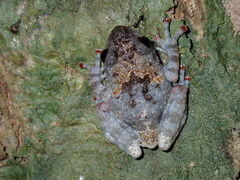
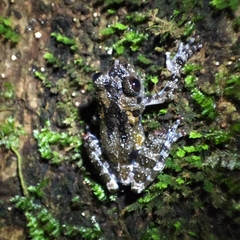
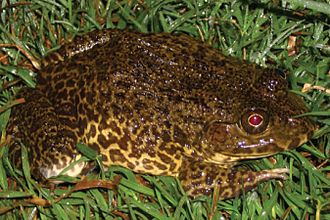
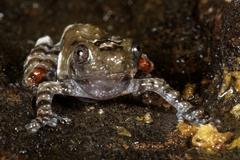
Theloderma vietnamense, the South Vietnamese bug-eyed frog or South Vietnamese bug eye frog, is a frog in the family Rhacophoridae. It is endemic to Vietnam, Cambodia, and Laos. It has been observed no higher than 1400 meters above sea level.

This frog has been found in dense, mixed evergreen-deciduous forests in lowlands, hills, and montane habitats. This frog has occasionally been observed in secondary forest. This frog is closely associated with water-filled holes in trees, which they use to breed and sometimes shelter during the day.

During the breeding season, the male frogs perch on plants near the tree holes and call to the female frogs. The female frogs enter the tree holes and lay eggs above the waterline. When the eggs hatch, the tadpoles fall into the water. Two or three female frogs may lay eggs in the same hole with the same male frog.

The IUCN does name some threats to this frog, mostly associated with habitat loss associated with agriculture, especially for cash crops like rubber, coffee, and tea. They also believe people may collect this frog to sell in the international trade because that has happened to similarly beautiful frogs.

The frog's range includes many protected parks, including Phu Quoc National Park, Nui Ong Nature Reserve, Vinh Cuu Nature Reserve, Kon Ka Kinh Nature Reserve, Kon Cha Rang Nature Reserve, Dong Nai Bioshpere Reserve, and others. Wikipedia →

Global Distribution

Parks Where Found

# Park Country Daily sighting probability
1 Cat Tien National Park 🇻🇳 Vietnam
~30%

More parks will be added in future updates.

Before you go

What are the chances of seeing a Vietnamese Bug-eyed Frog in Cat Tien National Park?

Possible

About 30% of wildlife watchers report a Vietnamese Bug-eyed Frog sighting in Cat Tien National Park on a given day, based on 24 verified sightings from GBIF citizen-science data from 2019 to 2026. It is the 9th most-seen of the 21 amphibians we can rate there. Over three days the chance rises to about 60%, and over a week to about 90%, if each day is a fresh chance.

When is the best time to see a Vietnamese Bug-eyed Frog in Cat Tien National Park?

March–April and June

In those months about 40% of wildlife watchers report a Vietnamese Bug-eyed Frog in Cat Tien National Park on a given day, against under 5% in February, May, July–September and November–December, the lowest months.

What time of day is best to see a Vietnamese Bug-eyed Frog?

Between 2 and 5 pm

Across all the parks we cover, that three-hour window holds the most Vietnamese Bug-eyed Frog sightings with a recorded time, and about 8 in 10 of them come between 6 am and 6 pm: it is a daytime animal.

Where else can you see a Vietnamese Bug-eyed Frog?

Only Cat Tien National Park, in our data

Cat Tien National Park is the only park on Wallace's Line with enough records to rate Vietnamese Bug-eyed Frog sightings: about 30% of wildlife watchers there report one on a given day.

Which relatives of the Vietnamese Bug-eyed Frog live in Cat Tien National Park?

Same family: Rhacophoridae

The closest relatives of the Vietnamese Bug-eyed Frog that you can see in Cat Tien National Park (family Rhacophoridae, Old World Tree Frogs) are Spot-legged Tree Frog (about 60%), Nongkhor Asian Treefrog (about 20%) and Annam Flying Frog (about 10%), with each one's daily chance of a sighting.

Where does the Vietnamese Bug-eyed Frog sighting chance come from?

GBIF citizen-science records

It is estimated from how often the Vietnamese Bug-eyed Frog is recorded against all the amphibians logged in Cat Tien National Park (24 verified sightings from 2019 to 2026), calibrated against known sighting rates. Figures are rounded to the nearest 10% because citizen-science data supports honest approximations, not decimals, and months with records from fewer than five people show "—". How it works.

← Back to Cat Tien National Park