Dark Kite-Swallowtail

Dark Kite-Swallowtail

Protographium philolaus

Daily sighting probability ~10% · With luck
at Biotopo Cerro Cahuí

In 3 days ~40% in a week ~60%

7 Verified sightings at Biotopo Cerro Cahuí From 2019 to 2026
62 In all 3 parks
April Best month
☀️ Diurnal When it's spotted

About the Dark Kite-Swallowtail

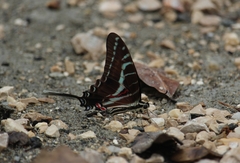
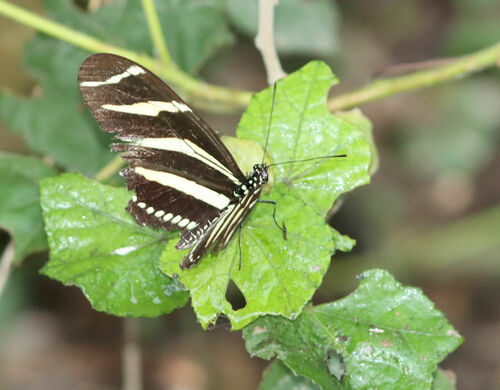
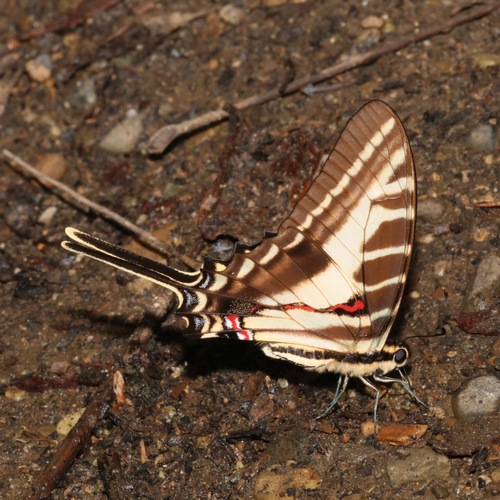
Eurytides philolaus, the dark zebra swallowtail or dark kite-swallowtail, is a butterfly of the family Papilionidae. It is found from southern Texas to northern South America. The wingspan is 90–95 mm. "Antenna black; the 7. pale green band of the forewing only represented by a spot; hindwing with 2 red spots posteriorly; on the under surface the red line of the hindwing edged with black at both sides, undulate anteriorly. Scent-scales of the male short, broad, irregular, produced in a number of filaments. The female is in 2 forms: female f. philolaus Boisd. similar to the male, the underside paler, female f. niger Eimer (nigrescens Eimer; felicis Fruhst.) the pale green bands of the membrane of the wings scaled with black, the wings therefore black with slight traces of the bands."

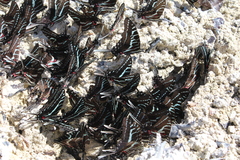
The butterfly is found in low situations, often resting in crowds on the sand at the edge of rivers. The larvae feed on Annonaceae species. There are two recognised subspecies: Eurytides philolaus philolaus (Mexico, Honduras, Costa Rica, southern Texas)

Eurytides philolaus xanticles (Bates, 1863) (Panama, northern Colombia, northern Venezuela) Wikipedia →
Global Distribution

Parks Where Found

# Park Country Daily sighting probability
1 Sian Ka'an Biosphere Reserve 🇲🇽 Mexico
~30%
2 Calakmul Biosphere Reserve 🇲🇽 Mexico
~20%
3 Biotopo Cerro Cahuí 🇬🇹 Guatemala
~10%

Before you go

What are the chances of seeing a Dark Kite-Swallowtail in Biotopo Cerro Cahuí?

With luck

About 10% of wildlife watchers report a Dark Kite-Swallowtail sighting in Biotopo Cerro Cahuí on a given day, based on 7 verified sightings from GBIF citizen-science data from 2019 to 2026. It is the 52nd most-seen of the 77 insects we can rate there. Over three days the chance rises to about 40%, and over a week to about 60%, if each day is a fresh chance.

When is the best time to see a Dark Kite-Swallowtail in Biotopo Cerro Cahuí?

April and June

In those months about 30% of wildlife watchers report a Dark Kite-Swallowtail in Biotopo Cerro Cahuí on a given day, against under 5% in July to February, the lowest months.

What time of day is best to see a Dark Kite-Swallowtail?

Between 9 am and noon

Across all the parks we cover, that three-hour window holds the most Dark Kite-Swallowtail sightings with a recorded time, and about 9 in 10 of them come between 6 am and 6 pm: it is a daytime animal.

Is Biotopo Cerro Cahuí the best place to see a Dark Kite-Swallowtail?

3rd of 3

Of the 3 parks where we can rate Dark Kite-Swallowtail sightings, Biotopo Cerro Cahuí ranks 3rd at about 10%. The best odds are in Sian Ka'an Biosphere Reserve (Mexico, about 30%) and Calakmul Biosphere Reserve (Mexico, about 20%).

Which relatives of the Dark Kite-Swallowtail live in Biotopo Cerro Cahuí?

Same order: Lepidoptera

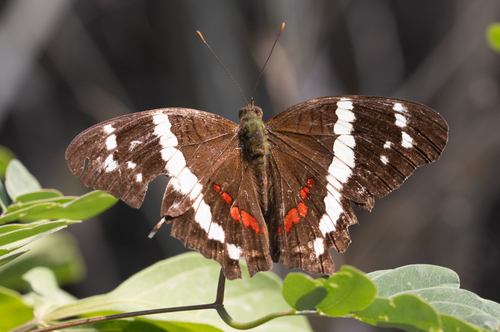
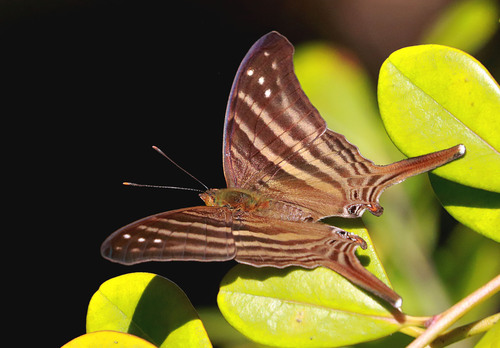
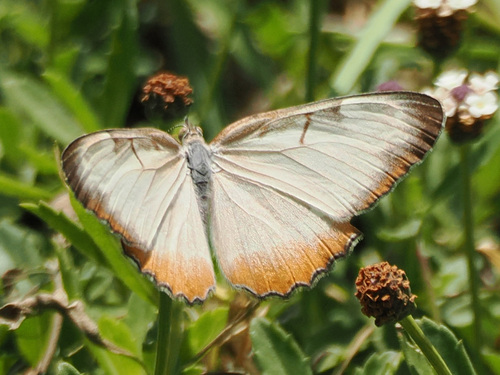
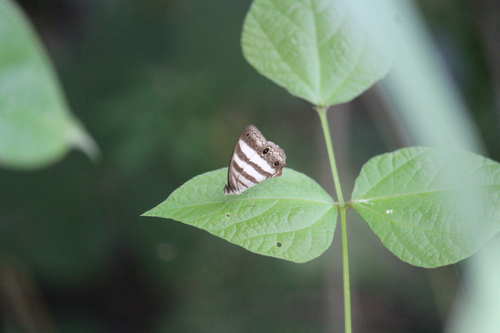
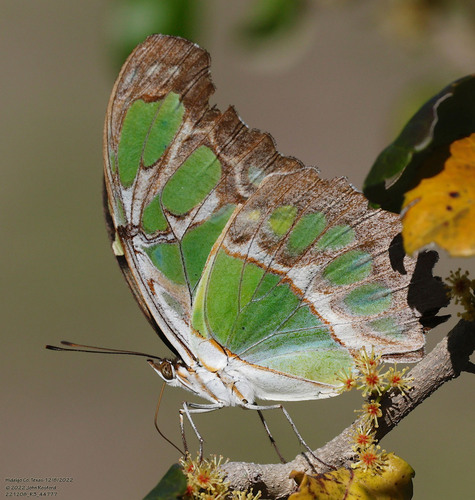
The closest relatives of the Dark Kite-Swallowtail that you can see in Biotopo Cerro Cahuí (order Lepidoptera, Butterflies and Moths) are Banded Peacock (about 40%), White Peacock (about 40%) and Many-Banded Daggerwing (about 30%), with each one's daily chance of a sighting.

Where does the Dark Kite-Swallowtail sighting chance come from?

GBIF citizen-science records

It is estimated from how often the Dark Kite-Swallowtail is recorded against all the insects logged in Biotopo Cerro Cahuí (7 verified sightings from 2019 to 2026), calibrated against known sighting rates. Figures are rounded to the nearest 10% because citizen-science data supports honest approximations, not decimals, and months with records from fewer than five people show "—". How it works.

← Back to Biotopo Cerro Cahuí