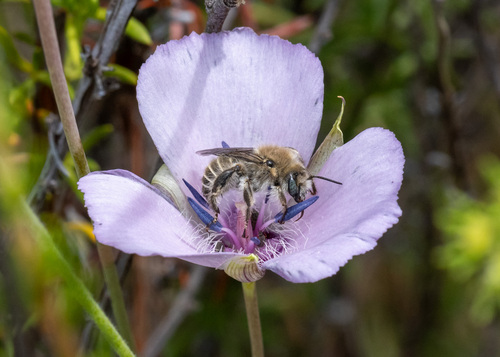
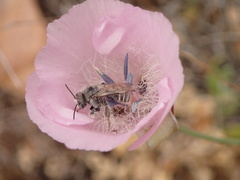
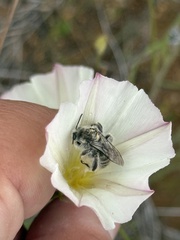
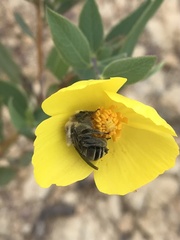
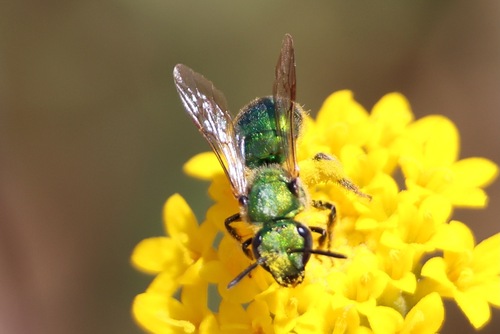
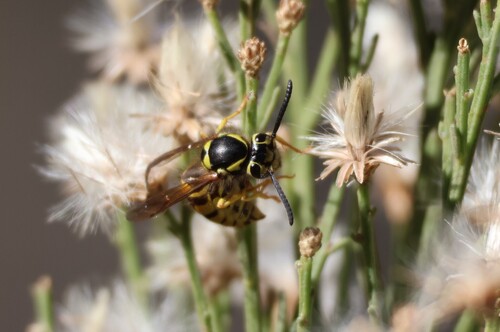
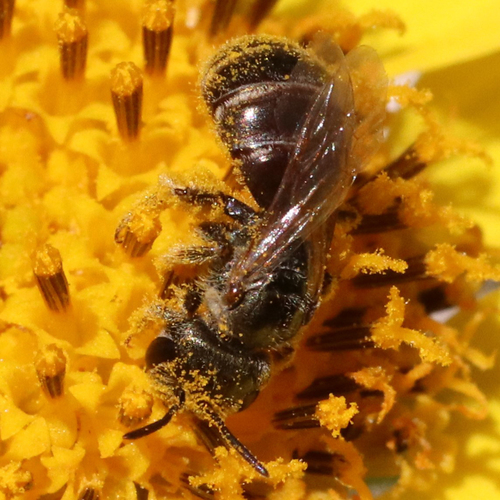
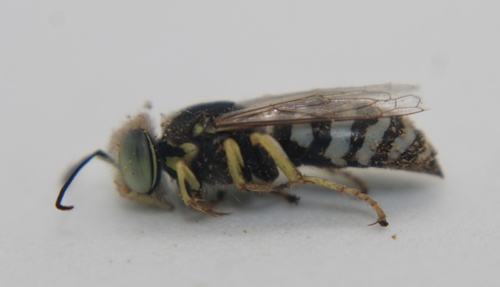
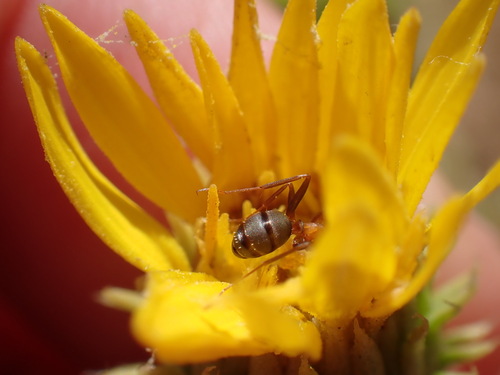
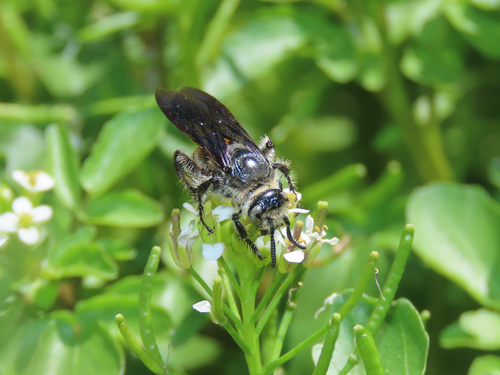
Bindweed Turret Bee

Bindweed Turret Bee

Diadasia bituberculata

Daily sighting probability ~10% · With luck
at Channel Islands National Park

In 3 days ~30% in a week ~60%

21 Verified sightings at Channel Islands National Park From 2019 to 2026
21 In 1 park
May Best month
☀️ Diurnal When it's spotted

About the Bindweed Turret Bee

Diadasia bituberculata, also known as bindweed turret bee, and bindweed bee is a species of chimney bee in the family Apidae. The bindweed turret bee is found on the West Coast of Mexico and North America. The bindweed turret bee's range extends through both Central and North America, but it is found primarily on the West Coast of the United States, especially in California. Colonies have been found as far North as Oregon and as far south as Baja California, Mexico.

This bee species starts out as an egg, usually laid 1-2 to a nest. After hatching into larva, they feed upon pollen provided by their mothers until they reach the adult stage. At this time, they will leave the nest in search of a mate. Adult bees are typically active for only a few months, between April and July. During this period the bees will mate, build their nests, gather food and lay eggs. Towards the end of spring and into early summer, they seal off their nests. For the remaining months of the year, the bee eggs will hatch and the larva will grow until they reach the adult stage and exit their nests in early spring, starting the cycle again.

Bindweed... Wikipedia →

Global Distribution

Parks Where Found

# Park Country Daily sighting probability
1 Channel Islands National Park 🇺🇸 United States
~10%

More parks will be added in future updates.

Cities Where Found

# City Country Daily sighting probability
1 Los Angeles 🇺🇸 United States
<5%
2 San Diego 🇺🇸 United States
<5%

Before you go

What are the chances of seeing a Bindweed Turret Bee in Channel Islands National Park?

With luck

About 10% of wildlife watchers report a Bindweed Turret Bee sighting in Channel Islands National Park on a given day, based on 21 verified sightings from GBIF citizen-science data from 2019 to 2026. It is the 38th most-seen of the 131 insects we can rate there. Over three days the chance rises to about 30%, and over a week to about 60%, if each day is a fresh chance.

When is the best time to see a Bindweed Turret Bee in Channel Islands National Park?

May

In that month about 30% of wildlife watchers report a Bindweed Turret Bee in Channel Islands National Park on a given day, against under 5% in August to March, the lowest months. That is one of Channel Islands National Park's driest months, with almost no rain against 60 mm in January.

What time of day is best to see a Bindweed Turret Bee?

Between 10 am and 1 pm

Across all the parks we cover, that three-hour window holds the most Bindweed Turret Bee sightings with a recorded time, and nearly all of them come between 6 am and 6 pm: it is a daytime animal.

Where else can you see a Bindweed Turret Bee?

Only Channel Islands National Park, in our data

Channel Islands National Park is the only park on Wallace's Line with enough records to rate Bindweed Turret Bee sightings: about 10% of wildlife watchers there report one on a given day.

Which relatives of the Bindweed Turret Bee live in Channel Islands National Park?

Same family: Apidae

The closest relatives of the Bindweed Turret Bee that you can see in Channel Islands National Park (family Apidae, Honey Bees, Bumble Bees, and Allies) are Yellow-Faced Bumble Bee (about 30%), Black-Tailed Bumble Bee (about 20%) and California Digger Bee (about 10%), with each one's daily chance of a sighting.

Where does the Bindweed Turret Bee sighting chance come from?

GBIF citizen-science records

It is estimated from how often the Bindweed Turret Bee is recorded against all the insects logged in Channel Islands National Park (21 verified sightings from 2019 to 2026), calibrated against known sighting rates. Figures are rounded to the nearest 10% because citizen-science data supports honest approximations, not decimals, and months with records from fewer than five people show "—". How it works.

← Back to Channel Islands National Park