Bogotá Rail

Bogotá Rail

Rallus semiplumbeus

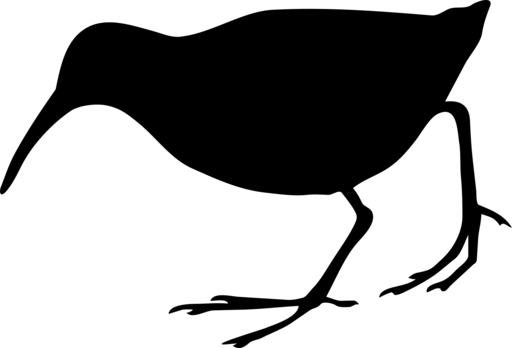
Silhouette: Ferran Sayol · PhyloPic

LCNTVUVulnerableENCR Endemic
Daily sighting probability ~10% · With luck
at Chingaza National Natural Park

In 3 days ~20% in a week ~40%

72 Verified sightings at Chingaza National Natural Park From 2019 to 2026
72 In 1 park
July Best month
☀️ Diurnal When it's spotted

About the Bogotá Rail

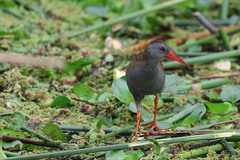
The Bogotá rail (Rallus semiplumbeus) is a Vulnerable species of bird in subfamily Rallinae of family Rallidae, the rails, gallinules, and coots. It is endemic to Colombia. The bird is a typical medium-sized rail with a plump body that is laterally compressed ("skinny as a rail"), a short tail and an elongated bill.

The Bogotá rail was first described in 1856 by the American ornithologist Philip Sclater, based on a specimen sent to him by the French collectors Jules and Édouard Verreaux. The generic name Rallus is thought to derive from the name for these birds in French (Rale) or German (ralle). The specific epithet semiplumbeus comes from the Latin plumbum (lead), suggesting that the bird is somewhat the color of lead.

The Bogotá rail has two known subspecies: R. s. peruvianus is known from a single specimen thought to have been collected in Peru; it is now considered to be extinct. Some authors have suggested that it represents a distinct species.

The taxonomic relationships among the Rallidae species are complex and not fully resolved, but phylogenetic analysis has determined... Wikipedia →

Sounds

Song0:10

Colombia · 2022

© Mauricio Cuéllar Ramírez · XC706568 · CC BY-NC-SA 4.0

Call0:46

Colombia · 2021

© Peter Boesman · XC693814 · CC BY-NC-ND 4.0

Duet0:12

Colombia · 2013

© Dušan M. Brinkhuizen · XC141899 · CC BY-NC-ND 3.0

Global Distribution

Parks Where Found

# Park Country Daily sighting probability
1 Chingaza National Natural Park 🇨🇴 Colombia
~10%

More parks will be added in future updates.

Cities Where Found

# City Country Daily sighting probability
1 Bogota 🇨🇴 Colombia
<5%

Before you go

What are the chances of seeing a Bogotá Rail in Chingaza National Natural Park?

With luck

About 10% of wildlife watchers report a Bogotá Rail sighting in Chingaza National Natural Park on a given day, based on 72 verified sightings from GBIF citizen-science data from 2019 to 2026. It is the 79th most-seen of the 258 birds we can rate there. Over three days the chance rises to about 20%, and over a week to about 40%, if each day is a fresh chance.

When is the best time to see a Bogotá Rail in Chingaza National Natural Park?

July

In that month about 20% of wildlife watchers report a Bogotá Rail in Chingaza National Natural Park on a given day, against under 5% in January, June and August–October, the lowest months.

What time of day is best to see a Bogotá Rail?

Between 7 and 10 am

Across all the parks we cover, that three-hour window holds the most Bogotá Rail sightings with a recorded time, and about 9 in 10 of them come between 6 am and 6 pm: it is a daytime animal.

Where else can you see a Bogotá Rail?

Only Chingaza National Natural Park, in our data

Chingaza National Natural Park is the only park on Wallace's Line with enough records to rate Bogotá Rail sightings: about 10% of wildlife watchers there report one on a given day.

Where does the Bogotá Rail sighting chance come from?

GBIF citizen-science records

It is estimated from how often the Bogotá Rail is recorded against all the birds logged in Chingaza National Natural Park (72 verified sightings from 2019 to 2026), calibrated against known sighting rates. Figures are rounded to the nearest 10% because citizen-science data supports honest approximations, not decimals, and months with records from fewer than five people show "—". How it works.

← Back to Chingaza National Natural Park