Alexander's Cusimanse silhouette

Silhouette: Margot Michaud · PhyloPic

Alexander's Cusimanse

Crossarchus alexandri

LCLeast ConcernNTVUENCR
Daily sighting probability ~10% · With luck
at Chinko Conservation Area

In 3 days ~40% in a week ~70%

5 Verified sightings at Chinko Conservation Area From 2019 to 2026
5 In 1 park
January Best month
☀️ Diurnal When it's spotted

About the Alexander's Cusimanse

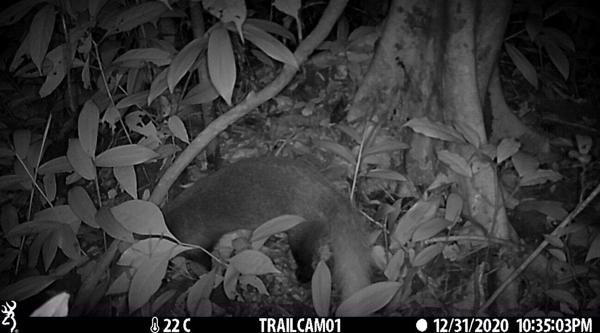
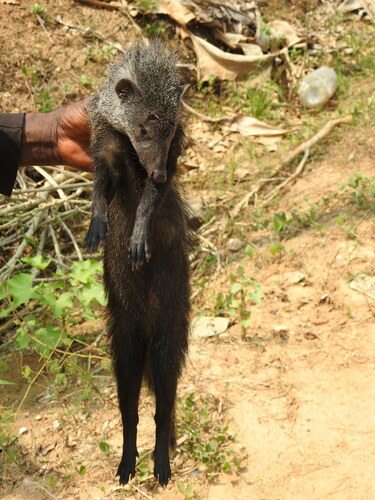
Alexander's kusimanse (Crossarchus alexandri) is a mongoose species native to Central African rainforests. The species was first described in 1907 by Oldfield Thomas and R. C. Wroughton based on specimens collected by Boyd Alexander, and named after Alexander himself. It is largely restricted to northern Democratic republic of Congo, and western Uganda. It is classified as Least Concern on the IUCN Red List.

Alexander's kusimanse is a species belonging to the mongoose family Herpestidae. The species was first described in 1907 by English zoologists Oldfield Thomas and R. C. Wroughton using specimens collected by Boyd Alexander. The species is named after captain Alexander who collected the specimens. No subspecies of Alexander's Kusimanse has been classified.

Alexander's kusimanse is a small mongoose with short legs. It measures about 375–437 mm (14.8–17.2 in) in body length, and has a 243–318 mm (9.6–12.5 in) long tail. It has brownish black hairy fur with tinges of gray. The head consists of a long snout with pale buff colored lips, and small brownish ears. The hind part of the body is covered with long guard hairs, which are darker at the base and...

Wikipedia →

Global Distribution

Parks Where Found

# Park Country Daily sighting probability
1 Chinko Conservation Area 🇨🇫 Central African Republic
~10%

More parks will be added in future updates.

Before you go

What are the chances of seeing an Alexander's Cusimanse in Chinko Conservation Area?

With luck

About 10% of wildlife watchers report an Alexander's Cusimanse sighting in Chinko Conservation Area on a given day, based on 5 verified sightings from GBIF citizen-science data from 2019 to 2026. It is the 53rd most-seen of the 53 mammals we can rate there. Over three days the chance rises to about 40%, and over a week to about 70%, if each day is a fresh chance.

When is the best time to see an Alexander's Cusimanse in Chinko Conservation Area?

January

In that month about 40% of wildlife watchers report an Alexander's Cusimanse in Chinko Conservation Area on a given day, against under 5% in February–June and August–December, the lowest months. That is one of Chinko Conservation Area's driest months, with almost no rain against 180 mm in August.

What time of day is best to see an Alexander's Cusimanse?

Between 6 and 9 am

Across all the parks we cover, that three-hour window holds the most Alexander's Cusimanse sightings with a recorded time, and nearly all of them come between 6 am and 6 pm: it is a daytime animal.

Where else can you see an Alexander's Cusimanse?

Only Chinko Conservation Area, in our data

Chinko Conservation Area is the only park on Wallace's Line with enough records to rate Alexander's Cusimanse sightings: about 10% of wildlife watchers there report one on a given day.

Which relatives of the Alexander's Cusimanse live in Chinko Conservation Area?

Same family: Herpestidae

The closest relatives of the Alexander's Cusimanse that you can see in Chinko Conservation Area (family Herpestidae, Mongooses) are White-tailed Mongoose (about 40%), Black-legged Mongoose (about 30%) and Marsh Mongoose (about 20%), with each one's daily chance of a sighting.

Where does the Alexander's Cusimanse sighting chance come from?

GBIF citizen-science records

It is estimated from how often the Alexander's Cusimanse is recorded against all the mammals logged in Chinko Conservation Area (5 verified sightings from 2019 to 2026), calibrated against known sighting rates. Figures are rounded to the nearest 10% because citizen-science data supports honest approximations, not decimals, and months with records from fewer than five people show "—". How it works.

← Back to Chinko Conservation Area