Bunyoro Rabbit

Bunyoro Rabbit

Poelagus marjorita

Silhouette: T. Michael Keesey · PhyloPic

LCLeast ConcernNTVUENCR
Daily sighting probability ~20% · Possible
at Chinko Conservation Area

In 3 days ~50% in a week ~80%

8 Verified sightings at Chinko Conservation Area From 2019 to 2026
8 In 1 park
March Best month
🌙 Nocturnal When it's spotted

About the Bunyoro Rabbit

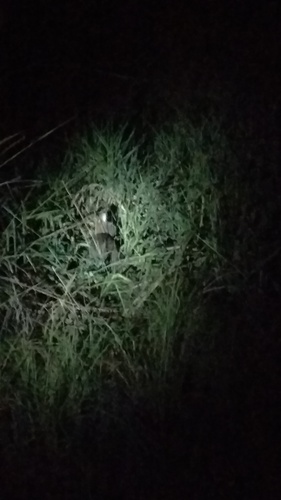
The Bunyoro rabbit or Uganda grass hare (Poelagus marjorita) is a species of mammal in the family Leporidae. It is the only member of the genus Poelagus. It is a medium-sized (400 to 605 millimetres (15.7 to 23.8 in) long), greyish-brown furred, nocturnal, plant-eating rabbit found in central Africa. Its typical habitat is damp savannah, often with rocky outcrops, but it also appears in forests and in rocky areas alongside rock hyraxes.

First described by British mammalogist Jane St. Leger in 1929 as a member of the hares, the Bunyoro rabbit was placed within its own genus in 1932 after specimens were examined in detail with relation to other leporids. Two subspecies from what is now South Sudan were described in the following decades, but neither is recognized today. The Bunyoro rabbit's genetic relationships have been variously described; most place it as closely related to the red rock hares (Pronolagus) and the striped rabbits (Nesolagus), but at least one study describes it as a sister group of the riverine rabbit (Bunolagus). While the Bunyoro rabbit was once considered abundant, and it is classified by the International Union for Conservation of Nature (IUCN) as a least-concern species, sightings have been infrequent, and its distribution is much more limited than early estimations.

Wikipedia →

Global Distribution

Parks Where Found

# Park Country Daily sighting probability
1 Chinko Conservation Area 🇨🇫 Central African Republic
~20%

More parks will be added in future updates.

Before you go

What are the chances of seeing a Bunyoro Rabbit in Chinko Conservation Area?

Possible

About 20% of wildlife watchers report a Bunyoro Rabbit sighting in Chinko Conservation Area on a given day, based on 8 verified sightings from GBIF citizen-science data from 2019 to 2026. It is the 47th most-seen of the 53 mammals we can rate there. Over three days the chance rises to about 50%, and over a week to about 80%, if each day is a fresh chance.

When is the best time to see a Bunyoro Rabbit in Chinko Conservation Area?

March–April and August–September

In those months about 30% of wildlife watchers report a Bunyoro Rabbit in Chinko Conservation Area on a given day, against under 5% in January, June–July and October–November, the lowest months.

What time of day is best to see a Bunyoro Rabbit?

Between 7 and 10 pm

Across all the parks we cover, that three-hour window holds the most Bunyoro Rabbit sightings with a recorded time, and about 7 in 10 of them come between 6 pm and 6 am: it is mostly seen at night.

Where else can you see a Bunyoro Rabbit?

Only Chinko Conservation Area, in our data

Chinko Conservation Area is the only park on Wallace's Line with enough records to rate Bunyoro Rabbit sightings: about 20% of wildlife watchers there report one on a given day.

Where does the Bunyoro Rabbit sighting chance come from?

GBIF citizen-science records

It is estimated from how often the Bunyoro Rabbit is recorded against all the mammals logged in Chinko Conservation Area (8 verified sightings from 2019 to 2026), calibrated against known sighting rates. Figures are rounded to the nearest 10% because citizen-science data supports honest approximations, not decimals, and months with records from fewer than five people show "—". How it works.

← Back to Chinko Conservation Area
