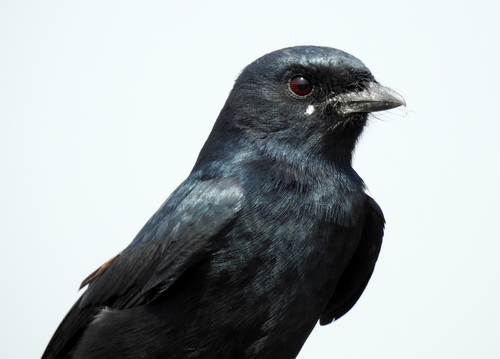
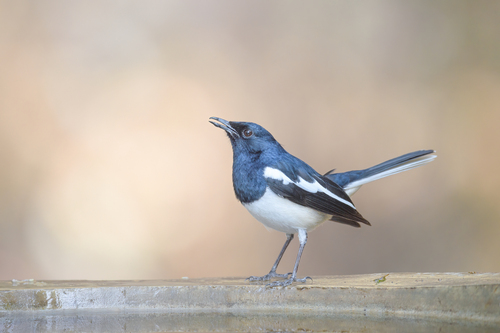
Yellow-breasted Bunting

Yellow-breasted Bunting

Emberiza aureola

Silhouette: L. Shyamal · PhyloPic

LCNTVUENCRCritically Endangered
Daily sighting probability <5% · Rare
at Chitwan National Park

In 3 days ~10% in a week ~30%

69 Verified sightings at Chitwan National Park From 2019 to 2026
69 In 1 park
December Best month
☀️ Diurnal When it's spotted

About the Yellow-breasted Bunting

The yellow-breasted bunting (Emberiza aureola) is a passerine bird in the bunting family Emberizidae that is found across the Boreal and East Palearctic. The genus name Emberiza is from Old German Embritz, a bunting. The specific aureola is Latin for "golden". The bird's call is a distinctive zick, and the song is a clear tru-tru, tri-tri.

Until 2004, the International Union for Conservation of Nature considered the yellow-breasted bunting to be a species of least concern. Since 2004, it has been gradually upgraded to a status of Critically Endangered due to rapid drops in population sizes. It is subject to heavy hunting pressure in China, through which most specimens pass during migration.

The yellow-breasted bunting is a small passerine, ranging from 14 to 16 cm (5.5 to 6.3 in) in length, and weighing 17 to 26 g (0.6 to 0.9 oz). For a bunting, it is large and rather stocky. The breeding male has bright white underparts with black flank streaks, brown upperparts, black face and throat bar, and a pink lower mandible. The female has a heavily streaked grey-brown back, and less intensely yellow underparts. She has a whitish face with dark crown, eye and cheek stripes... Wikipedia →

Sounds

Recording1:07

Russia · 2026

© naturalisttt · iNaturalist · CC BY-NC 4.0

Recording0:27

Russia · 2026

© nadezhda_boiko · iNaturalist · CC BY-NC 4.0

Recording0:08

Russia · 2025

© Сергей · iNaturalist · CC BY-NC 4.0

Global Distribution

Parks Where Found

# Park Country Daily sighting probability
1 Chitwan National Park 🇳🇵 Nepal
<5%

More parks will be added in future updates.

Cities Where Found

# City Country Daily sighting probability
1 Kolkata 🇮🇳 India
~10%
2 Beijing 🇨🇳 China
~10%
3 Kathmandu 🇳🇵 Nepal
<5%
4 Bangkok 🇹🇭 Thailand
<5%
5 Guangzhou 🇨🇳 China
<5%
6 Hong Kong 🇨🇳 China
<5%
7 Taipei 🇹🇼 Taiwan
<5%

Before you go

What are the chances of seeing a Yellow-breasted Bunting in Chitwan National Park?

Rare

Under 5% of wildlife watchers report a Yellow-breasted Bunting sighting in Chitwan National Park on a given day, based on 69 verified sightings from GBIF citizen-science data from 2019 to 2026. It is the 186th most-seen of the 367 birds we can rate there. Over three days the chance rises to about 10%, and over a week to about 30%, if each day is a fresh chance.

When is the best time to see a Yellow-breasted Bunting in Chitwan National Park?

December to February

In those months about 10% of wildlife watchers report a Yellow-breasted Bunting in Chitwan National Park on a given day, against under 5% in March to November, the lowest months. Those are among Chitwan National Park's driest months, with about 20 mm of rain a month against 660 mm in July.

What time of day is best to see a Yellow-breasted Bunting?

Between 8 and 11 am

Across all the parks we cover, that three-hour window holds the most Yellow-breasted Bunting sightings with a recorded time, and about 8 in 10 of them come between 6 am and 6 pm: it is a daytime animal.

Where else can you see a Yellow-breasted Bunting?

Only Chitwan National Park, in our data

Chitwan National Park is the only park on Wallace's Line with enough records to rate Yellow-breasted Bunting sightings: under 5% of wildlife watchers there report one on a given day.

Where does the Yellow-breasted Bunting sighting chance come from?

GBIF citizen-science records

It is estimated from how often the Yellow-breasted Bunting is recorded against all the birds logged in Chitwan National Park (69 verified sightings from 2019 to 2026), calibrated against known sighting rates. Figures are rounded to the nearest 10% because citizen-science data supports honest approximations, not decimals, and months with records from fewer than five people show "—". How it works.

← Back to Chitwan National Park