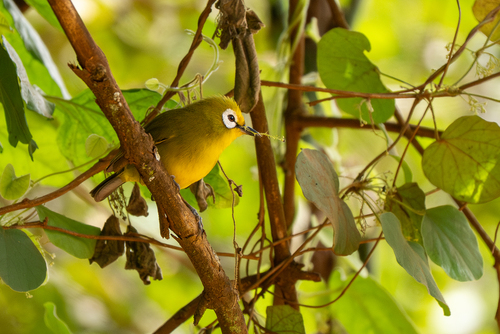
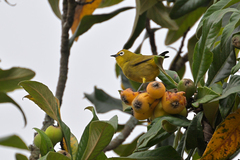
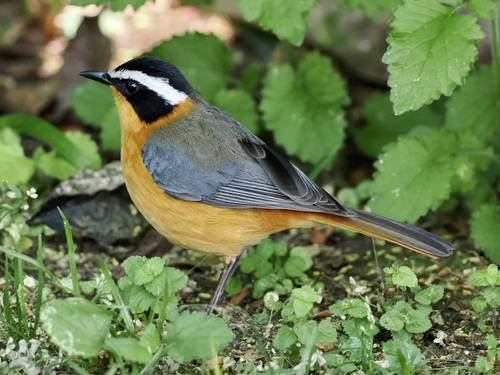
About the Heuglin's White-eye
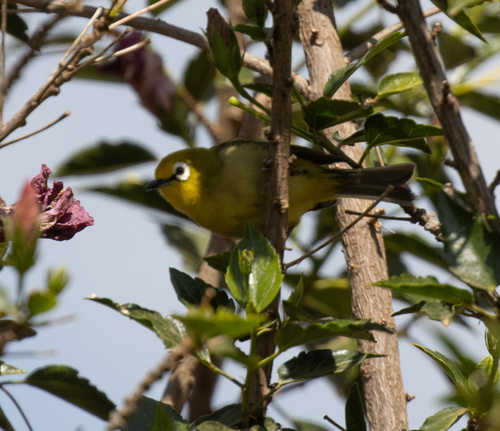
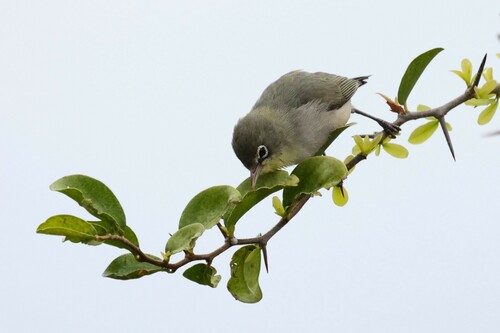
The Ethiopian white-eye (Zosterops poliogastrus), formerly known as Heuglin's white-eye or montane white-eye, is a small passerine bird in the white-eye family Zosteropidae. It is native to the Ethiopian Highlands. Its natural habitats range from subtropical or tropical moist montane forests, to subtropical or tropical high-altitude shrubland, plantations, and rural gardens.
The Ethiopian white-eye was formally described and illustrated in 1861 by the German explorer and ornithologist Theodor von Heuglin based on specimens collected in the "high mountainous district of Abbyssinia". He placed it in the genus Zosterops and coined the binomial name Zosterops poliogastra. As Zosterops is masculine, this must be corrected to Zosterops poliogastrus. The genus name combines the Ancient Greek ζωστηρος/zōstēros meaning "belt" or "girdle" with ωπος/ōpos meaning "eye". The specific epithet poliogastrus combines the Ancient Greek πολιος/polios meaning "grey" with γαστηρ/gastēr, γαστρος/gastros meaning "belly".
The Ethiopian white-eye was formerly treated as a polytypic species with the English name "montane white-eye" or "broad-ringed white-eye". Based mainly of evidence from molecular... Wikipedia →