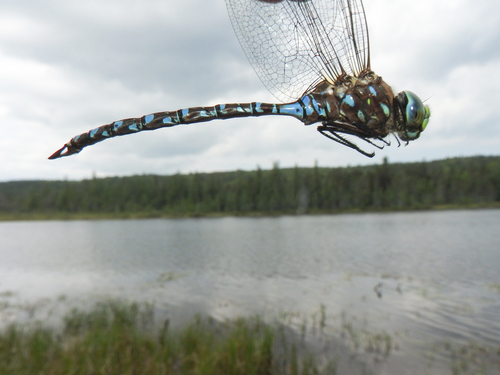
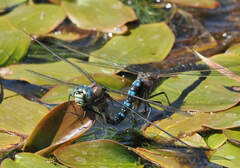
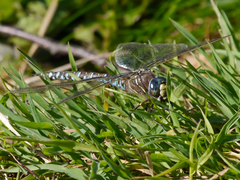
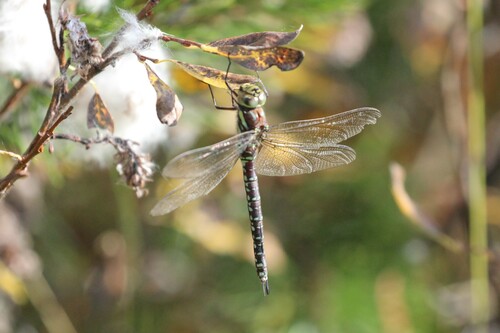
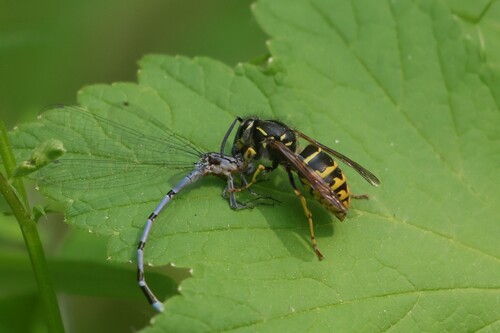
Variable Darner

Variable Darner

Aeshna interrupta

Daily sighting probability ~10% · With luck
at Anchorage

In 3 days ~30% in a week ~50%

14 Verified sightings at Anchorage
76 In all 6 parks From 2019 to 2026
August Best month
☀️ Diurnal When it's spotted

About the Variable Darner

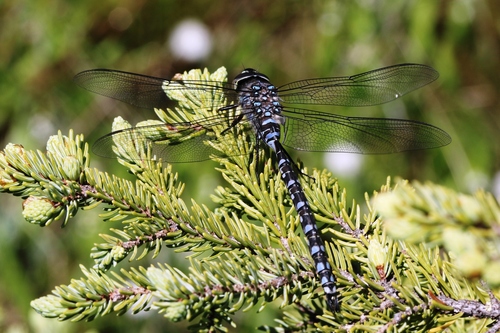
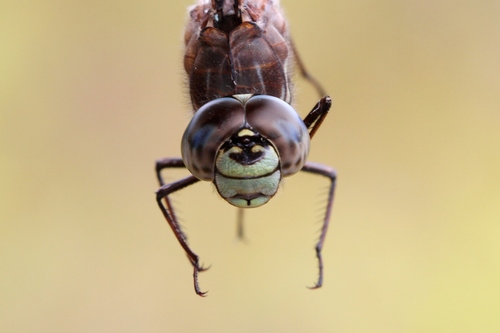
The variable darner (Aeshna interrupta) is a dragonfly of the family Aeshnidae, native from Alaska through the Northwest Territories to Newfoundland, south to New Hampshire and Michigan in the eastern United States, and to the mountains of New Mexico, Arizona, and California in the west. It's named after the distinctive broken stripes on the sides of the thorax of many male specimens. It lives in many habitats from northern and mountain peatlands to cattail marshes and temporary pools. It is the characteristic species of grassland ponds. Wikipedia →

Global Distribution

Parks Where Found

# Park Country Daily sighting probability
1 Riding Mountain National Park 🇨🇦 Canada
~20%
2 Elk Island National Park 🇨🇦 Canada
~10%
3 Grand Teton National Park 🇺🇸 United States
~10%
4 Yosemite National Park 🇺🇸 United States
~10%
5 Rocky Mountain National Park 🇺🇸 United States
~10%
6 Banff National Park 🇨🇦 Canada
~10%

Cities Where Found

# City Country Daily sighting probability
1 Anchorage 🇺🇸 United States
~10%
2 Edmonton 🇨🇦 Canada
~10%
3 Calgary 🇨🇦 Canada
~10%
4 Montreal 🇨🇦 Canada
<5%
5 Toronto 🇨🇦 Canada
<5%
6 Seattle 🇺🇸 United States
<5%

Before you go

What are the chances of seeing a Variable Darner in Anchorage?

With luck

About 10% of wildlife watchers report a Variable Darner sighting in Anchorage on a given day, based on 14 verified sightings from GBIF citizen-science data. It is the 17th most-seen of the 59 insects we can rate there. Over three days the chance rises to about 30%, and over a week to about 50%, if each day is a fresh chance.

When is the best time to see a Variable Darner in Anchorage?

August

In that month about 30% of wildlife watchers report a Variable Darner in Anchorage on a given day, against under 5% in September to May, the lowest months. That is one of Anchorage's wettest months, with about 110 mm of rain against 40 mm in April.

What time of day is best to see a Variable Darner?

Between 1 and 4 pm

Across all the parks we cover, that three-hour window holds the most Variable Darner sightings with a recorded time, and about 9 in 10 of them come between 6 am and 6 pm: it is a daytime animal.

Is Anchorage the best place to see a Variable Darner?

Yes

Of the 6 cities where we can rate Variable Darner sightings, Anchorage has the highest daily chance: about 10%. Next come Edmonton (Canada, about 10%) and Calgary (Canada, about 10%).

Which relatives of the Variable Darner live in Anchorage?

Same genus: Aeshna

The closest relatives of the Variable Darner that you can see in Anchorage (genus Aeshna, Hawkers and Typical Darners) are Sedge Darner (about 10%), Lake Darner (about 10%) and Zigzag Darner (about 10%), with each one's daily chance of a sighting.

Where does the Variable Darner sighting chance come from?

GBIF citizen-science records

It is estimated from how often the Variable Darner is recorded against all the insects logged in Anchorage (14 verified sightings), calibrated against known sighting rates. Figures are rounded to the nearest 10% because citizen-science data supports honest approximations, not decimals, and months with records from fewer than five people show "—". How it works.

← Back to Anchorage