Milbert's Tortoiseshell

Milbert's Tortoiseshell

Aglais milberti

Daily sighting probability ~20% · Possible
at Anchorage

In 3 days ~40% in a week ~70%

35 Verified sightings at Anchorage
503 In all 14 parks From 2019 to 2026
April Best month
☀️ Diurnal When it's spotted

About the Milbert's Tortoiseshell

Aglais milberti, the fire-rim tortoiseshell or Milbert's tortoiseshell, is considered the only species of the proposed Aglais genus that occurs in North America. It is one of two tortoiseshell butterflies in North America. The other species is the nymphata californica or California Tortoiseshell (California tortoiseshell).

The data is muddled on the range of the two recognized tortoiseshell species. Similar species distributions exist and have separate migration patterns for other butterflies with the same geographical ranges. Western monarchs, for example, migrate between southern BC, coastal CA and Pacific Mexico. Eastern monarchs can be found east of the Rockies in Canada and migrate along the Eastern American coast into interior Mexican highlands. The mountain ranges are often physical borders between distinct populations and migration. (Danaus plexippus)

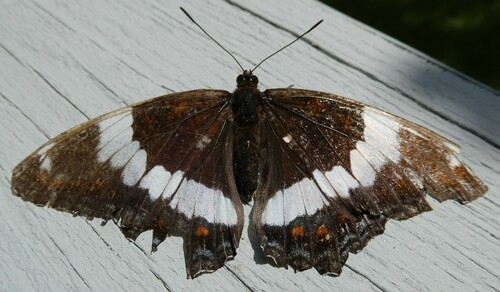
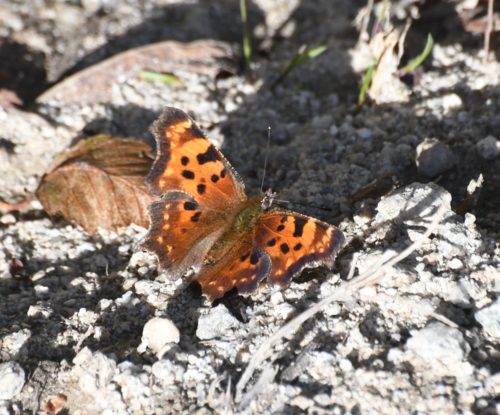
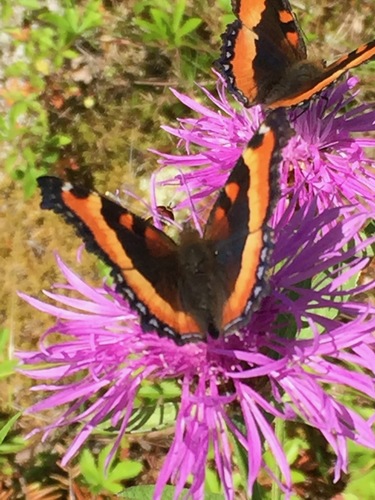
The wingspan is between 4.2 and 6.3 cm and the forewing's tips are squared off. The upperside is black with wide orange submarginal bands; this orange slightly fades to yellow near the inner edge. Both wings have narrow black marginal borders; the hindwing may have blue spots.

This is... Wikipedia →

Global Distribution

Parks Where Found

# Park Country Daily sighting probability
1 Wood Buffalo National Park 🇨🇦 Canada
~40%
2 Elk Island National Park 🇨🇦 Canada
~40%
3 Gros Morne National Park 🇨🇦 Canada
~30%
4 Riding Mountain National Park 🇨🇦 Canada
~20%
5 Banff National Park 🇨🇦 Canada
~20%
6 Glacier National Park 🇺🇸 United States
~20%
7 Jasper National Park 🇨🇦 Canada
~20%
8 Grand Teton National Park 🇺🇸 United States
~20%
9 Yellowstone National Park 🇺🇸 United States
~10%
10 Sequoia and Kings Canyon National Parks 🇺🇸 United States
~10%
11 Rocky Mountain National Park 🇺🇸 United States
~10%
12 Great Bear Rainforest 🇨🇦 Canada
~10%
13 Yosemite National Park 🇺🇸 United States
~10%
14 Olympic National Park 🇺🇸 United States
<5%

Cities Where Found

# City Country Daily sighting probability
1 Anchorage 🇺🇸 United States
~20%
2 Edmonton 🇨🇦 Canada
~10%
3 Calgary 🇨🇦 Canada
~10%
4 Vancouver 🇨🇦 Canada
~10%
5 Salt Lake City 🇺🇸 United States
<5%
6 Denver 🇺🇸 United States
<5%
7 Montreal 🇨🇦 Canada
<5%
8 Seattle 🇺🇸 United States
<5%
9 Toronto 🇨🇦 Canada
<5%

Before you go

What are the chances of seeing a Milbert's Tortoiseshell in Anchorage?

Possible

About 20% of wildlife watchers report a Milbert's Tortoiseshell sighting in Anchorage on a given day, based on 35 verified sightings from GBIF citizen-science data. It is the 4th most-seen of the 59 insects we can rate there. Over three days the chance rises to about 40%, and over a week to about 70%, if each day is a fresh chance.

When is the best time to see a Milbert's Tortoiseshell in Anchorage?

April

In that month about 50% of wildlife watchers report a Milbert's Tortoiseshell in Anchorage on a given day, against under 5% in October to March, the lowest months. That is one of Anchorage's driest months, with about 40 mm of rain against 120 mm in September.

What time of day is best to see a Milbert's Tortoiseshell?

Between 11 am and 2 pm

Across all the parks we cover, that three-hour window holds the most Milbert's Tortoiseshell sightings with a recorded time, and nearly all of them come between 6 am and 6 pm: it is a daytime animal.

Is Anchorage the best place to see a Milbert's Tortoiseshell?

Yes

Of the 9 cities where we can rate Milbert's Tortoiseshell sightings, Anchorage has the highest daily chance: about 20%. Next come Edmonton (Canada, about 10%) and Calgary (Canada, about 10%).

Which relatives of the Milbert's Tortoiseshell live in Anchorage?

Same family: Nymphalidae

The closest relatives of the Milbert's Tortoiseshell that you can see in Anchorage (family Nymphalidae, Brush-footed Butterflies) are Mourning Cloak (about 10%), Red-Spotted Admiral (about 10%) and Green Comma (about 10%), with each one's daily chance of a sighting.

Where does the Milbert's Tortoiseshell sighting chance come from?

GBIF citizen-science records

It is estimated from how often the Milbert's Tortoiseshell is recorded against all the insects logged in Anchorage (35 verified sightings), calibrated against known sighting rates. Figures are rounded to the nearest 10% because citizen-science data supports honest approximations, not decimals, and months with records from fewer than five people show "—". How it works.

← Back to Anchorage