
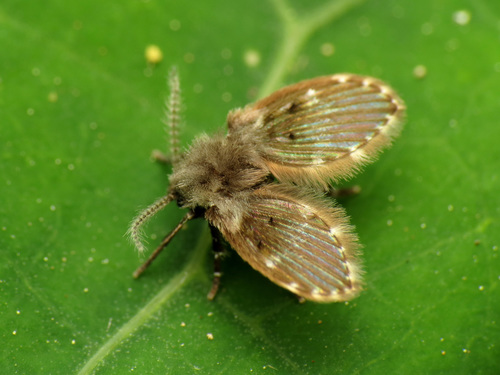
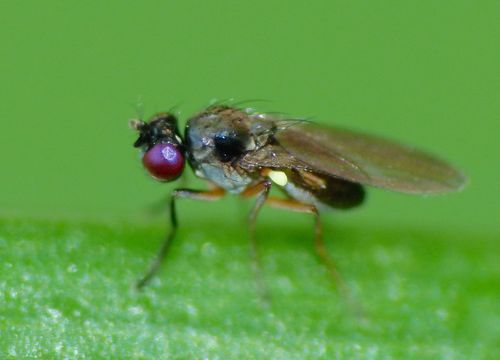
Large Hover Fly

Large Hover Fly

Melangyna novaezelandiae

Endemic
Daily sighting probability ~10% · With luck
at Auckland

In 3 days ~20% in a week ~50%

57 Verified sightings at Auckland
49 In all 4 parks From 2019 to 2026
November Best month
☀️ Diurnal When it's spotted

About the Large Hover Fly

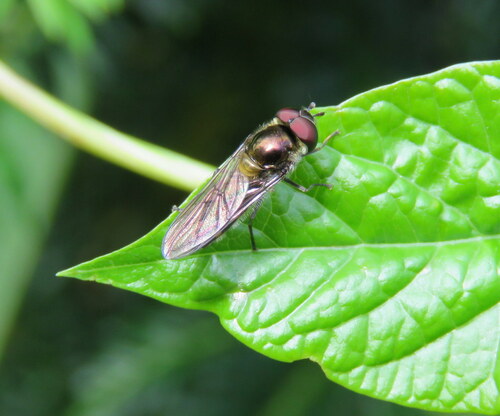
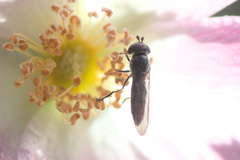
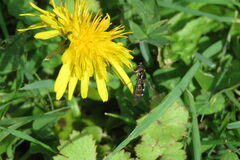
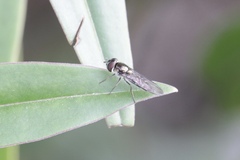
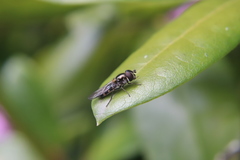
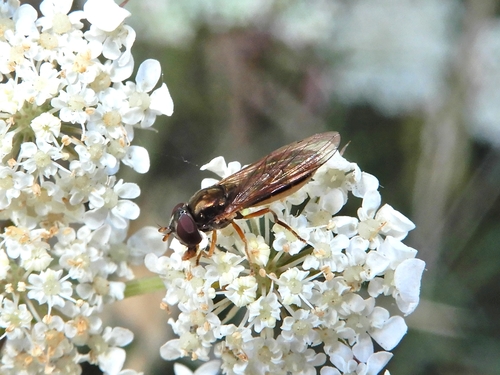
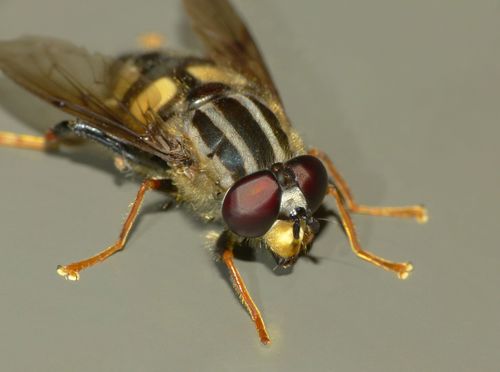
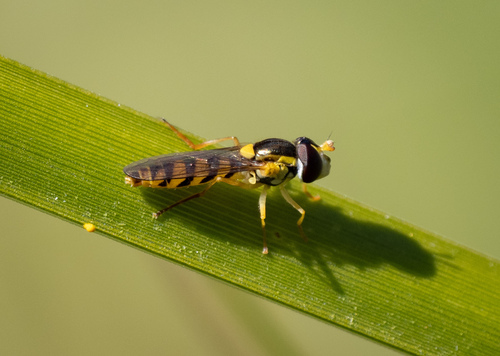
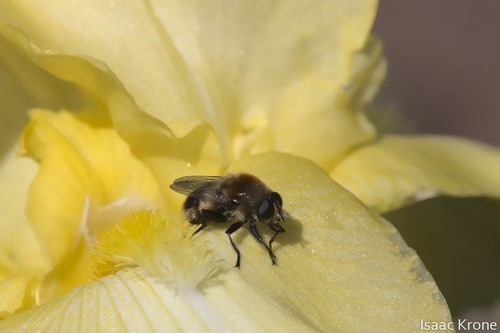
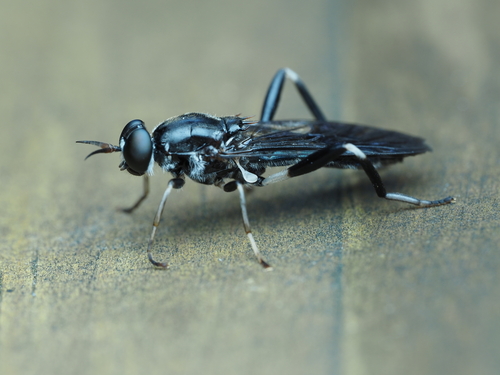
Melangyna novaezelandiae, commonly referred to as the large hoverfly, is a hoverfly species found in New Zealand. They are widespread throughout the country and abundant during summer months. They occur in a variety of habitats, including in subalpine and agricultural zones. As adults, they are around 9–12 millimetres in length, with a blackish body that has yellowish markings on the abdomen. The larvae vaguely resemble green slugs. The adults live for around 19–45 days and lay their eggs near aphid colonies. As adults, they feed on pollen and nectar from a wide range of flower species. Their pollen diet is considered to be essential for the females to produce eggs. Because of this, females tend to feed on pollen more than males. The larvae are predators and feed on aphids, but will also target Lepidoptera larvae such as Pieris rapae. Because of this diet, the larvae have been considered for use as a biocontrol agent. The species was first described in 1849 by English entomologist Francis Walker. A later description, however, is the main basis for this species. They are parasitised by Diplazon laetatorius, an Ichneumonidae wasp introduced to New Zealand.

Melangyna novaezelandiae... Wikipedia →

Global Distribution

Parks Where Found

# Park Country Daily sighting probability
1 Aoraki Mount Cook National Park 🇳🇿 New Zealand
~20%
2 Arthur's Pass National Park 🇳🇿 New Zealand
~20%
3 Fiordland National Park 🇳🇿 New Zealand
~10%
4 Rakiura National Park 🇳🇿 New Zealand
~10%

Cities Where Found

# City Country Daily sighting probability
1 Auckland 🇳🇿 New Zealand
~10%

Before you go

What are the chances of seeing a Large Hover Fly in Auckland?

With luck

About 10% of wildlife watchers report a Large Hover Fly sighting in Auckland on a given day, based on 57 verified sightings from GBIF citizen-science data. It is the 119th most-seen of the 689 insects we can rate there. Over three days the chance rises to about 20%, and over a week to about 50%, if each day is a fresh chance.

When is the best time to see a Large Hover Fly in Auckland?

November

In that month about 20% of wildlife watchers report a Large Hover Fly in Auckland on a given day, against under 5% in May, the lowest month.

What time of day is best to see a Large Hover Fly?

Between 10 am and 1 pm

Across all the parks we cover, that three-hour window holds the most Large Hover Fly sightings with a recorded time, and about 9 in 10 of them come between 6 am and 6 pm: it is a daytime animal.

Where else can you see a Large Hover Fly?

Only Auckland, in our data

Auckland is the only city on Wallace's Line with enough records to rate Large Hover Fly sightings: about 10% of wildlife watchers there report one on a given day.

Which relatives of the Large Hover Fly live in Auckland?

Same family: Syrphidae

The closest relatives of the Large Hover Fly that you can see in Auckland (family Syrphidae, Hover Flies) are Common Drone Fly (about 20%) and Small Hover Fly (about 10%), with each one's daily chance of a sighting.

Where does the Large Hover Fly sighting chance come from?

GBIF citizen-science records

It is estimated from how often the Large Hover Fly is recorded against all the insects logged in Auckland (57 verified sightings), calibrated against known sighting rates. Figures are rounded to the nearest 10% because citizen-science data supports honest approximations, not decimals, and months with records from fewer than five people show "—". How it works.

← Back to Auckland