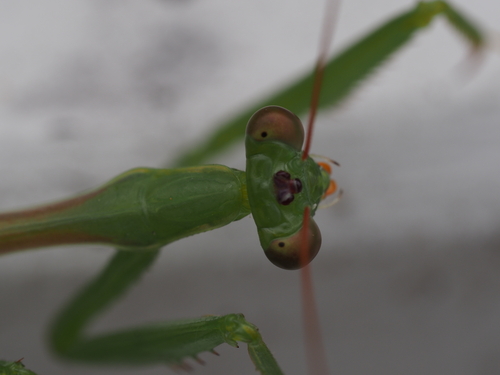
Talitropsis sedilloti
Daily sighting probability <5% · Rare
at Auckland

In 3 days ~10% in a week ~30%

17 Verified sightings at Auckland
84 In all 3 parks From 2019 to 2026
July Best month
🌙 Nocturnal When it's spotted

About the Talitropsis sedilloti

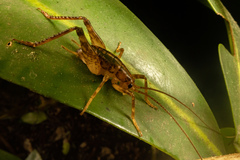
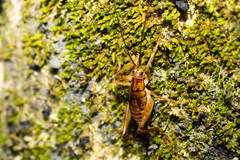
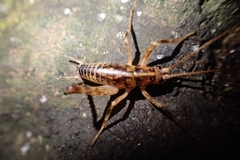
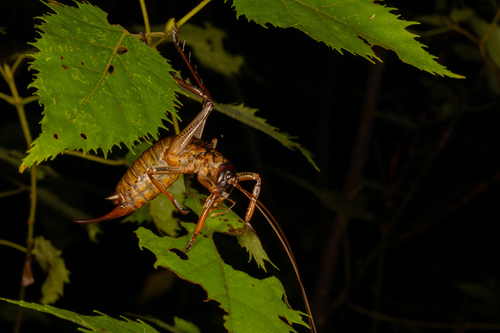
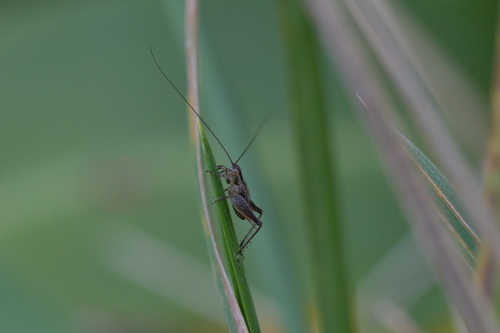
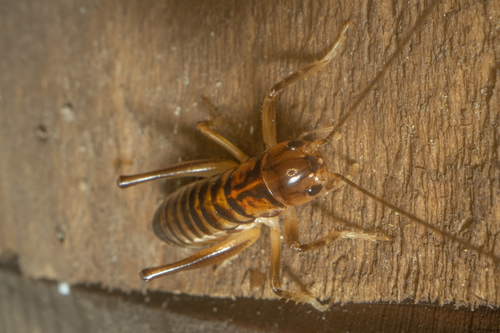
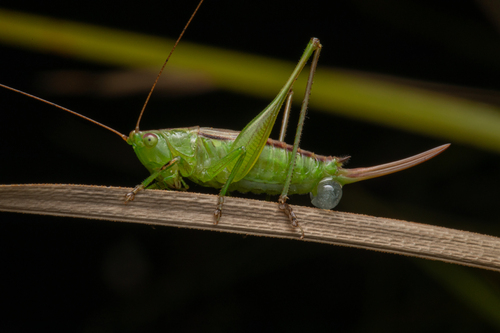
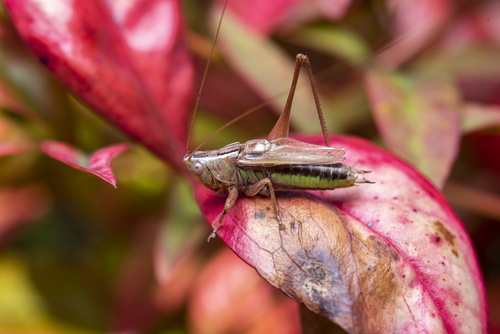
Talitropsis sedilloti is a species of flightless wētā, in the family Rhaphidophoridae (cave crickets, cave wētā, or camel crickets), endemic to Aotearoa New Zealand. This species is common in forests throughout New Zealand and during the day can be found hiding in holes in tree branches.

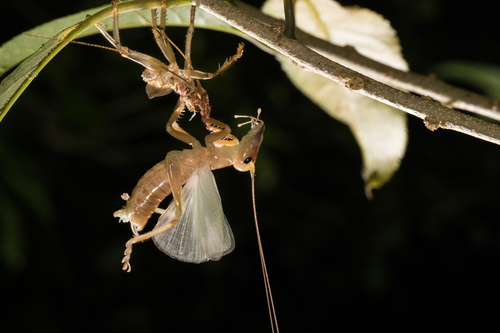
Cave wētā have extra-long antennae and long, slender legs. They lack hearing organs (tympana), but they are sensitive to ground vibrations, this is enabled by pads on their feet. Specialised hairs on the cerci and organs on the antennae are also good at capture of low frequency vibrations in the air.

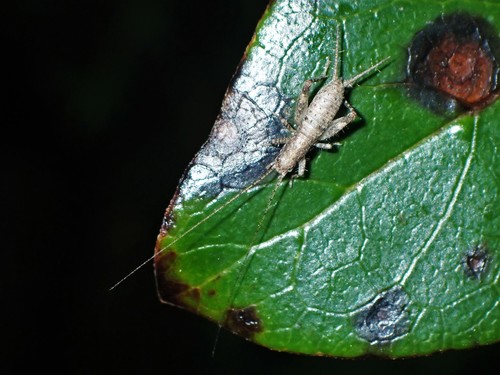
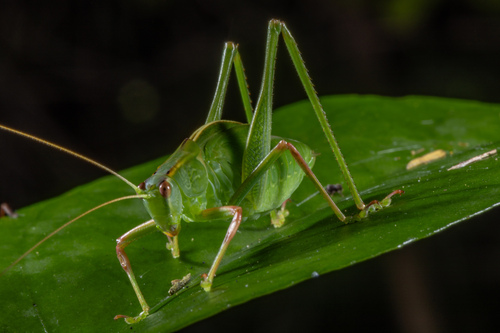
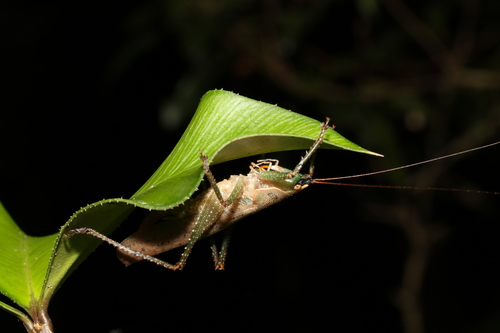
Talitropsis sedilloti adults range from about 14mm for females to 18mm for males. Adults are a shiny, pale orange brown. Their hind tibiae have two rows of prominent spines on either side down most of the length. This feature helps distinguish them from other tokoriro (cave wētā) as others species have very fine spines. Juveniles are darker in colour with an evident yellow diamond on the dorsal abdominal surface.

Talitropsis is a New Zealand genus of wētā belonging to the family Rhaphidophoridae, all species have small to medium bodies and live in forests not caves. Two... Wikipedia →
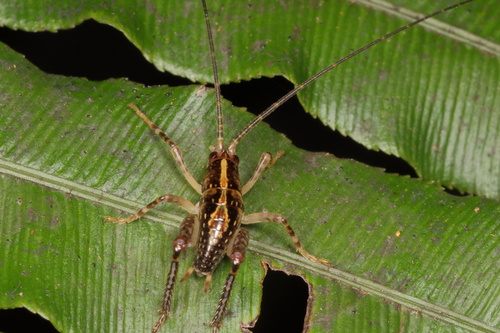
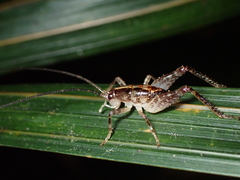
Global Distribution

Parks Where Found

# Park Country Daily sighting probability
1 Rakiura National Park 🇳🇿 New Zealand
~20%
2 Egmont National Park 🇳🇿 New Zealand
~20%
3 Fiordland National Park 🇳🇿 New Zealand
~10%

Cities Where Found

# City Country Daily sighting probability
1 Auckland 🇳🇿 New Zealand
<5%

Before you go

What are the chances of seeing a Talitropsis sedilloti in Auckland?

Rare

Under 5% of wildlife watchers report a Talitropsis sedilloti sighting in Auckland on a given day, based on 17 verified sightings from GBIF citizen-science data. It is the 370th most-seen of the 689 insects we can rate there. Over three days the chance rises to about 10%, and over a week to about 30%, if each day is a fresh chance.

When is the best time to see a Talitropsis sedilloti in Auckland?

February–March, July and September

In those months about 10% of wildlife watchers report a Talitropsis sedilloti in Auckland on a given day, against under 5% in April–June, August and October–January, the lowest months.

What time of day is best to see a Talitropsis sedilloti?

Between 9 pm and midnight

Across all the parks we cover, that three-hour window holds the most Talitropsis sedilloti sightings with a recorded time, and about 9 in 10 of them come between 6 pm and 6 am: it is mostly seen at night.

Where else can you see a Talitropsis sedilloti?

Only Auckland, in our data

Auckland is the only city on Wallace's Line with enough records to rate Talitropsis sedilloti sightings: under 5% of wildlife watchers there report one on a given day.

Where does the Talitropsis sedilloti sighting chance come from?

GBIF citizen-science records

It is estimated from how often the Talitropsis sedilloti is recorded against all the insects logged in Auckland (17 verified sightings), calibrated against known sighting rates. Figures are rounded to the nearest 10% because citizen-science data supports honest approximations, not decimals, and months with records from fewer than five people show "—". How it works.

← Back to Auckland