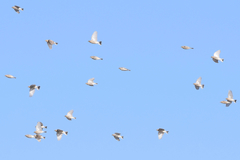
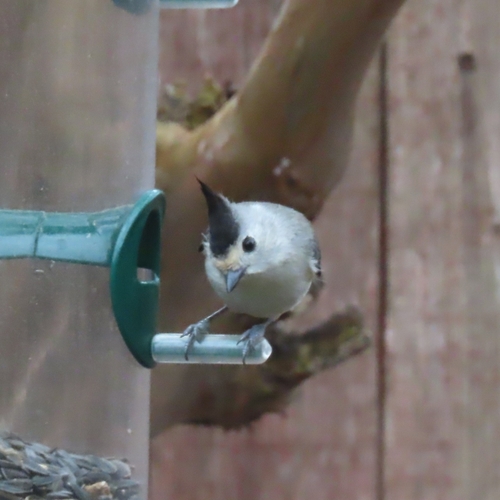
Chestnut-collared Longspur

Chestnut-collared Longspur

Calcarius ornatus

Silhouette: Sheatherius · PhyloPic

LCNTVUVulnerableENCR
Daily sighting probability <5% · Rare
at Austin

In 3 days <5%

23 Verified sightings at Austin
11 In 1 park From 2019 to 2026
April Best month
☀️ Diurnal When it's spotted

About the Chestnut-collared Longspur

The chestnut-collared longspur (Calcarius ornatus) is a species of bird in the family Calcariidae. Like the other longspurs, it is a small ground-feeding bird that primarily eats seeds. It breeds in prairie habitats in Canada and the northern United States and winters to the south in the United States and Mexico.

These birds have a short conical bill, a streaked back and a white tail with a dark tip. In breeding plumage, the male has black underparts, a chestnut nape, a yellow throat and a black crown. Other birds have light brown underparts, a dark crown, brown wings and may have some chestnut on the nape.

Measurements: Length: 5.1–6.5 in (13–16.5 cm) Weight: 0.6–0.8 oz (17–23 g) Wingspan: 25–27 cm This bird breeds in short and mixed grass prairies in central Canada and the north central United States. In winter, they migrate in flocks to prairies and open fields in the southern United States and Mexico. Like other prairie birds, they have disappeared from some areas because of habitat loss but are still fairly common.

Controlled burns may benefit this species as they feed on low-growing plants that are more easily spotted after a fire... Wikipedia →

Sounds

Call0:27

United States · 2017

© Matt Wistrand · XC373364 · CC BY-NC-SA 4.0

Song0:06

United States · 2015

© Paul Marvin · XC293744 · CC BY-NC-SA 4.0

Flight call0:42

United States · 2014

© Richard E. Webster · XC196475 · CC BY-NC-SA 4.0

Global Distribution

Parks Where Found

# Park Country Daily sighting probability
1 Badlands National Park 🇺🇸 United States
<5%

More parks will be added in future updates.

Cities Where Found

# City Country Daily sighting probability
1 San Francisco 🇺🇸 United States
<5%
2 San Diego 🇺🇸 United States
<5%
3 Austin 🇺🇸 United States
<5%
4 Denver 🇺🇸 United States
<5%
5 Chicago 🇺🇸 United States
<5%
6 Los Angeles 🇺🇸 United States
<5%

Before you go

What are the chances of seeing a Chestnut-collared Longspur in Austin?

Rare

Under 5% of wildlife watchers report a Chestnut-collared Longspur sighting in Austin on a given day, based on 23 verified sightings from GBIF citizen-science data. It is the 264th most-seen of the 277 birds we can rate there. Over three days the chance rises to under 5%, if each day is a fresh chance.

When is the best time to see a Chestnut-collared Longspur in Austin?

Any time of year

In every month with enough records, under 5% of wildlife watchers report a Chestnut-collared Longspur in Austin on a given day, so our monthly data shows no clear season.

What time of day is best to see a Chestnut-collared Longspur?

Between 8 and 11 am

Across all the parks we cover, that three-hour window holds the most Chestnut-collared Longspur sightings with a recorded time, and about 9 in 10 of them come between 6 am and 6 pm: it is a daytime animal.

Is Austin the best place to see a Chestnut-collared Longspur?

Among the best

Of the 6 cities where we can rate Chestnut-collared Longspur sightings, Austin ranks 3rd at under 5%, level with the leaders once rounded. The best odds are in San Francisco (United States, under 5%) and San Diego (United States, under 5%).

Which relatives of the Chestnut-collared Longspur live in Austin?

Same order: Passeriformes

The closest relatives of the Chestnut-collared Longspur that you can see in Austin (order Passeriformes, Perching Birds) are Northern Cardinal (about 90%), Carolina Wren (about 80%) and Blue Jay (about 80%), with each one's daily chance of a sighting.

Where does the Chestnut-collared Longspur sighting chance come from?

GBIF citizen-science records

It is estimated from how often the Chestnut-collared Longspur is recorded against all the birds logged in Austin (23 verified sightings), calibrated against known sighting rates. Figures are rounded to the nearest 10% because citizen-science data supports honest approximations, not decimals, and months with records from fewer than five people show "—". How it works.

← Back to Austin