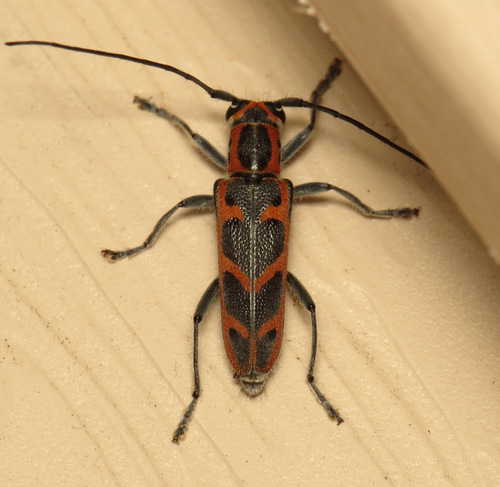
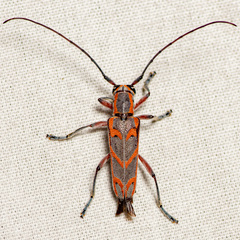
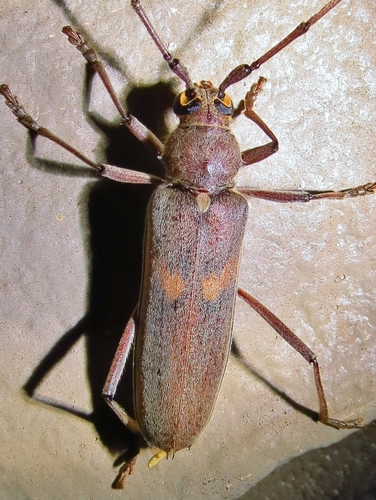
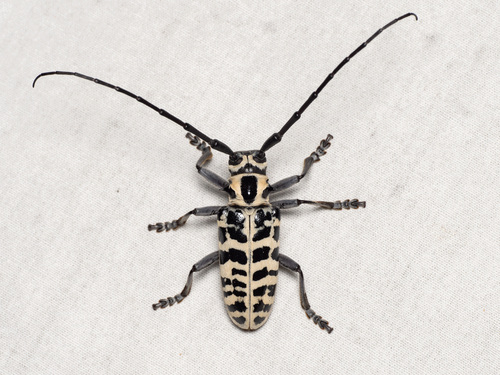
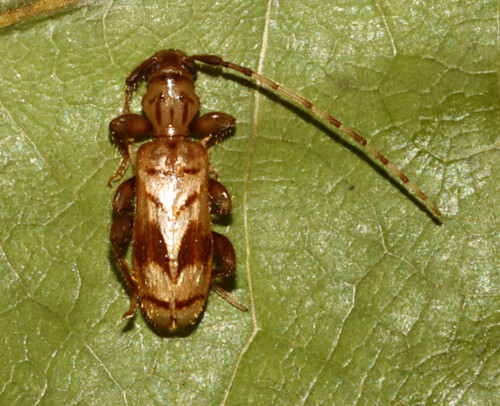
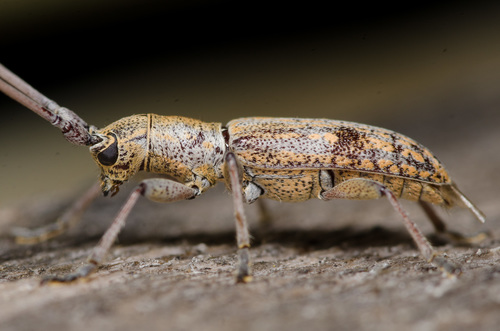
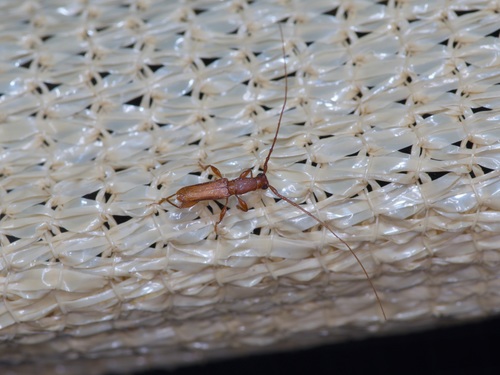
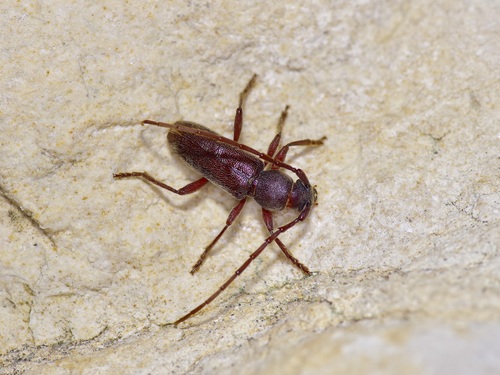
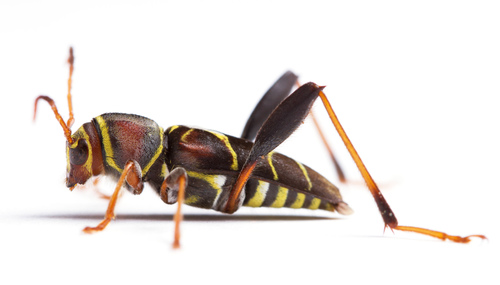
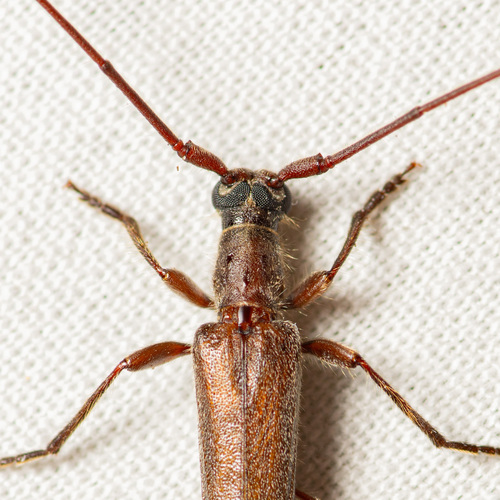
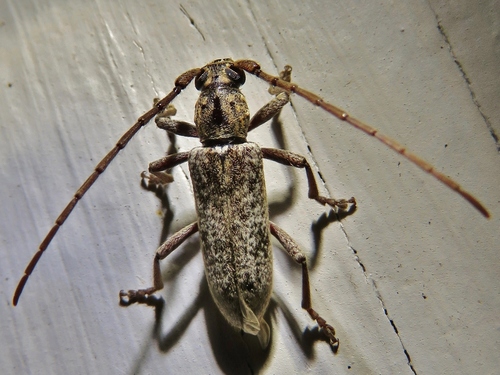
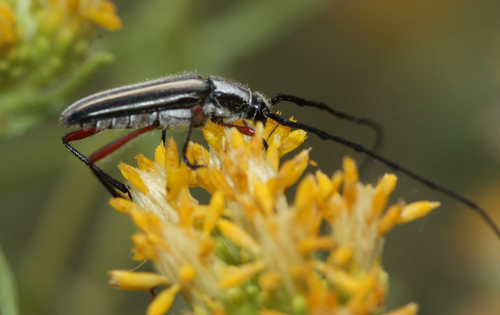
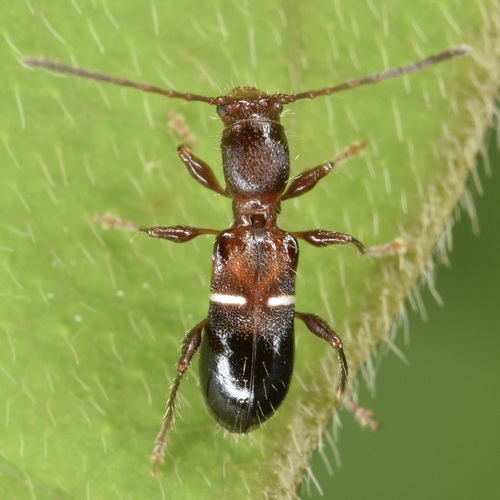
Elm Borer

Elm Borer

Saperda tridentata

Daily sighting probability <5% · Rare
at Austin

In 3 days ~10% in a week ~20%

6 Verified sightings at Austin
May Best month

About the Elm Borer

The elm borer (Saperda tridentata) is a species of beetle in the family Cerambycidae. It was described by Guillaume-Antoine Olivier in 1795. It is known from Canada and the United States. It feeds on Ulmus rubra and Ulmus americana. It acts as a vector for the fungus Ophiostoma ulmi, and as a host for the parasitoid wasp Cenocoelius saperdae. Wikipedia →

Global Distribution

Parks Where Found

# Park Country Daily sighting probability

More parks will be added in future updates.

Cities Where Found

# City Country Daily sighting probability
1 Dallas 🇺🇸 United States
<5%
2 Baltimore 🇺🇸 United States
<5%
3 Montreal 🇨🇦 Canada
<5%
4 Chicago 🇺🇸 United States
<5%
5 Austin 🇺🇸 United States
<5%
6 Toronto 🇨🇦 Canada
<5%

Before you go

What are the chances of seeing an Elm Borer in Austin?

Rare

Under 5% of wildlife watchers report an Elm Borer sighting in Austin on a given day, based on 6 verified sightings from GBIF citizen-science data. It is the 1392nd most-seen of the 1624 insects we can rate there. Over three days the chance rises to about 10%, and over a week to about 20%, if each day is a fresh chance.

When is the best time to see an Elm Borer in Austin?

Any time of year

In every month with enough records, under 5% of wildlife watchers report an Elm Borer in Austin on a given day, so our monthly data shows no clear season.

Is Austin the best place to see an Elm Borer?

Among the best

Of the 6 cities where we can rate Elm Borer sightings, Austin ranks 5th at under 5%, level with the leaders once rounded. The best odds are in Dallas (United States, under 5%), Baltimore (United States, under 5%) and Montreal (Canada, under 5%).

Where does the Elm Borer sighting chance come from?

GBIF citizen-science records

It is estimated from how often the Elm Borer is recorded against all the insects logged in Austin (6 verified sightings), calibrated against known sighting rates. Figures are rounded to the nearest 10% because citizen-science data supports honest approximations, not decimals, and months with records from fewer than five people show "—". How it works.

← Back to Austin