Salvinia Stem Borer Moth

Salvinia Stem Borer Moth

Samea multiplicalis

Daily sighting probability <5% · Rare
at Austin

In 3 days ~10% in a week ~20%

5 Verified sightings at Austin
49 In all 3 parks From 2019 to 2026
November Best month
🌙 Nocturnal When it's spotted

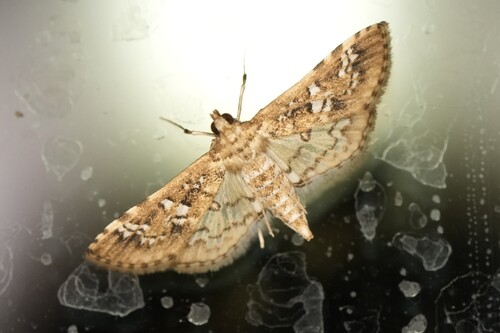
About the Salvinia Stem Borer Moth

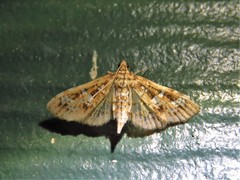
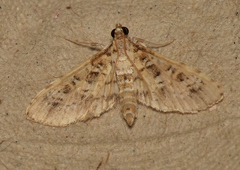
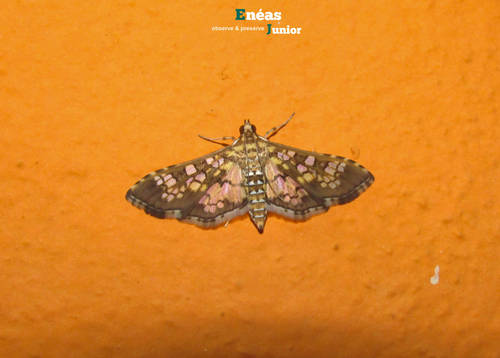
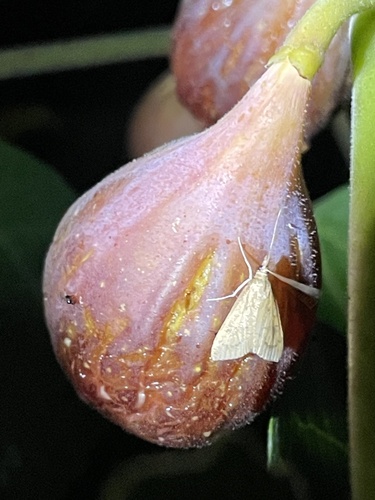
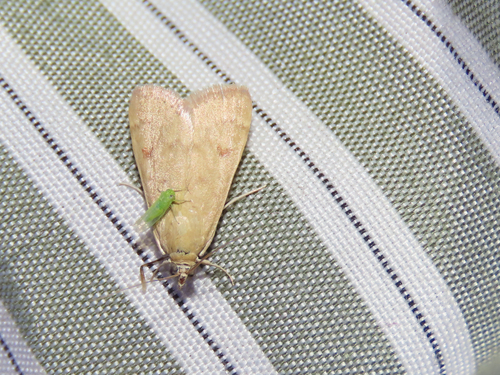
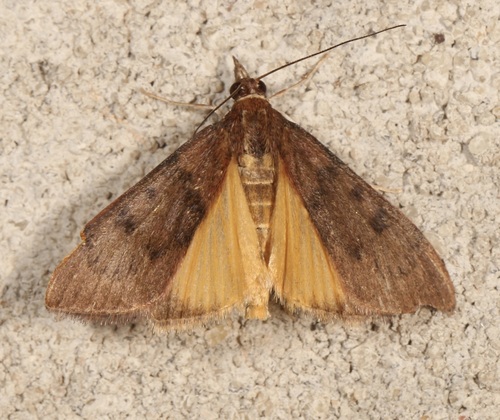
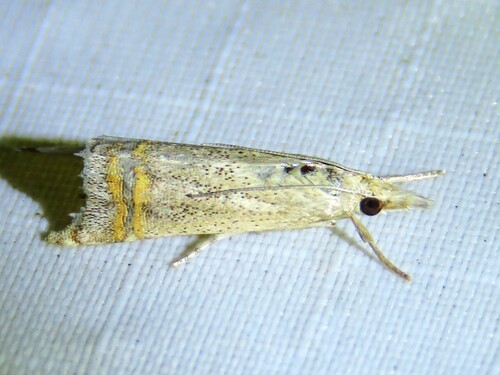
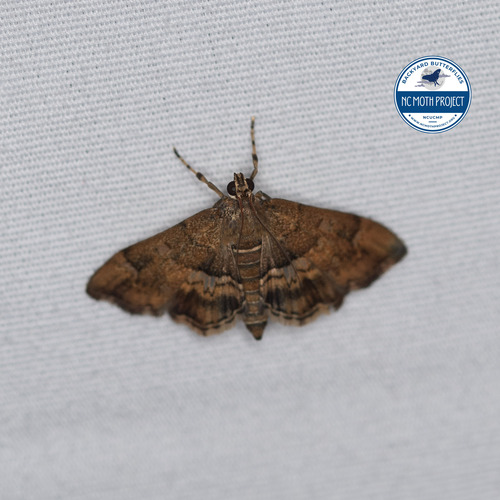
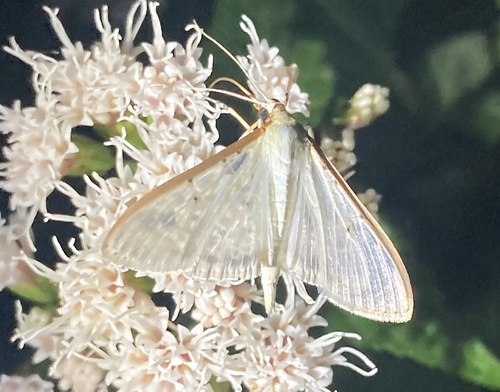
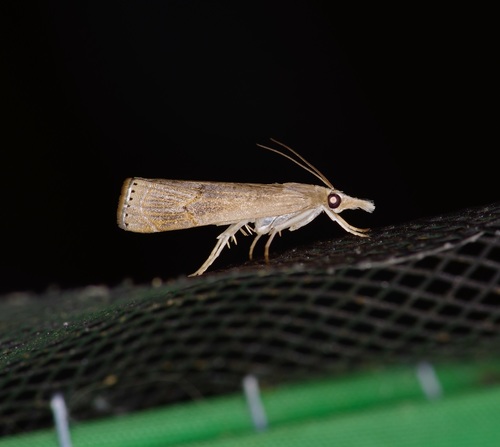
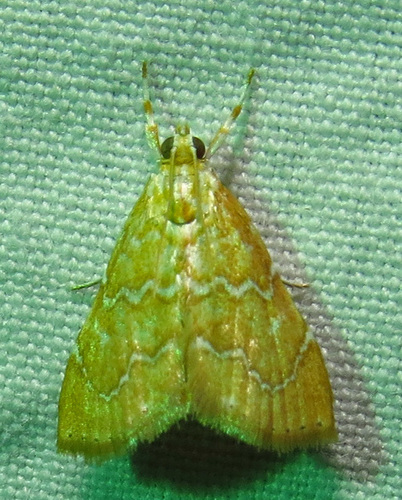
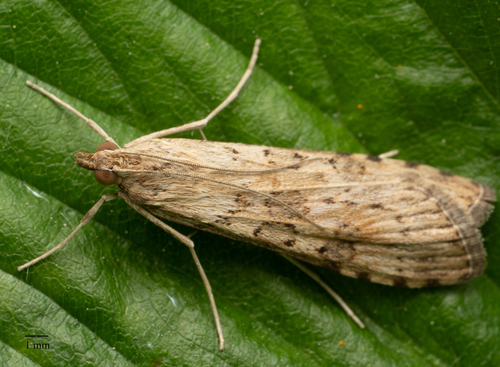
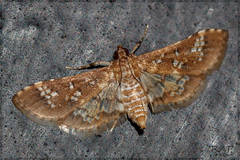
Samea multiplicalis, the salvinia stem-borer moth, is an aquatic moth commonly found in freshwater habitats from the southern United States to Argentina, as well as in Australia where it was introduced in 1981. Salvinia stem-borer moths lay their eggs on water plants like Azolla caroliniana (water velvet), Pistia stratiotes (water lettuce), and Salvinia rotundifolia (water fern). Larval feeding on host plants causes plant death, which makes S. multiplicalis a good candidate for biological control of weedy water plants like Salvinia molesta, an invasive water fern in Australia. However, high rates of parasitism in the moth compromise its ability to effectively control water weeds. S. multiplicalis larvae are a pale yellow to green color, and adults develop tan coloration with darker patterning. The lifespan, from egg to the end of adulthood is typically three to four weeks. The species was first described by Achille Guenée in 1854.

Samea multiplicalis was first observed in Brazil in 1854, and has since been documented across the southeastern United States, as far west as Louisiana. This region constitutes its native range. In 1981, the moth was introduced in Australia... Wikipedia →
Global Distribution

Parks Where Found

# Park Country Daily sighting probability
1 Big Cypress National Preserve 🇺🇸 United States
~10%
2 Merritt Island National Wildlife Refuge 🇺🇸 United States
~10%
3 Everglades National Park 🇺🇸 United States
<5%

Cities Where Found

# City Country Daily sighting probability
1 Brisbane 🇦🇺 Australia
<5%
2 Houston 🇺🇸 United States
<5%
3 Miami 🇺🇸 United States
<5%
4 Austin 🇺🇸 United States
<5%

Before you go

What are the chances of seeing a Salvinia Stem Borer Moth in Austin?

Rare

Under 5% of wildlife watchers report a Salvinia Stem Borer Moth sighting in Austin on a given day, based on 5 verified sightings from GBIF citizen-science data. It is the 1503rd most-seen of the 1624 insects we can rate there. Over three days the chance rises to about 10%, and over a week to about 20%, if each day is a fresh chance.

When is the best time to see a Salvinia Stem Borer Moth in Austin?

Any time of year

In every month with enough records, under 5% of wildlife watchers report a Salvinia Stem Borer Moth in Austin on a given day, so our monthly data shows no clear season.

What time of day is best to see a Salvinia Stem Borer Moth?

Between 9 pm and midnight

Across all the parks we cover, that three-hour window holds the most Salvinia Stem Borer Moth sightings with a recorded time, and about 9 in 10 of them come between 6 pm and 6 am: it is mostly seen at night.

Is Austin the best place to see a Salvinia Stem Borer Moth?

Among the best

Of the 4 cities where we can rate Salvinia Stem Borer Moth sightings, Austin ranks 4th at under 5%, level with the leaders once rounded. The best odds are in Brisbane (Australia, under 5%), Houston (United States, under 5%) and Miami (United States, under 5%).

Where does the Salvinia Stem Borer Moth sighting chance come from?

GBIF citizen-science records

It is estimated from how often the Salvinia Stem Borer Moth is recorded against all the insects logged in Austin (5 verified sightings), calibrated against known sighting rates. Figures are rounded to the nearest 10% because citizen-science data supports honest approximations, not decimals, and months with records from fewer than five people show "—". How it works.

← Back to Austin