Scarce Black Arches

Scarce Black Arches

Nola aerugula

Daily sighting probability <5% · Rare
at Beijing

In 3 days ~10% in a week ~30%

14 Verified sightings at Beijing
45 In all 2 parks From 2019 to 2026
August Best month
☀️🌙 Day & Night When it's spotted

About the Scarce Black Arches

Nola aerugula, the scarce black arches, is a moth of the family Nolidae found in Asia and Europe. The species was first described by the German entomologist, Jacob Hübner in 1793. Nola aerugula aerugula Nola aerugula holsatica Sauber, 1916 (Denmark, the Netherlands) – many authors consider holsatica to be a full species.

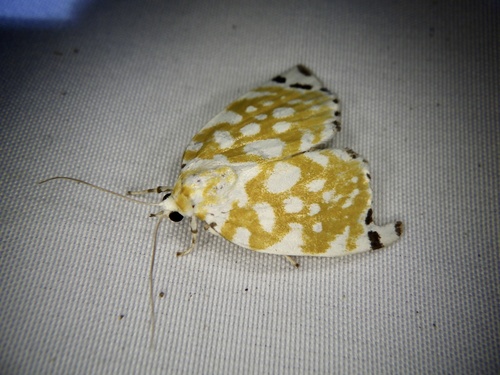
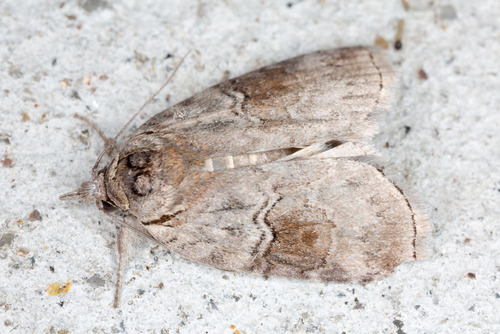
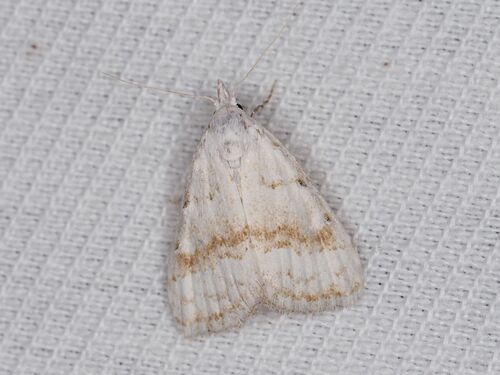
The wingspan is 15–20 mm. These small drab moths show quite variable colors and patterns. The basic color may be gray, brownish or almost white, with brown transverse bands. There are also bright and dark specimens with high-contrast patterns. Forewings are almost triangular with a rounded basal area. The rear wings are gray or brownish. The body is cylindrical. The antennas are filamentous, about half as long as forewings.

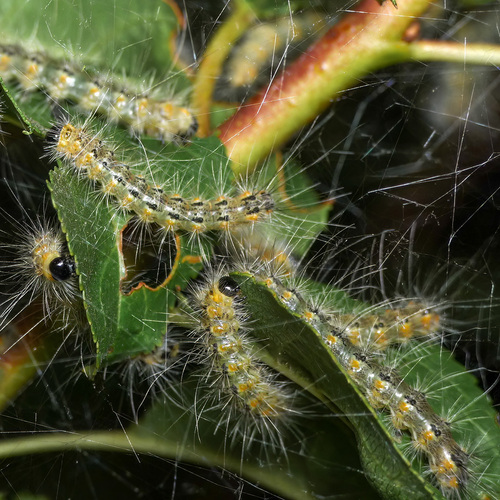
Adults are on wing from June to August in one generation. Males begin to fly just before sunset, and can sometimes be seen in swarms in search of females. The larvae mainly feed on clover (Trifolium) and common bird's-foot trefoil (Lotus corniculatus), but also birch (Betula species), willow (Salix species) and poplar (Populus species). The larvae of ssp. holsatica feed on petty whin (Genista anglica... Wikipedia →
Global Distribution

Parks Where Found

# Park Country Daily sighting probability
1 Wadden Sea National Park 🇩🇪 Germany
~10%
2 Bavarian Forest National Park 🇩🇪 Germany
<5%

Cities Where Found

# City Country Daily sighting probability
1 Beijing 🇨🇳 China
<5%

Before you go

What are the chances of seeing a Scarce Black Arches in Beijing?

Rare

Under 5% of wildlife watchers report a Scarce Black Arches sighting in Beijing on a given day, based on 14 verified sightings from GBIF citizen-science data. It is the 184th most-seen of the 401 insects we can rate there. Over three days the chance rises to about 10%, and over a week to about 30%, if each day is a fresh chance.

When is the best time to see a Scarce Black Arches in Beijing?

June to August

In those months about 10% of wildlife watchers report a Scarce Black Arches in Beijing on a given day, against under 5% in September to May, the lowest months. Those are among Beijing's wettest months, with about 110 mm of rain a month against almost none in January.

What time of day is best to see a Scarce Black Arches?

Between 10 pm and 1 am

Across all the parks we cover, that three-hour window holds the most Scarce Black Arches sightings with a recorded time, and about 6 in 10 of them come between 6 pm and 6 am: it is seen both by day and at night.

Where else can you see a Scarce Black Arches?

Only Beijing, in our data

Beijing is the only city on Wallace's Line with enough records to rate Scarce Black Arches sightings: under 5% of wildlife watchers there report one on a given day.

Where does the Scarce Black Arches sighting chance come from?

GBIF citizen-science records

It is estimated from how often the Scarce Black Arches is recorded against all the insects logged in Beijing (14 verified sightings), calibrated against known sighting rates. Figures are rounded to the nearest 10% because citizen-science data supports honest approximations, not decimals, and months with records from fewer than five people show "—". How it works.

← Back to Beijing