About the White-Footed Ant
Technomyrmex albipes, commonly known as the white-footed ant, is a species of ant first described in 1861 from Sulawesi, Indonesia by the British entomologist Frederick Smith. Invasive pest ants in Florida, previously identified as T. albipes, have now been separated as Technomyrmex difficilis, both forming part of a species complex with a worldwide distribution.
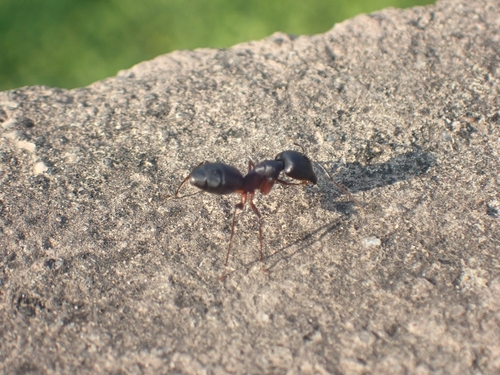
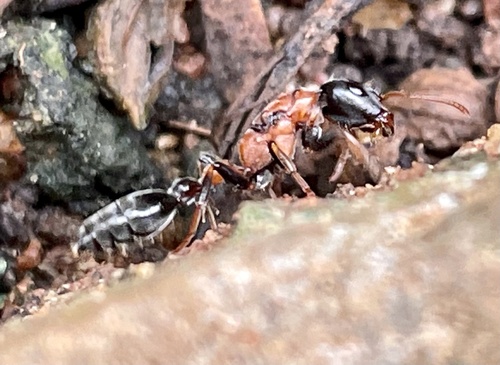
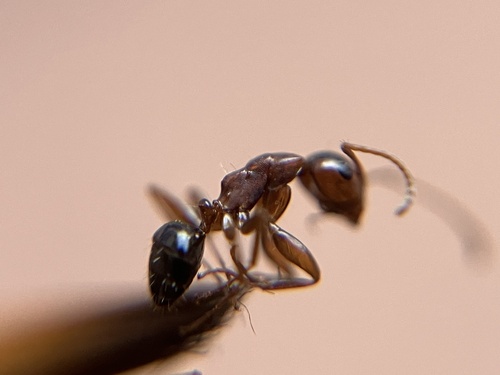
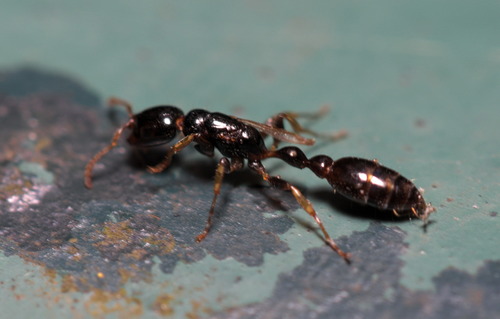
T. albipes is a small black ant some 2 to 4 mm (0.08 to 0.16 in) long with the lower part of the limbs pale. Workers are chocolate-black with pale lower limbs, antennae with twelve segments and a flattened petiolar node. It differs from T. difficilis in lacking the pair of setae (bristles) that that species has on the back of its head.
The white-footed ant is native to the Indo-Pacific area, and has been introduced into Australia, Africa, North America, the Caribbean and parts of Asia. It inhabits dry forests and open locations. Tent-like nests are made out of debris in trees, bushes, rotten logs, under rocks, in leaf litter and similar places. It also nests in man-made structures such as wall cavities and attics.
The colony structure of this ant is unusual; there... Wikipedia →