About the Hawthorn Moth
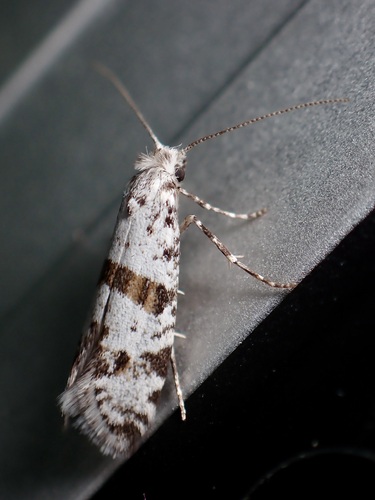
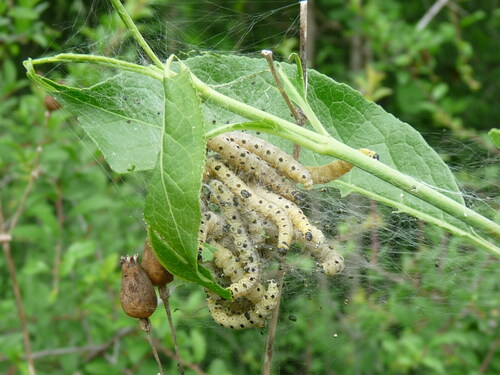
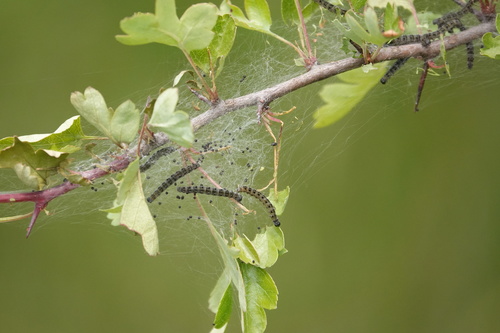
Scythropia crataegella, the hawthorn moth, is a species of moth in the monotypic genus Scythropia. It is found in western Eurasia. Described as Phalaena crataegella by Linnaeus in 1767, it was made the type species of Scythropia by Jacob Hübner in the 1820s. The genus is now placed in the monotypic family Scythropiidae., but was previously placed in subfamily Scythropiinae either in Plutellidae or Yponomeutidae.
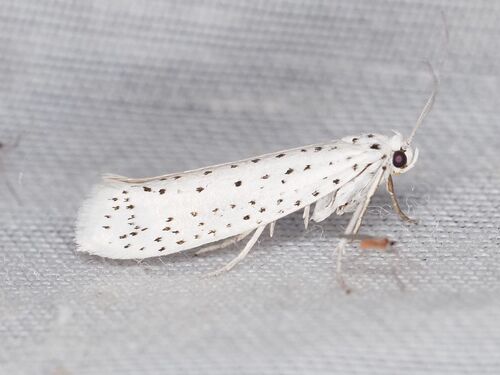
Initially (in 1796), Hübner had misidentified the grass moth Eudonia lacustrata – much larger and only distantly related, but somewhat similar in color and pattern – as Linnaeus' Phalaena crataegella. Similarly, a junior synonym of this species, Tinea cornella, has frequently been misapplied – and sometimes still is even today – to the fairly closely related apple blossom tineid.
Scythropia crataegella is a small moth is widespread almost all over Europe; it is absent from Great Britain north of The Lake District, and has also not been recorded yet on Iceland and Ireland (where it is probably genuinely absent), in Portugal (where it may be absent), and in Slovenia (where it probably occurs but has not been found yet, as its range... Wikipedia →