About the Pea Aphid
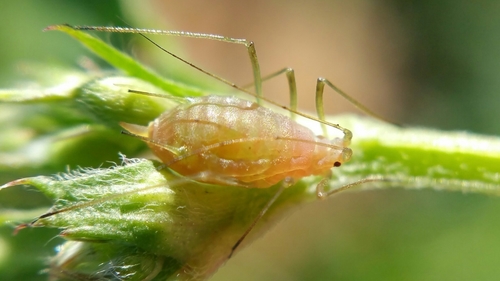
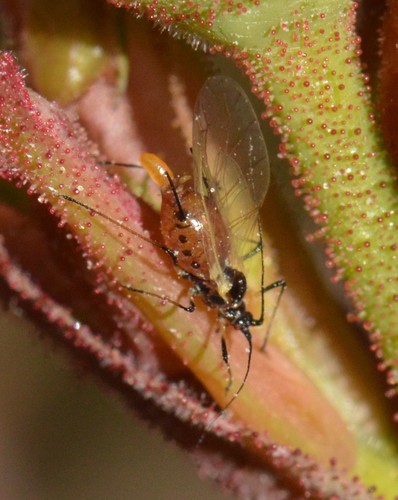
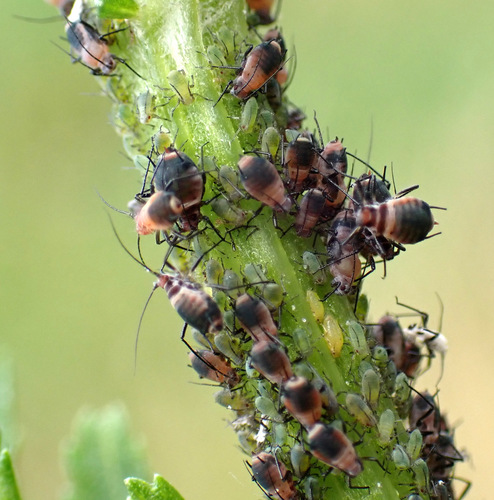
Acyrthosiphon pisum, commonly known as the pea aphid (and colloquially known as the green dolphin, pea louse, and clover louse), is a sap-sucking insect in the family Aphididae. It feeds on several species of legumes (plant family Fabaceae) worldwide, including forage crops, such as pea, clover, alfalfa, and broad bean, and ranks among the aphid species of major agronomical importance. The pea aphid is a model organism for biological study whose genome has been sequenced and annotated.
In the autumn, female pea aphids lay fertilized eggs overwinter that hatch the following spring. The nymphs that hatch from these eggs are all females, which undergo four moults before reaching sexual maturity. They will then begin to reproduce by viviparous parthenogenesis, like most aphids. Each adult female gives birth to four to 12 female nymphs per day, around a hundred in her lifetime. These develop into mature females in about seven to ten days. The life span of an adult is about 30 days.
Population densities are at their highest in early summer, then decrease through predation and parasitism. In autumn, the lengthening of the night triggers the production of a... Wikipedia →