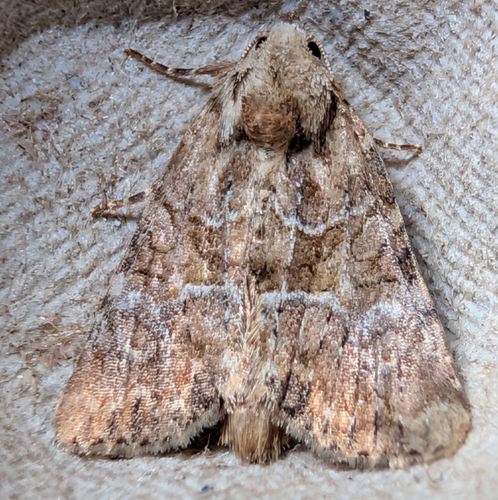
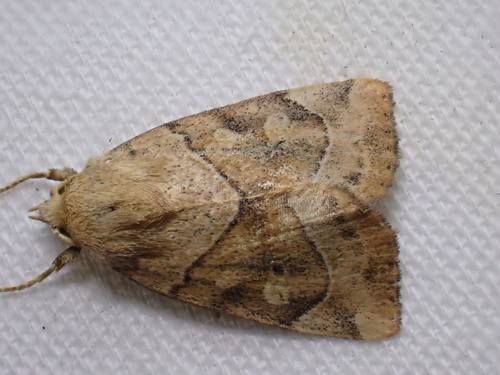
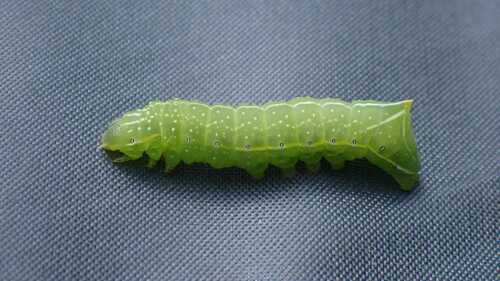
Sprawler

Sprawler

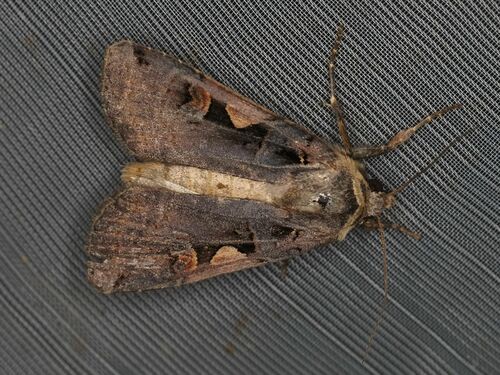
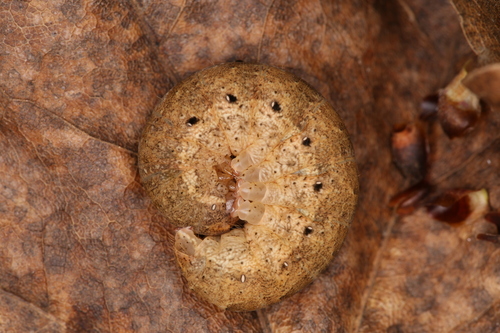
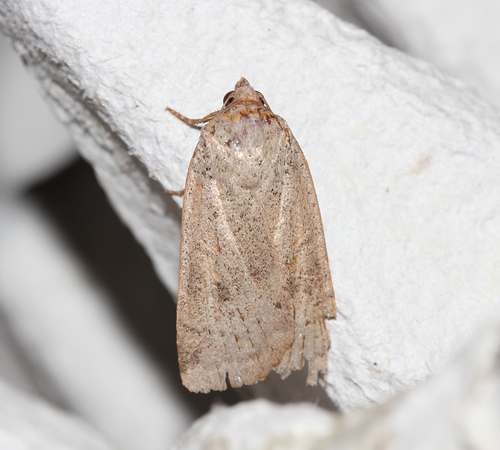
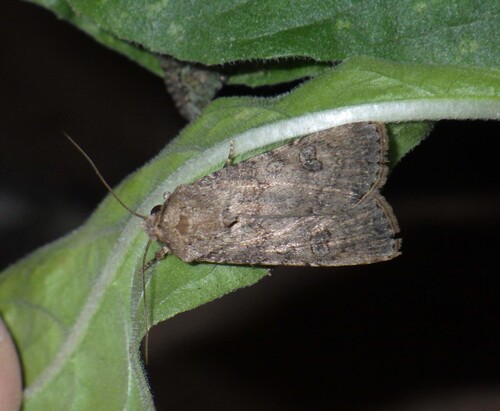
Asteroscopus sphinx

Daily sighting probability <5% · Rare
at Berlin

In 3 days ~10% in a week ~20%

7 Verified sightings at Berlin
November Best month
☀️ Diurnal When it's spotted

About the Sprawler

Asteroscopus sphinx, the sprawler, is a moth in the family Noctuidae. It is found throughout western Europe, but is mainly a northern species occurring south to northern Spain, the southern edge of the Alps, Central Italy, and Northern Greece. In the northwest, it occurs throughout England and Wales, but is rare in Ireland; and then east through southern Sweden, to Kaliningrad and Moscow, and also in Central Europe, Turkey, the Caucasus and Asia Minor.

The wingspan is 39–49 mm. The length of the forewings is 17–22 mm. "Forewing pale luteous grey, more or less strongly dusted with olive grey: a thick black streak from base below cell, with a finer streak above and beyond it, and another beyond it below submedian fold; outer line marked by black vein dashes on a paler space; orbicular stigma flattened, elongate, edged with black; reniform large irregularly 8-shaped, the lower half angled and reaching below median vein: submarginal line pale, preceded by black wedgeshaped marks between veins and followed by black streaks from termen in the intervals, the indentation on submedian fold more strongly marked; veins towards margin finely black; fringe chequered pale and dark... Wikipedia →
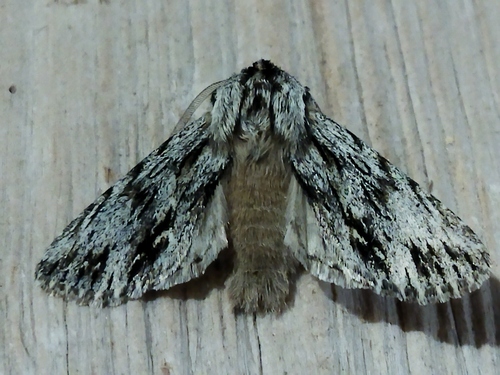

Global Distribution

Parks Where Found

# Park Country Daily sighting probability

More parks will be added in future updates.

Cities Where Found

# City Country Daily sighting probability
1 Vienna 🇦🇹 Austria
<5%
2 Berlin 🇩🇪 Germany
<5%
3 Paris 🇫🇷 France
<5%
4 Prague 🇨🇿 Czechia
<5%
5 London 🇬🇧 United Kingdom
<5%

Before you go

What are the chances of seeing a Sprawler in Berlin?

Rare

Under 5% of wildlife watchers report a Sprawler sighting in Berlin on a given day, based on 7 verified sightings from GBIF citizen-science data. It is the 801st most-seen of the 1065 insects we can rate there. Over three days the chance rises to about 10%, and over a week to about 20%, if each day is a fresh chance.

When is the best time to see a Sprawler in Berlin?

November and December

In those months about 10% of wildlife watchers report a Sprawler in Berlin on a given day, against under 5% in January to October, the lowest months.

What time of day is best to see a Sprawler?

Between noon and 3 pm

Across all the parks we cover, that three-hour window holds the most Sprawler sightings with a recorded time, and nearly all of them come between 6 am and 6 pm: it is a daytime animal.

Is Berlin the best place to see a Sprawler?

Among the best

Of the 5 cities where we can rate Sprawler sightings, Berlin ranks 2nd at under 5%, level with the leaders once rounded. The best odds are in Vienna (Austria, under 5%).

Which relatives of the Sprawler live in Berlin?

Same family: Noctuidae

The closest relatives of the Sprawler that you can see in Berlin (family Noctuidae, Cutworm Moths and Allies) are Large Yellow Underwing (about 20%), Silver Υ (about 10%) and Heart And Dart (about 10%), with each one's daily chance of a sighting.

Where does the Sprawler sighting chance come from?

GBIF citizen-science records

It is estimated from how often the Sprawler is recorded against all the insects logged in Berlin (7 verified sightings), calibrated against known sighting rates. Figures are rounded to the nearest 10% because citizen-science data supports honest approximations, not decimals, and months with records from fewer than five people show "—". How it works.

← Back to Berlin