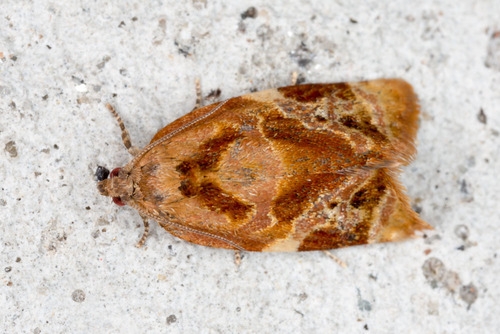
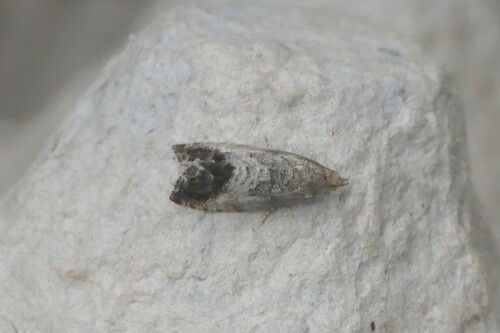
Ragwort Crown-Boring Moth

Ragwort Crown-Boring Moth

Cochylis atricapitana

Daily sighting probability <5% · Rare
at Birmingham

In 3 days ~10% in a week ~20%

8 Verified sightings at Birmingham
52 In 1 park From 2019 to 2026
August Best month
🌅 Crepuscular When it's spotted

About the Ragwort Crown-Boring Moth

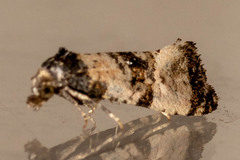
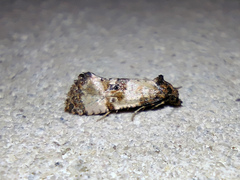
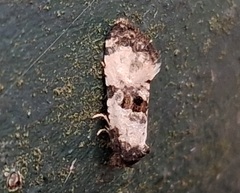
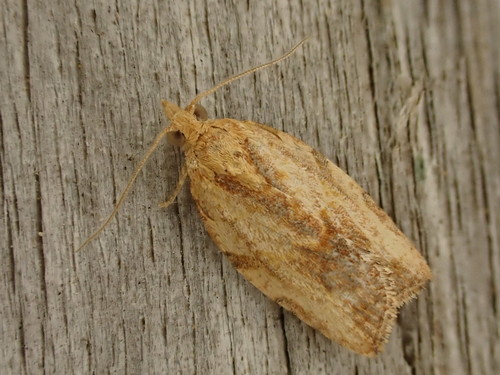
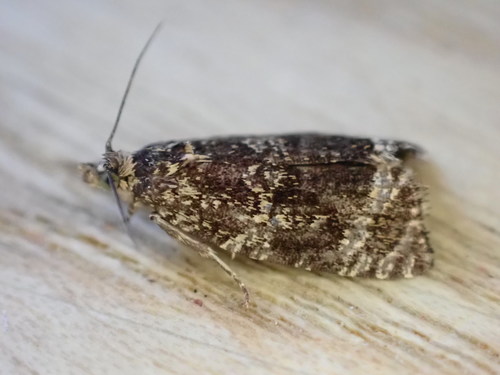
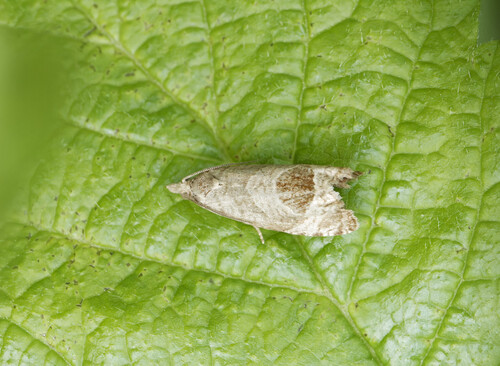
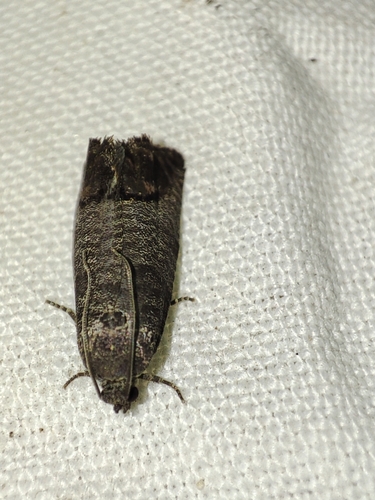
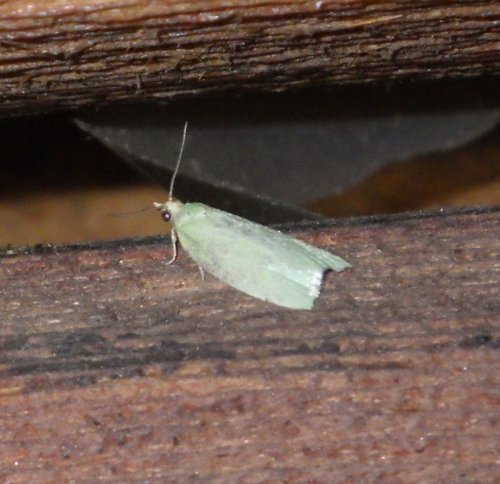
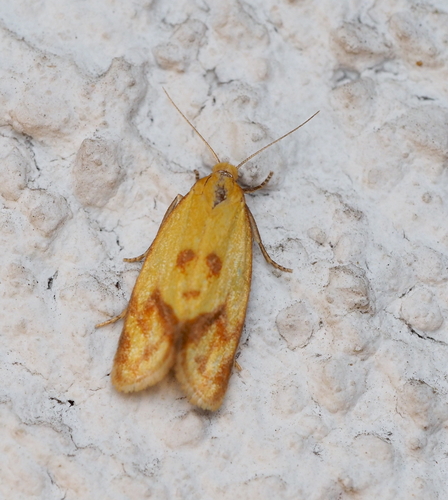
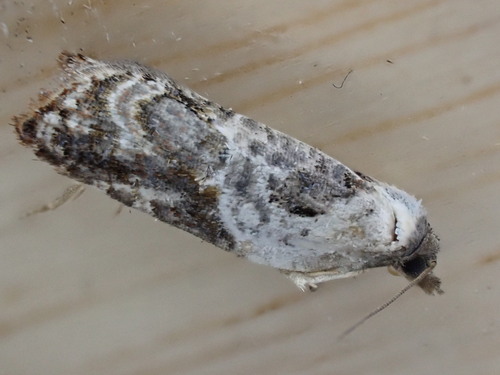
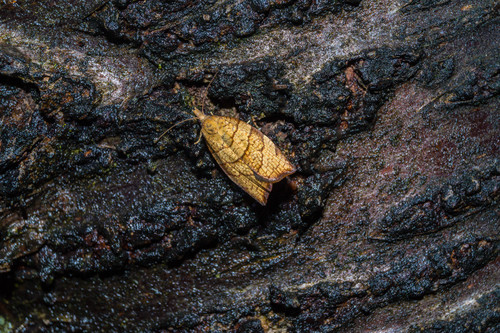
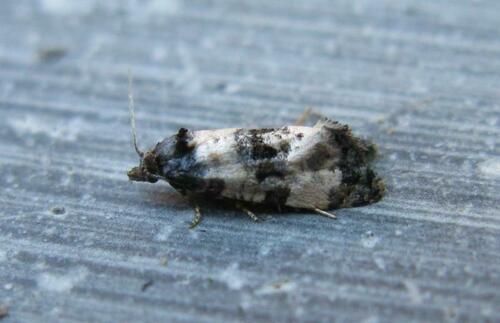
Cochylichroa atricapitana, the black-headed conch, is a moth of the family Tortricidae. It is found in China (Xinjiang) and the eastern Palearctic and most of Europe. The wingspan is 10.5–13 mm. Very similar to Cochylis dubitana but differs from this in that the head and thorax are black. The forewings are white with grey or brown basal areas. There is a cross-band slightly basal to the middle (unlike many other Cochylis species this is often complete) and a distal cross-band. The hindwings are light grey-brown, slightly angular behind the apex. The larva is pale orange. Meyrick describes it - Head in male blackish, in female greyish-ochreous. Forewings with costa gently arched; rosy-ochreous -whitish, costa and dorsum strigulated with blackish; a small dark ashy-fuscous basal patch; a spot on costa touching it, a very irregular median fascia, a narrow terminal fascia dilated or furcate on costa, and cilia brown much marked with black; a pale greyish-ochreous cloud above tornus. Hindwings in male whitish-grey strigulated with grey, in female grey. The larva is pale yellow, faintly reddish-tinged above; head light brown; plate of 2 faintly brownish Julius von Kennel provides a full description.

There are two generations per year with adults on wing from May to June and again in August. Cochylichroa atricapitana was formerly a member of the genus Cochylis, but was moved to the redefined genus Cochylichroa in 2019 as a result of phylogenetic analysis. Wikipedia →

Global Distribution

Parks Where Found

# Park Country Daily sighting probability
1 Wadden Sea National Park 🇩🇪 Germany
~10%

More parks will be added in future updates.

Cities Where Found

# City Country Daily sighting probability
1 Liverpool 🇬🇧 United Kingdom
~10%
2 Birmingham 🇬🇧 United Kingdom
<5%
3 London 🇬🇧 United Kingdom
<5%

Before you go

What are the chances of seeing a Ragwort Crown-Boring Moth in Birmingham?

Rare

Under 5% of wildlife watchers report a Ragwort Crown-Boring Moth sighting in Birmingham on a given day, based on 8 verified sightings from GBIF citizen-science data. It is the 563rd most-seen of the 811 insects we can rate there. Over three days the chance rises to about 10%, and over a week to about 20%, if each day is a fresh chance.

When is the best time to see a Ragwort Crown-Boring Moth in Birmingham?

May and August

In those months about 10% of wildlife watchers report a Ragwort Crown-Boring Moth in Birmingham on a given day, against under 5% in June–July and September–April, the lowest months.

What time of day is best to see a Ragwort Crown-Boring Moth?

Between 11 pm and 2 am

Across all the parks we cover, that three-hour window holds the most Ragwort Crown-Boring Moth sightings with a recorded time, and about 6 in 10 of them come between 6 pm and 6 am: it is most active around dawn and dusk.

Is Birmingham the best place to see a Ragwort Crown-Boring Moth?

2nd of 3

Of the 3 cities where we can rate Ragwort Crown-Boring Moth sightings, Birmingham ranks 2nd at under 5%. The best odds are in Liverpool (United Kingdom, about 10%).

Which relatives of the Ragwort Crown-Boring Moth live in Birmingham?

Same family: Tortricidae

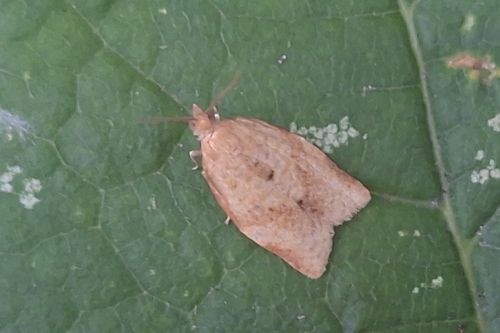
The closest relatives of the Ragwort Crown-Boring Moth that you can see in Birmingham (family Tortricidae, Tortricid Leafroller Moths) are Light Brown Apple Moth (about 20%), Common Marble (about 10%) and Common Roller (about 10%), with each one's daily chance of a sighting.

Where does the Ragwort Crown-Boring Moth sighting chance come from?

GBIF citizen-science records

It is estimated from how often the Ragwort Crown-Boring Moth is recorded against all the insects logged in Birmingham (8 verified sightings), calibrated against known sighting rates. Figures are rounded to the nearest 10% because citizen-science data supports honest approximations, not decimals, and months with records from fewer than five people show "—". How it works.
← Back to Birmingham