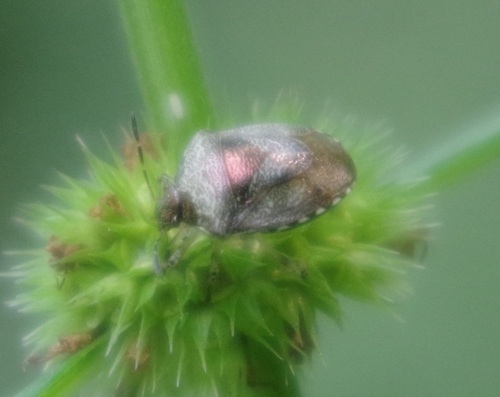
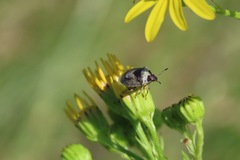
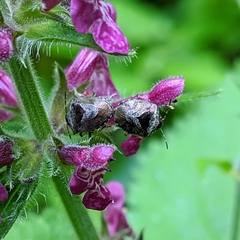
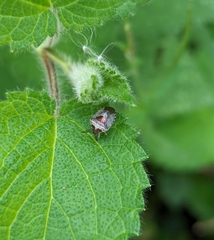
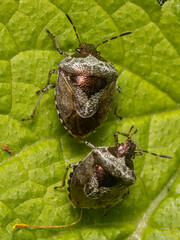
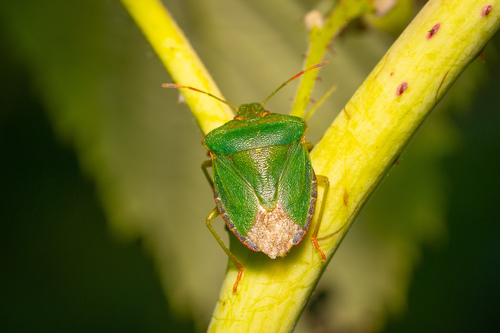
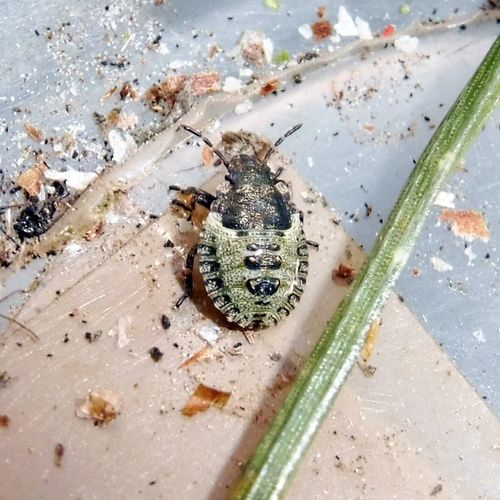
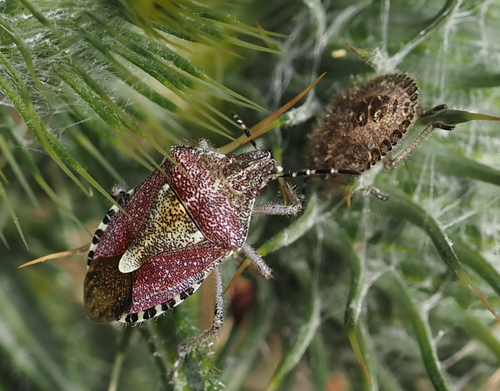
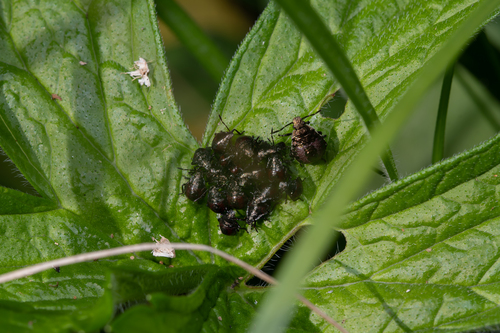
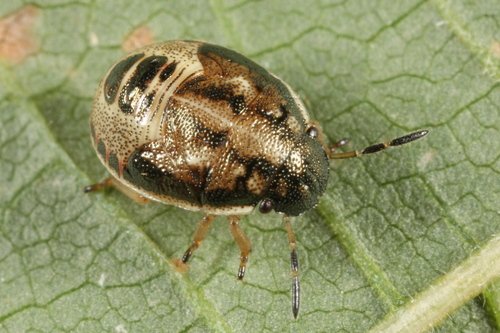
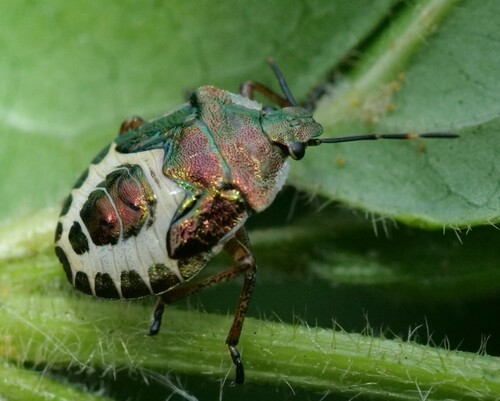
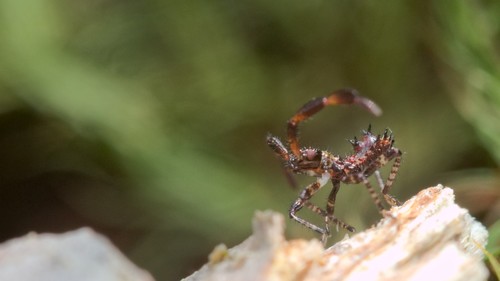
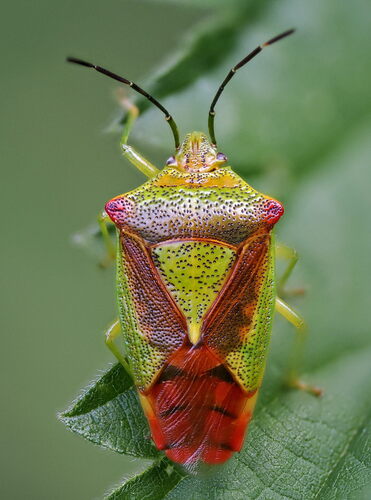
Woundwort Shield Bug

Woundwort Shield Bug

Eysarcoris venustissimus

Daily sighting probability ~10% · With luck
at Birmingham

In 3 days ~20% in a week ~40%

35 Verified sightings at Birmingham
23 In all 2 parks From 2019 to 2026
May Best month
☀️ Diurnal When it's spotted

About the Woundwort Shield Bug

Stagonomus venustissimus, common name woundwort shieldbug, is a species of shieldbug belonging to the family Pentatomidae, subfamily Pentatominae. The species was first named by Fabricius as Cimex melanocephalus. However this name had already been used by Linnaeus for the mirid bug now known as Phylus melanocephalus - at the time, the genus Cimex encompassed the entirety of the Heteroptera.

The replacement name Eysarcoris fabricii given by Kirkaldy in 1904 was used for many years, but Rider (1998) pointed out the seniority of the name venustissimus, given by Schrank in 1776 (Schönste Wanze, most beautiful bug).

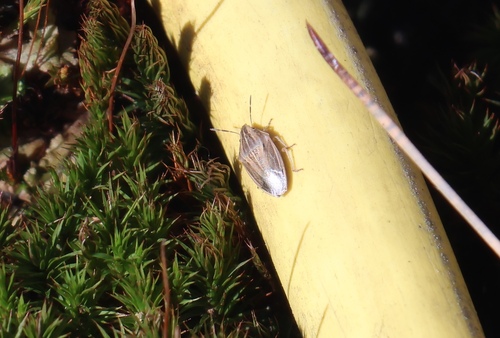
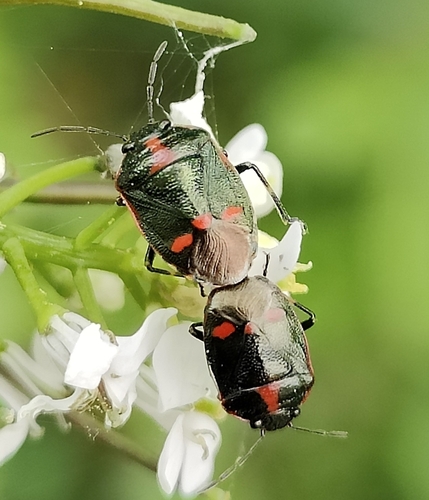
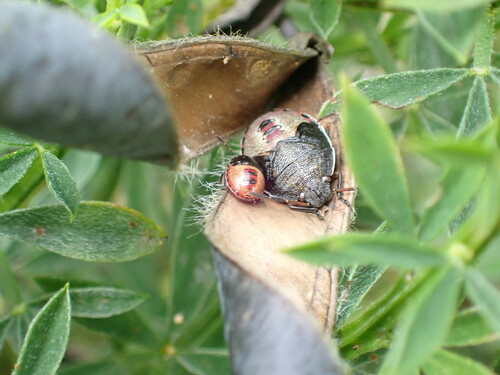
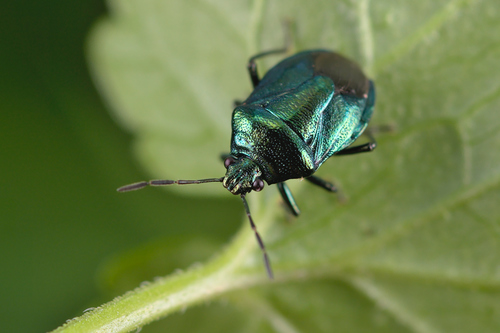
This species has been recently transferred to the genus Stagonomus, so the correct name is Stagonomus venustissimus (Schrank, 1776). This species can be found in most of Europe. Stagonomus venustissimus can reach a length of 5–7 millimetres (0.20–0.28 in). These small bugs have a greenish-grey body. The head and the pronotum are copper coloured. They have a bronze-purple triangular stain at the base of the scutellum. The connexivum has black and white markings. The legs are whitish with black spots

Stagonomus... Wikipedia →

Global Distribution

Parks Where Found

# Park Country Daily sighting probability
1 Bavarian Forest National Park 🇩🇪 Germany
~10%
2 Pyrénées National Park 🇫🇷 France
<5%

Cities Where Found

# City Country Daily sighting probability
1 Birmingham 🇬🇧 United Kingdom
~10%
2 Brussels 🇧🇪 Belgium
~10%
3 Amsterdam 🇳🇱 Netherlands
~10%
4 London 🇬🇧 United Kingdom
~10%
5 Paris 🇫🇷 France
<5%
6 Lyon 🇫🇷 France
<5%
7 Essen 🇩🇪 Germany
<5%
8 Liverpool 🇬🇧 United Kingdom
<5%
9 Munich 🇩🇪 Germany
<5%
10 Kyiv 🇺🇦 Ukraine
<5%

Before you go

What are the chances of seeing a Woundwort Shield Bug in Birmingham?

With luck

About 10% of wildlife watchers report a Woundwort Shield Bug sighting in Birmingham on a given day, based on 35 verified sightings from GBIF citizen-science data. It is the 236th most-seen of the 811 insects we can rate there. Over three days the chance rises to about 20%, and over a week to about 40%, if each day is a fresh chance.

When is the best time to see a Woundwort Shield Bug in Birmingham?

May

In that month about 20% of wildlife watchers report a Woundwort Shield Bug in Birmingham on a given day, against under 5% in July and November–April, the lowest months.

What time of day is best to see a Woundwort Shield Bug?

Between 10 am and 1 pm

Across all the parks we cover, that three-hour window holds the most Woundwort Shield Bug sightings with a recorded time, and nearly all of them come between 6 am and 6 pm: it is a daytime animal.

Is Birmingham the best place to see a Woundwort Shield Bug?

Yes

Of the 12 cities where we can rate Woundwort Shield Bug sightings, Birmingham has the highest daily chance: about 10%. Next come Brussels (Belgium, about 10%) and Amsterdam (Netherlands, about 10%).

Which relatives of the Woundwort Shield Bug live in Birmingham?

Same family: Pentatomidae

The closest relatives of the Woundwort Shield Bug that you can see in Birmingham (family Pentatomidae, Stink Bugs) are Green Shield Bug (about 40%), Forest Bug (about 20%) and Sloe Bug (about 20%), with each one's daily chance of a sighting.

Where does the Woundwort Shield Bug sighting chance come from?

GBIF citizen-science records

It is estimated from how often the Woundwort Shield Bug is recorded against all the insects logged in Birmingham (35 verified sightings), calibrated against known sighting rates. Figures are rounded to the nearest 10% because citizen-science data supports honest approximations, not decimals, and months with records from fewer than five people show "—". How it works.

← Back to Birmingham