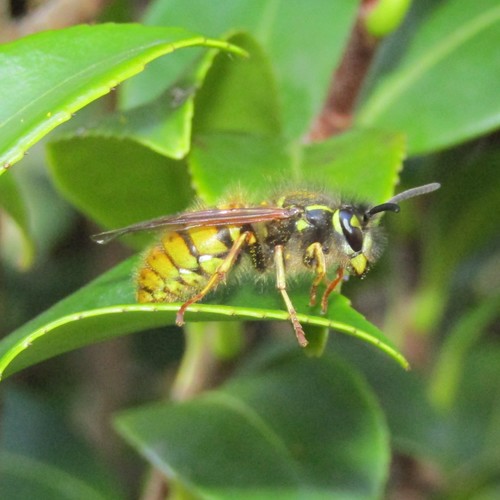
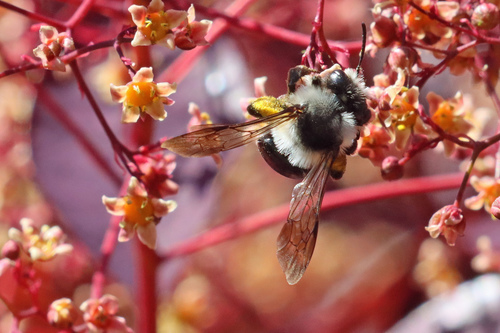
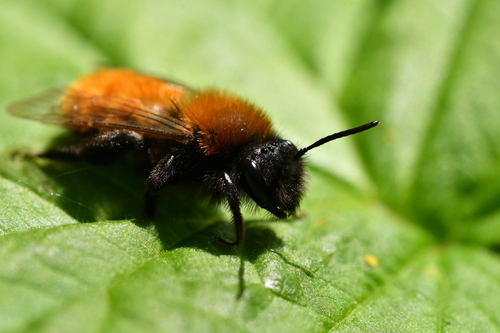
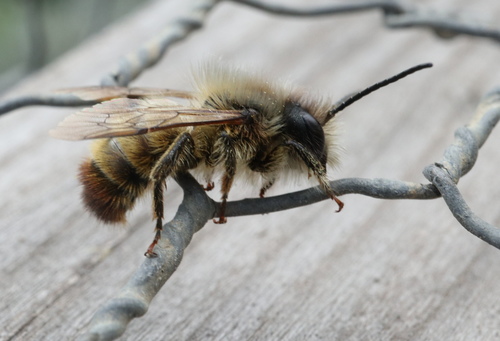
Yellow Meadow Ant
Daily sighting probability <5% · Rare
at Birmingham

In 3 days ~10% in a week ~20%

8 Verified sightings at Birmingham
April Best month

About the Yellow Meadow Ant

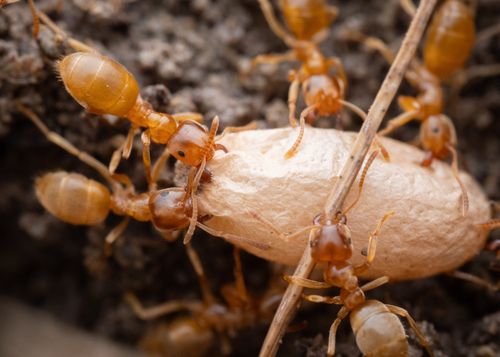
The yellow meadow ant (Lasius flavus), also known as the yellow hill ant, is a species of ant occurring in Europe (where it is one of the most common ants), Asia, and North Africa. As of 2018, populations in North America are considered a different, related species, Lasius brevicornis.

The queen is 7–9 mm long, males 3–4 mm and workers 2–4 mm. Their colour varies from yellow to brown, with queen and males being slightly more darkly colored. The species lives primarily underground in meadows and very commonly, lawns. The nests are often completely overgrown by grass, however, often their presence is betrayed by small mounds of loose soil material between the grass stalks. They will also nest under large rocks or concrete slabs. Lawn nesting will eventually become obvious as the aphids clear sections of grass or portions of gardens.

The yellow meadow ant feeds on the honeydew from root aphids, which they breed in their nests. During winter, the aphids themselves are sometimes eaten. As a consequence of their feeding habits, the species only occasionally forages outside the nest. Evidence of their underground lives is their lack of pigmentation and the smaller size of their eyes, compared to closely related species like the black garden ant. They are a timid species and will often simply barricade their tunnels to fight off invaders.

Alates (winged, unmated queens and males) can be seen on warm days and evenings of July and August. This is one of the rare times that they are seen, as workers open up their nest entrances and herd the young winged ants out of the nest. Colonies are often founded by multiple queens (pleometrosis). Later on, when the first workers emerge, fights between the founder queens will erupt, with only one queen left (monogyne). However, this species is also known to have single colonies with multiple queens and up to 250,000 workers, when they are spread out over multiple interconnected nests. Wikipedia →

Global Distribution

Parks Where Found

# Park Country Daily sighting probability

More parks will be added in future updates.

Cities Where Found

# City Country Daily sighting probability
1 London 🇬🇧 United Kingdom
<5%
2 Helsinki 🇫🇮 Finland
<5%
3 Liverpool 🇬🇧 United Kingdom
<5%
4 Birmingham 🇬🇧 United Kingdom
<5%
5 Hamburg 🇩🇪 Germany
<5%
6 Berlin 🇩🇪 Germany
<5%
7 Moscow 🇷🇺 Russia
<5%

Before you go

What are the chances of seeing a Yellow Meadow Ant in Birmingham?

Rare

Under 5% of wildlife watchers report a Yellow Meadow Ant sighting in Birmingham on a given day, based on 8 verified sightings from GBIF citizen-science data. It is the 563rd most-seen of the 811 insects we can rate there. Over three days the chance rises to about 10%, and over a week to about 20%, if each day is a fresh chance.

When is the best time to see a Yellow Meadow Ant in Birmingham?

March–April and August

In those months about 10% of wildlife watchers report a Yellow Meadow Ant in Birmingham on a given day, against under 5% in May–July and September–February, the lowest months.

Is Birmingham the best place to see a Yellow Meadow Ant?

Among the best

Of the 7 cities where we can rate Yellow Meadow Ant sightings, Birmingham ranks 4th at under 5%, level with the leaders once rounded. The best odds are in London (United Kingdom, under 5%), Helsinki (Finland, under 5%) and Liverpool (United Kingdom, under 5%).

Which relatives of the Yellow Meadow Ant live in Birmingham?

Same order: Hymenoptera

The closest relatives of the Yellow Meadow Ant that you can see in Birmingham (order Hymenoptera, Ants, Bees, Wasps, and Sawflies) are Common Carder Bumble Bee (about 40%), Red-Tailed Bumble Bee (about 30%) and Early Bumble Bee (about 30%), with each one's daily chance of a sighting.

Where does the Yellow Meadow Ant sighting chance come from?

GBIF citizen-science records

It is estimated from how often the Yellow Meadow Ant is recorded against all the insects logged in Birmingham (8 verified sightings), calibrated against known sighting rates. Figures are rounded to the nearest 10% because citizen-science data supports honest approximations, not decimals, and months with records from fewer than five people show "—". How it works.

← Back to Birmingham