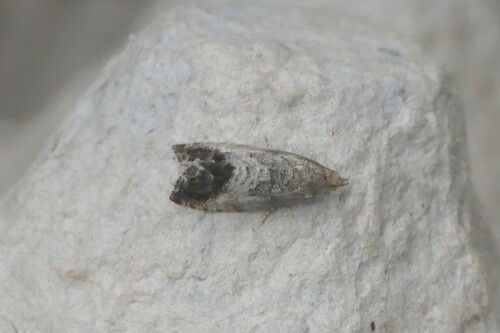
Yellow-Spot Tortrix

Yellow-Spot Tortrix

Pseudargyrotoza conwagana

Daily sighting probability <5% · Rare
at Birmingham

In 3 days ~10% in a week ~30%

9 Verified sightings at Birmingham
6 In 1 park From 2019 to 2026
June Best month
☀️🌙 Day & Night When it's spotted

About the Yellow-Spot Tortrix

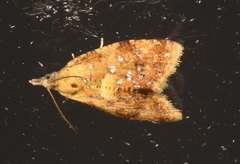
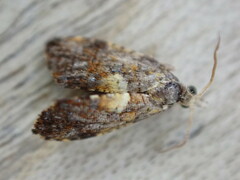
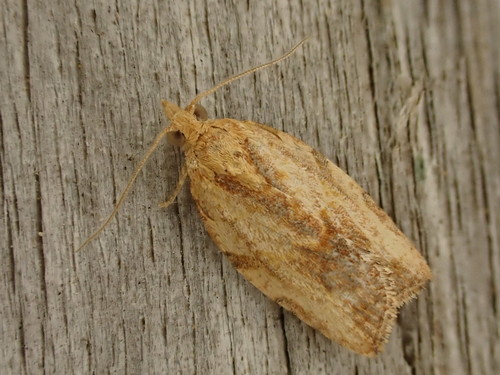
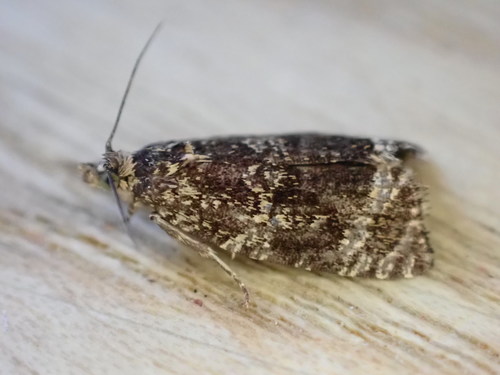
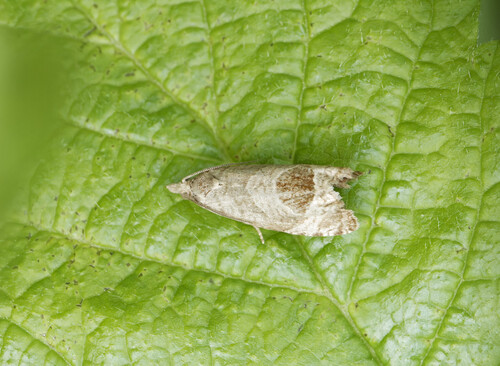
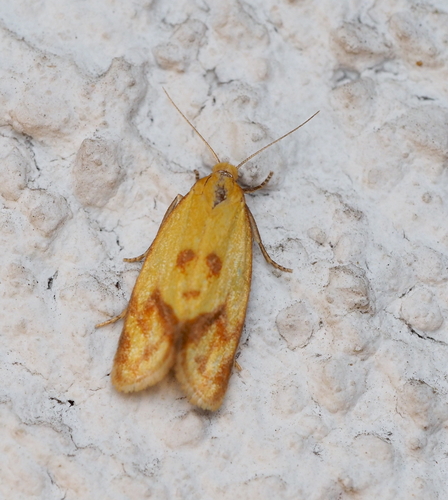
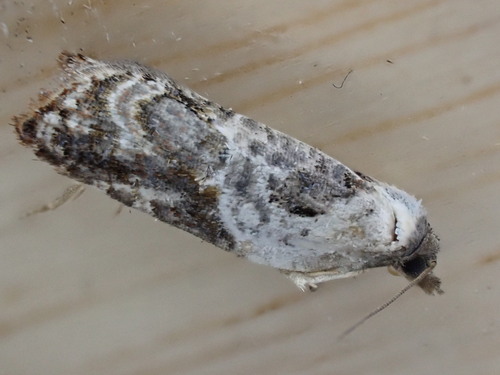
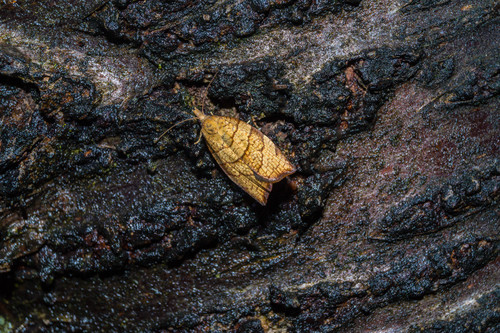
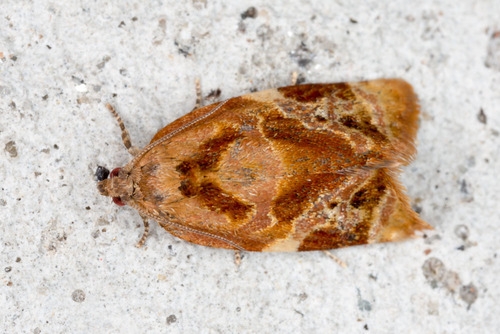
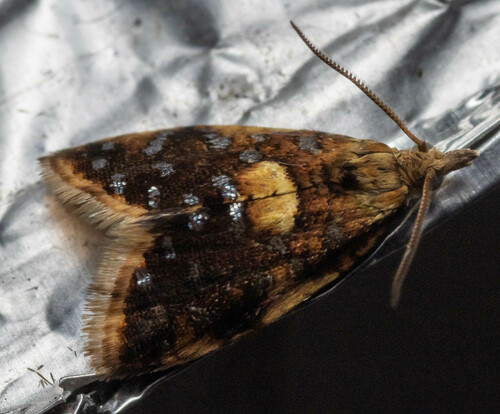
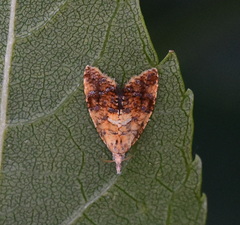
Pseudargyrotoza conwagana is a moth of the family Tortricidae found in Asia and Europe. It was first described by the Danish entomologists, Johan Christian Fabricius in 1775. The wingspan is 11–15 mm. The thorax is crested. The forewings are triangular, yellow, more or less suffused with orange or ferruginous and faintly darker-strigulated. The basal patch is often darker and always followed by a pale yellow dorsal mark. The central and terminal fasciae are often darker or blackish-mixed, edged with leaden-metallic dots. The hindwings are blackish - grey, lighter anteriorly. The larva yellow-whitish; dorsal line darker; head yellow-brownish.

Adults are on wing from May to July. The larvae feed on ash (Fraxinus excelsior), Manchurian ash (Fraxinus mandshurica), privet (Ligustrum species) (including broad-leaf privet (Ligustrum lucidum)) and barberry (Berberis species).

It is found in Europe, China (Heilongjiang, Jilin, Shaanxi, Sichuan, Beijing, Shandong), South Korea, Japan, Russia (Siberia, Ussuri) and Asia Minor. Fabricius originally called the moth Pyralis conwagana from a specimen found in Oxford, England. Pyralis refers to an... Wikipedia →
Global Distribution

Parks Where Found

# Park Country Daily sighting probability
1 Wadden Sea National Park 🇩🇪 Germany
<5%

More parks will be added in future updates.

Cities Where Found

# City Country Daily sighting probability
1 Copenhagen 🇩🇰 Denmark
~10%
2 Liverpool 🇬🇧 United Kingdom
~10%
3 Rotterdam [The Hague] 🇳🇱 Netherlands
<5%
4 London 🇬🇧 United Kingdom
<5%
5 Birmingham 🇬🇧 United Kingdom
<5%

Before you go

What are the chances of seeing a Yellow-Spot Tortrix in Birmingham?

Rare

Under 5% of wildlife watchers report a Yellow-Spot Tortrix sighting in Birmingham on a given day, based on 9 verified sightings from GBIF citizen-science data. It is the 528th most-seen of the 811 insects we can rate there. Over three days the chance rises to about 10%, and over a week to about 30%, if each day is a fresh chance.

When is the best time to see a Yellow-Spot Tortrix in Birmingham?

June

In that month about 10% of wildlife watchers report a Yellow-Spot Tortrix in Birmingham on a given day, against under 5% in July to May, the lowest months.

What time of day is best to see a Yellow-Spot Tortrix?

Between 7 and 10 pm

Across all the parks we cover, that three-hour window holds the most Yellow-Spot Tortrix sightings with a recorded time, and about 7 in 10 of them come between 6 pm and 6 am: it is seen both by day and at night.

Is Birmingham the best place to see a Yellow-Spot Tortrix?

5th of 5

Of the 5 cities where we can rate Yellow-Spot Tortrix sightings, Birmingham ranks 5th at under 5%. The best odds are in Copenhagen (Denmark, about 10%), Liverpool (United Kingdom, about 10%) and Rotterdam [The Hague] (Netherlands, under 5%).

Which relatives of the Yellow-Spot Tortrix live in Birmingham?

Same family: Tortricidae

The closest relatives of the Yellow-Spot Tortrix that you can see in Birmingham (family Tortricidae, Tortricid Leafroller Moths) are Light Brown Apple Moth (about 20%), Common Marble (about 10%) and Common Roller (about 10%), with each one's daily chance of a sighting.

Where does the Yellow-Spot Tortrix sighting chance come from?

GBIF citizen-science records

It is estimated from how often the Yellow-Spot Tortrix is recorded against all the insects logged in Birmingham (9 verified sightings), calibrated against known sighting rates. Figures are rounded to the nearest 10% because citizen-science data supports honest approximations, not decimals, and months with records from fewer than five people show "—". How it works.

← Back to Birmingham