About the Chequered Cuckoo Bee
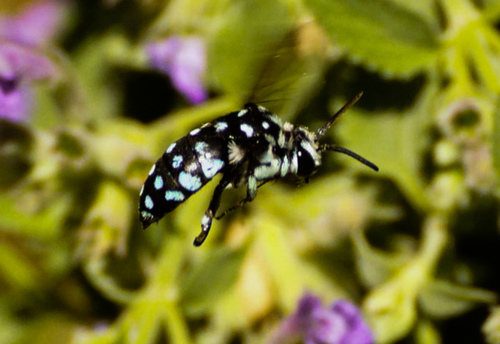
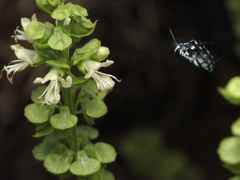
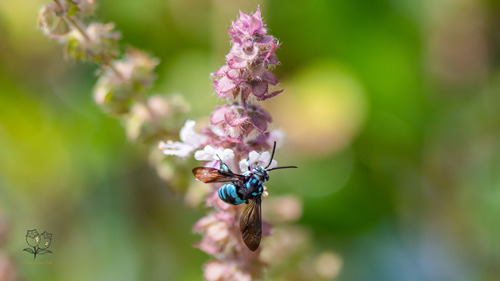
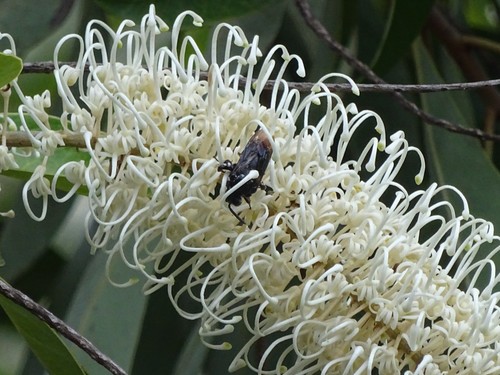
The chequered cuckoo bee (Thyreus caeruleopunctatus) is a species of bee native to Australia and New Guinea. A member of the family Apidae, it was described by Émile Blanchard in 1840. It is mostly black, with pale blue markings on the abdomen, thorax, legs and head, and smoky-coloured wings. This species is kleptoparasitic on species of the Amegilla genus, including Amegilla pulchra.
The chequered cuckoo bee was first described by French zoologist and entomologist Émile Blanchard, who named it Crocisa caeruleopunctata in 1840. It has also been known as Crocisa australensis and Crocisa lamprosoma. In the late 1950s to early 1960s, these names were synonymized by Dutch entomologist Maurits Lieftinck, who undertook a broad revision of the genus, and gave this species the current name of Thyreus caeruleopunctatus. The specific name (caeruleopunctatus) means "sky-blue spotted" in Latin.
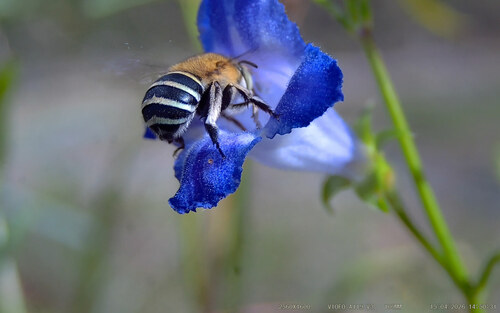
This bee is stocky and approximately 10 to 12 millimetres in length. It is mostly black, with four rows of pale blue hair spots running lengthwise on top of the abdomen, and two rows of pale blue hair spots underneath. As in other bees of this genus, the thorax has a flat... Wikipedia →