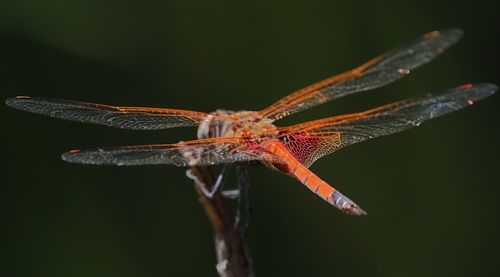
L-Spot Basker

L-Spot Basker

Aethriamanta nymphaeae

Daily sighting probability <5% · Rare
at Brisbane

In 3 days ~10% in a week ~30%

41 Verified sightings at Brisbane
6 In 1 park From 2019 to 2026
March Best month

About the L-Spot Basker

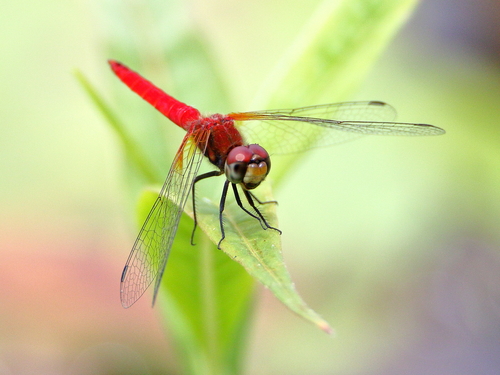
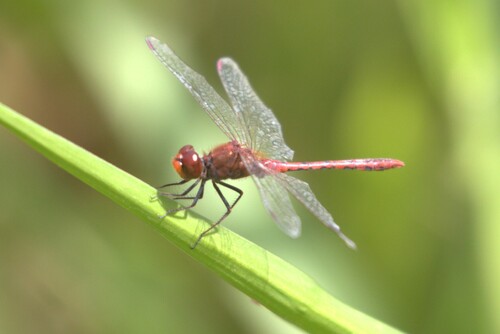
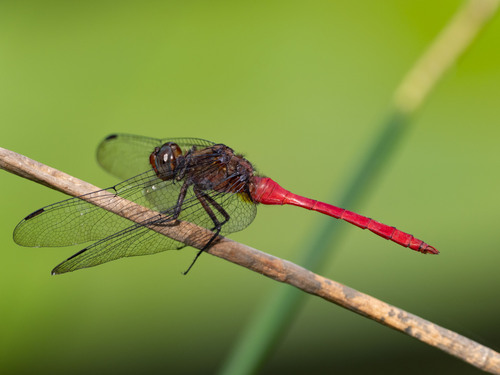
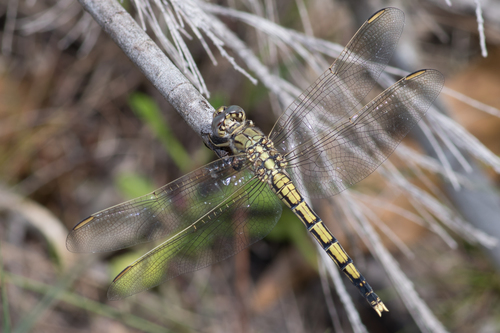
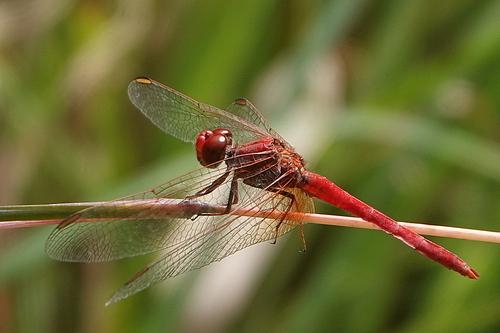
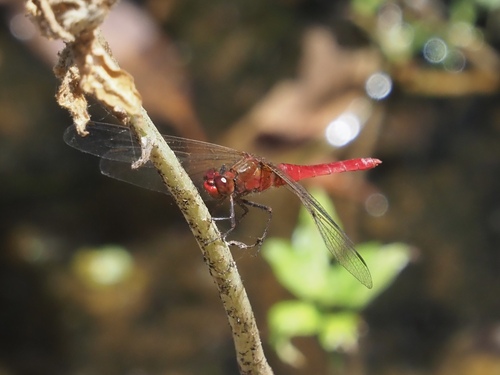
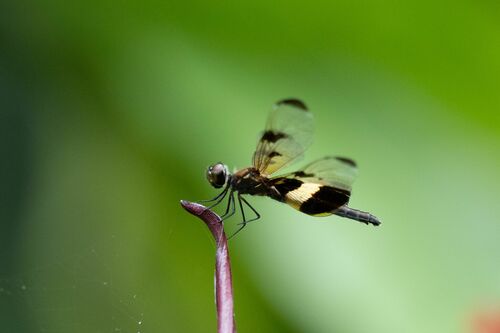
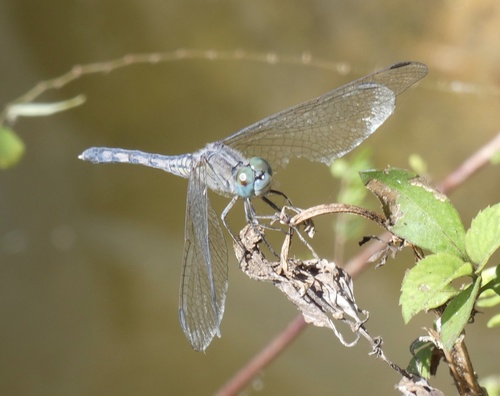
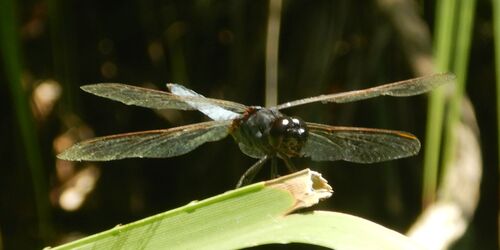
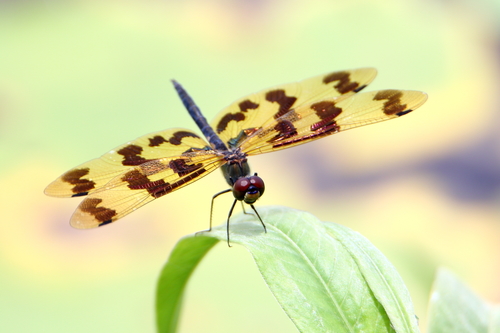
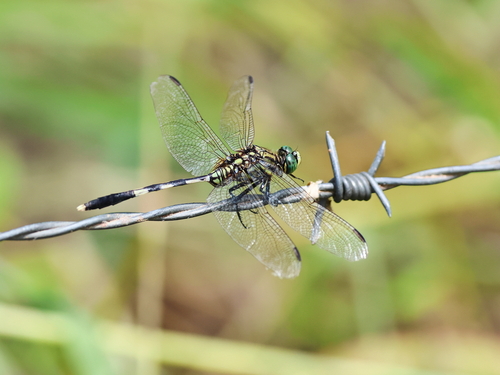
Aethriamanta nymphaeae is a species of dragonfly of the family Libellulidae, commonly known as the L-spot basker. It inhabits lagoons ponds and swamps across northern Australia. The L-spot basker Aethriamanta nymphaeae and Square-spot basker Aethriamanta circumsignata are very similar dragonflies and can be difficult to separate. The common name describes dark markings at the base of the hindwing of each species.

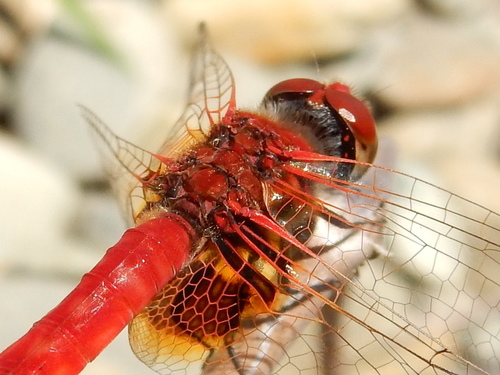
The L-spot basker usually has one dark brown fleck radiating between the fourth and fifth vein (Cu and A) and a small dark patch at right angles which occupies a few cells parallel to the abdomen. These marks form the L shape. A lighter brown surrounds the dark marks and may extend to the arculus and hindwing margin. Light brown marks may also exist at the base of the forewing. In some examples of the L-spot basker, the dark markings may be absent altogether.

The genus name Aethriamanta combines the Greek αἴθρα (aithra, "bright sky") with the Latin amans ("loving"), possibly meaning "loving the bright sky". The species name nymphaeae is named for Nymphaea, the genus of waterlilies, derived from the Greek νυμφαία (nymphaia, "waterlily"... Wikipedia →

Global Distribution

Parks Where Found

# Park Country Daily sighting probability
1 Kakadu National Park 🇦🇺 Australia
~10%

More parks will be added in future updates.

Cities Where Found

# City Country Daily sighting probability
1 Brisbane 🇦🇺 Australia
<5%

Before you go

What are the chances of seeing a L-Spot Basker in Brisbane?

Rare

Under 5% of wildlife watchers report a L-Spot Basker sighting in Brisbane on a given day, based on 41 verified sightings from GBIF citizen-science data. It is the 396th most-seen of the 1083 insects we can rate there. Over three days the chance rises to about 10%, and over a week to about 30%, if each day is a fresh chance.

When is the best time to see a L-Spot Basker in Brisbane?

February to May

In those months about 10% of wildlife watchers report a L-Spot Basker in Brisbane on a given day, against under 5% in June to January, the lowest months.

Where else can you see a L-Spot Basker?

Only Brisbane, in our data

Brisbane is the only city on Wallace's Line with enough records to rate L-Spot Basker sightings: under 5% of wildlife watchers there report one on a given day.

Where does the L-Spot Basker sighting chance come from?

GBIF citizen-science records

It is estimated from how often the L-Spot Basker is recorded against all the insects logged in Brisbane (41 verified sightings), calibrated against known sighting rates. Figures are rounded to the nearest 10% because citizen-science data supports honest approximations, not decimals, and months with records from fewer than five people show "—". How it works.

← Back to Brisbane