Three-clawed Worm-skink

Three-clawed Worm-skink

Anomalopus verreauxii

Silhouette: Andy Wilson · PhyloPic

LCLeast ConcernNTVUENCR Endemic
Daily sighting probability ~10% · With luck
at Brisbane

In 3 days ~20% in a week ~50%

79 Verified sightings at Brisbane
January Best month
☀️ Diurnal When it's spotted

About the Three-clawed Worm-skink

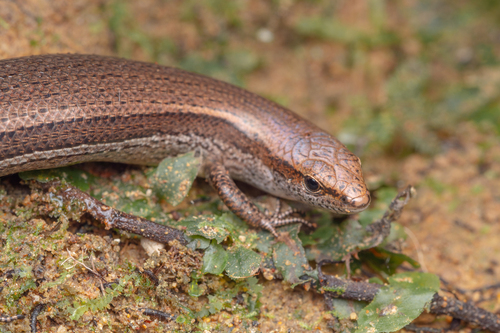
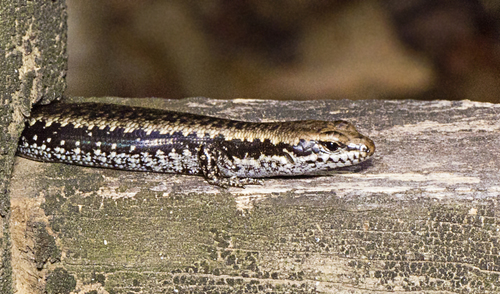
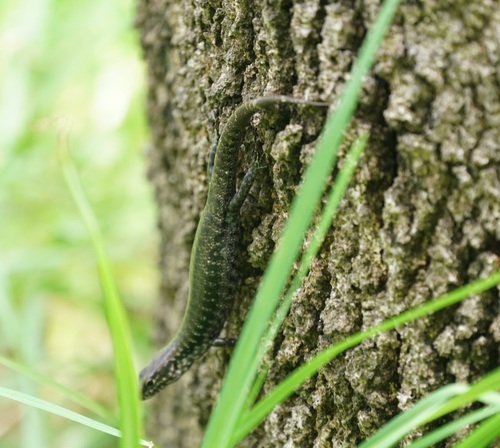
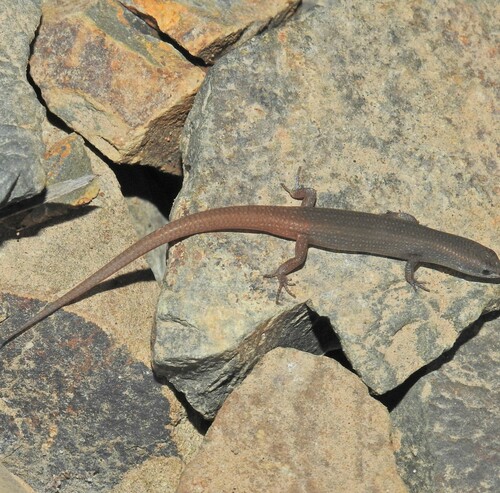
Anomalopus verreauxii, also known commonly as the three-clawed worm-skink or Verreaux's skink, is a species of lizard in the family Scincidae. The species is endemic to Australia. The specific name, verreauxii (masculine, genitive, singular), is in honor of one of the Verreaux brothers, Édouard Verreaux and Jules Verreaux, who were French naturalists and taxidermists.

A. verreauxii is found in New South Wales and Queensland, Australia. The preferred natural habitat of A. verreauxii is forest. A. verreauxii has three clawed toes on the front leg, and it has no toes on the back leg. A. verreauxii is oviparous.

Cogger HG (2014). Reptiles and Amphibians of Australia, Seventh Edition. Clayton, Victoria, Australia: CSIRO Publishing. xxx + 1,033pp. ISBN 978-0643100350. Duméril AMC, Duméril AHA (1851). Catalogue méthodique de la collection des reptile du Muséum d'Histoire Naurelle de Paris. Paris: Gide et Baudry / Roret. 224 pp. (Anomalopus verreauxii, new species, p. 185). (in French).

Greer AE, Cogger HG (1985). "Systematics of the reduce-limbed and limbless... Wikipedia →

Global Distribution

Parks Where Found

# Park Country Daily sighting probability

More parks will be added in future updates.

Cities Where Found

# City Country Daily sighting probability
1 Brisbane 🇦🇺 Australia
~10%

Before you go

What are the chances of seeing a Three-clawed Worm-skink in Brisbane?

With luck

About 10% of wildlife watchers report a Three-clawed Worm-skink sighting in Brisbane on a given day, based on 79 verified sightings from GBIF citizen-science data. It is the 18th most-seen of the 43 reptiles we can rate there. Over three days the chance rises to about 20%, and over a week to about 50%, if each day is a fresh chance.

When is the best time to see a Three-clawed Worm-skink in Brisbane?

January

In that month about 20% of wildlife watchers report a Three-clawed Worm-skink in Brisbane on a given day, against under 5% in June, the lowest month. That is one of Brisbane's wettest months, with about 140 mm of rain against 40 mm in July.

What time of day is best to see a Three-clawed Worm-skink?

Between 10 am and 1 pm

Across all the parks we cover, that three-hour window holds the most Three-clawed Worm-skink sightings with a recorded time, and about 8 in 10 of them come between 6 am and 6 pm: it is a daytime animal.

Where else can you see a Three-clawed Worm-skink?

Only Brisbane, in our data

Brisbane is the only city on Wallace's Line with enough records to rate Three-clawed Worm-skink sightings: about 10% of wildlife watchers there report one on a given day.

Which relatives of the Three-clawed Worm-skink live in Brisbane?

Same family: Scincidae

The closest relatives of the Three-clawed Worm-skink that you can see in Brisbane (family Scincidae, Skinks) are Eastern Water Skink (about 30%), Common Bluetongue (about 30%) and Elegant Snake-eyed Skink (about 30%), with each one's daily chance of a sighting.

Where does the Three-clawed Worm-skink sighting chance come from?

GBIF citizen-science records

It is estimated from how often the Three-clawed Worm-skink is recorded against all the reptiles logged in Brisbane (79 verified sightings), calibrated against known sighting rates. Figures are rounded to the nearest 10% because citizen-science data supports honest approximations, not decimals, and months with records from fewer than five people show "—". How it works.

← Back to Brisbane