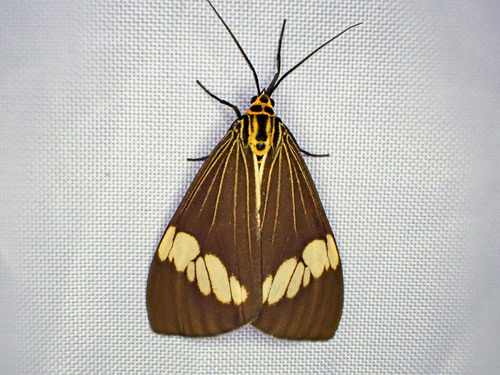
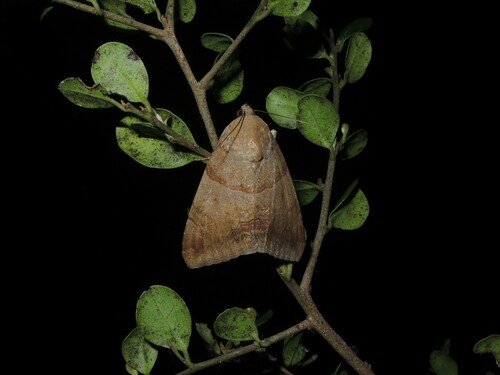
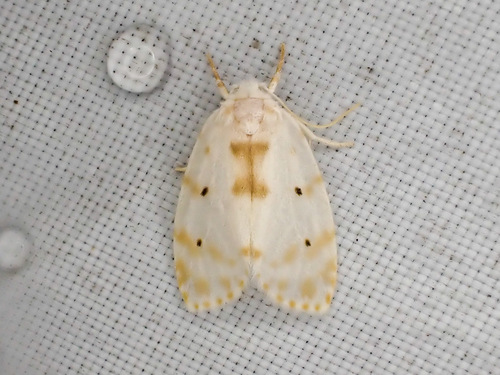
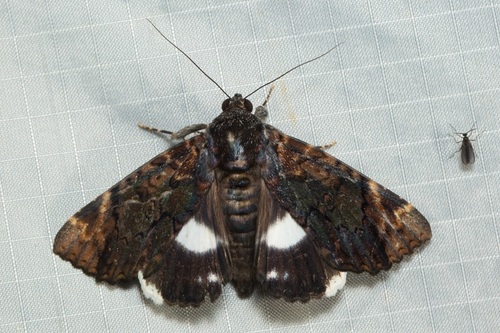
Tropical White Patch

Tropical White Patch

Catephia linteola

Daily sighting probability <5% · Rare
at Brisbane

In 3 days ~10% in a week ~20%

12 Verified sightings at Brisbane
March Best month

About the Tropical White Patch

Nagia linteola is a species of moth in the family Erebidae first described by Achille Guenée in 1852. This species occurs in South Africa, the Democratic Republic of the Congo, Yemen, the Comoros, Mauritius, Madagascar, Indonesia (Borneo), India, Sri Lanka, Myanmar, Thailand and in Australia, where it has been recorded from Western Australia, the Northern Territory, Queensland and Victoria.

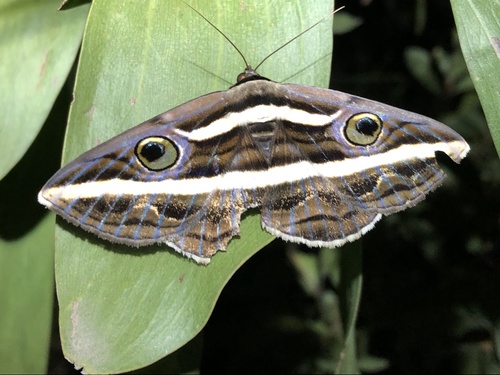
The wingspan is about 56–66 mm. Antennae of male almost simple. Forelegs in male with thick tufts of scales from coxa and very long hairs from femur and tibia. Head and thorax black and dark red-brown with a purplish gloss. Abdomen blackish. Forewings red-brown with more or less black. A short sub-basal line can be seen. waved antemedial, medial, and post-medial line present, where the postmedial highly angled outwards beyond end of cell. A small black spot or ring-spot in cell and indistinct reniform spot with ring-spot below it. Traces of an irregularly waved sub-marginal line present and apex irrorated with white. Hindwings black with a pure white medial band not reaching inner margin. Apex white and some white sub-marginal spots more or less developed towards anal angle.

Larva... Wikipedia →
Global Distribution

Parks Where Found

# Park Country Daily sighting probability

More parks will be added in future updates.

Cities Where Found

# City Country Daily sighting probability
1 Brisbane 🇦🇺 Australia
<5%

Before you go

What are the chances of seeing a Tropical White Patch in Brisbane?

Rare

Under 5% of wildlife watchers report a Tropical White Patch sighting in Brisbane on a given day, based on 12 verified sightings from GBIF citizen-science data. It is the 636th most-seen of the 1083 insects we can rate there. Over three days the chance rises to about 10%, and over a week to about 20%, if each day is a fresh chance.

When is the best time to see a Tropical White Patch in Brisbane?

March

In that month about 10% of wildlife watchers report a Tropical White Patch in Brisbane on a given day, against under 5% in April to February, the lowest months. That is one of Brisbane's wettest months, with about 140 mm of rain against 40 mm in July.

Where else can you see a Tropical White Patch?

Only Brisbane, in our data

Brisbane is the only city on Wallace's Line with enough records to rate Tropical White Patch sightings: under 5% of wildlife watchers there report one on a given day.

Which relatives of the Tropical White Patch live in Brisbane?

Same family: Erebidae

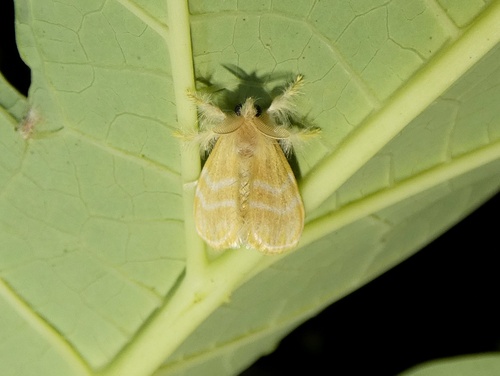
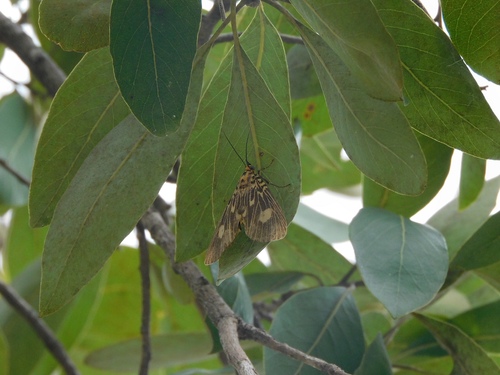
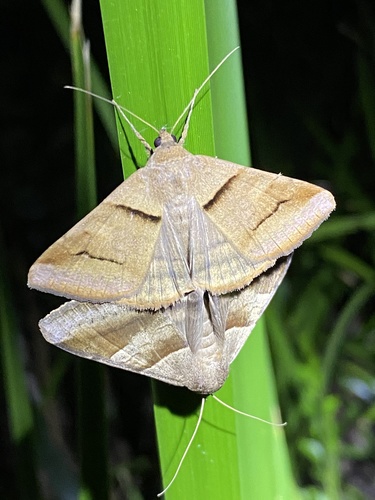
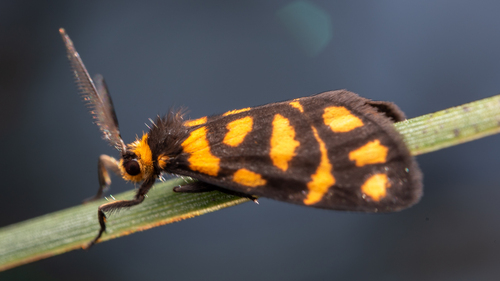
The closest relatives of the Tropical White Patch that you can see in Brisbane (family Erebidae, Underwing, Tiger, Tussock, and Allied Moths) are Asian Magpie Moth (about 20%), Castor Semi-Looper (about 10%) and Yellow Tussock (about 10%), with each one's daily chance of a sighting.

Where does the Tropical White Patch sighting chance come from?

GBIF citizen-science records

It is estimated from how often the Tropical White Patch is recorded against all the insects logged in Brisbane (12 verified sightings), calibrated against known sighting rates. Figures are rounded to the nearest 10% because citizen-science data supports honest approximations, not decimals, and months with records from fewer than five people show "—". How it works.

← Back to Brisbane