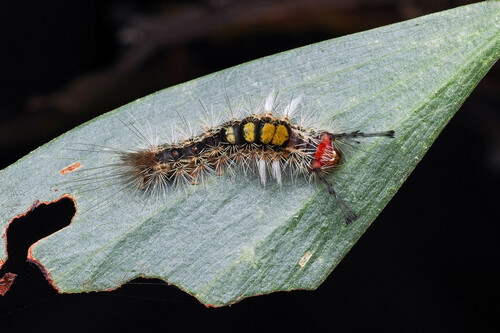
Sugarcane Looper

Sugarcane Looper

Mocis frugalis

Daily sighting probability ~10% · With luck
at Brisbane

In 3 days ~20% in a week ~50%

124 Verified sightings at Brisbane
90 In all 4 parks From 2019 to 2026
April Best month
🌙 Nocturnal When it's spotted

About the Sugarcane Looper

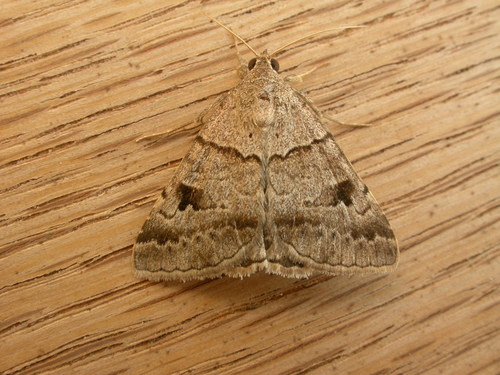
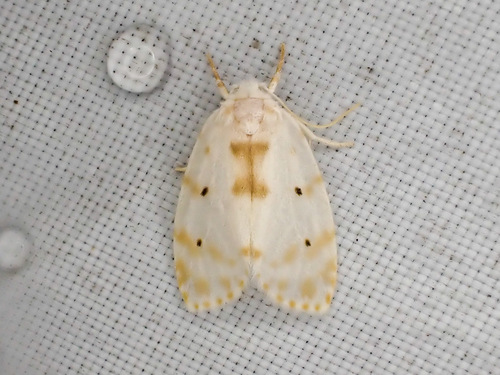
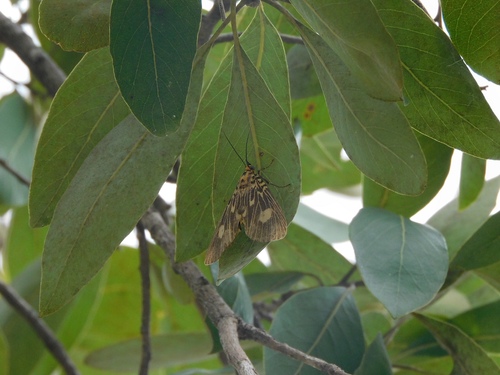
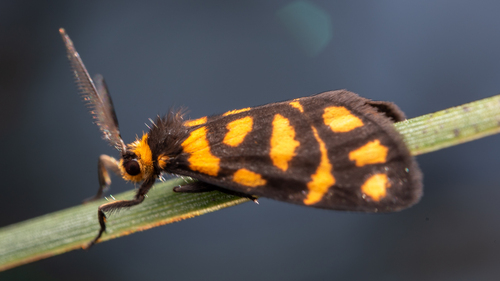
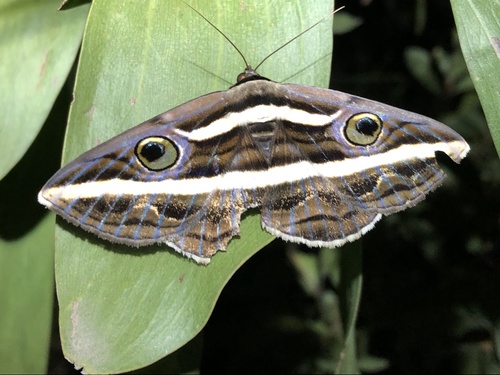
Mocis frugalis, the sugarcane looper, is a moth of the family Erebidae. The species was first described by Johan Christian Fabricius in 1775. It is found in several parts of the world, including India, Sri Lanka, West African countries and other Oriental regions. The adult is a fruit piercer and a major pest of crops.

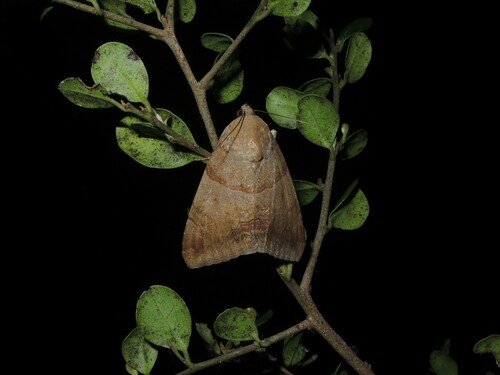
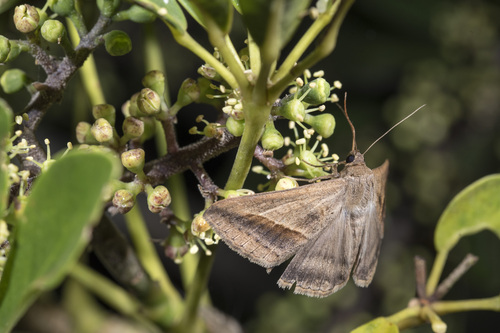
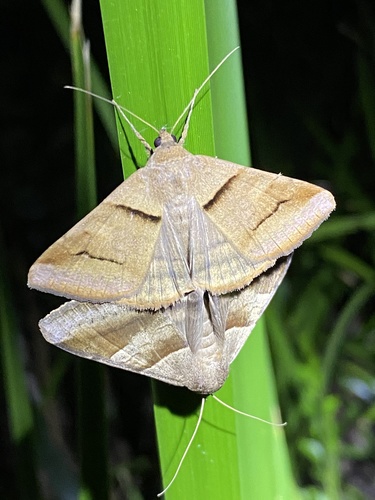
In a recent publication[1] Mocis proverai, that is found in Africa and on the Arabian peninsula has been promoted to a separate species. Both species can be distinguished by microscopic examination of their genitalia. Its wingspan is 36–50 millimetres (1.4–2.0 in). Male with the hind tibia and tarsi clothed with long thick pile. It has a grey-brown body. Forewing with a diffused dark mark above the centre of vein 1; an oblique postmedial line pale inwardly, red brown outwardly; a submarginal series of black specks. Hindwing with postmedial and diffused submarginal lines. Some specimens have a black spot above inner margin of forewing before the middle.

Larva pale yellowish ochreous, with darker lines. Two subdorsal lines present and with a sublateral series of olivaceous spots. The 4th and 5th somites are edged behind with black. Food... Wikipedia →
Global Distribution

Parks Where Found

# Park Country Daily sighting probability
1 Kanha National Park 🇮🇳 India
~20%
2 Daintree National Park 🇦🇺 Australia
~20%
3 Springbrook National Park 🇦🇺 Australia
~10%
4 Lamington National Park 🇦🇺 Australia
~10%

Cities Where Found

# City Country Daily sighting probability
1 Jamshedpur 🇮🇳 India
~30%
2 Prayagraj 🇮🇳 India
~10%
3 Brisbane 🇦🇺 Australia
~10%
4 Colombo [Sri Jayawardenepura Kotte] 🇱🇰 Sri Lanka
~10%
5 Tuen Mun 🇨🇳 China
~10%
6 Kochi 🇮🇳 India
~10%
7 Pune 🇮🇳 India
~10%
8 Chennai 🇮🇳 India
~10%
9 Kolkata 🇮🇳 India
~10%
10 Bengaluru 🇮🇳 India
<5%

Before you go

What are the chances of seeing a Sugarcane Looper in Brisbane?

With luck

About 10% of wildlife watchers report a Sugarcane Looper sighting in Brisbane on a given day, based on 124 verified sightings from GBIF citizen-science data. It is the 123rd most-seen of the 1083 insects we can rate there. Over three days the chance rises to about 20%, and over a week to about 50%, if each day is a fresh chance.

When is the best time to see a Sugarcane Looper in Brisbane?

March to May

In those months about 20% of wildlife watchers report a Sugarcane Looper in Brisbane on a given day, against under 5% in July to January, the lowest months.

What time of day is best to see a Sugarcane Looper?

Between 7 and 10 pm

Across all the parks we cover, that three-hour window holds the most Sugarcane Looper sightings with a recorded time, and about 9 in 10 of them come between 6 pm and 6 am: it is mostly seen at night.

Is Brisbane the best place to see a Sugarcane Looper?

3rd of 16

Of the 16 cities where we can rate Sugarcane Looper sightings, Brisbane ranks 3rd at about 10%. The best odds are in Jamshedpur (India, about 30%) and Prayagraj (India, about 10%).

Where does the Sugarcane Looper sighting chance come from?

GBIF citizen-science records

It is estimated from how often the Sugarcane Looper is recorded against all the insects logged in Brisbane (124 verified sightings), calibrated against known sighting rates. Figures are rounded to the nearest 10% because citizen-science data supports honest approximations, not decimals, and months with records from fewer than five people show "—". How it works.

← Back to Brisbane