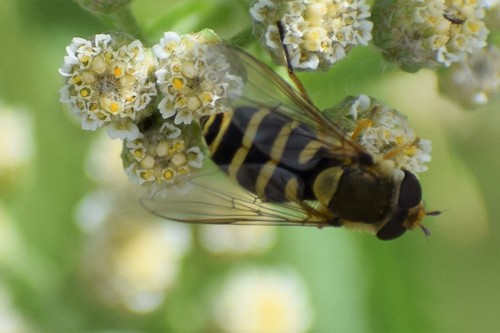
Anthracite Bee-Fly

Anthracite Bee-Fly

Anthrax anthrax

Daily sighting probability <5% · Rare
at Brussels

In 3 days ~10% in a week ~30%

6 Verified sightings at Brussels
15 In all 2 parks From 2019 to 2026
June Best month
☀️ Diurnal When it's spotted

About the Anthracite Bee-Fly

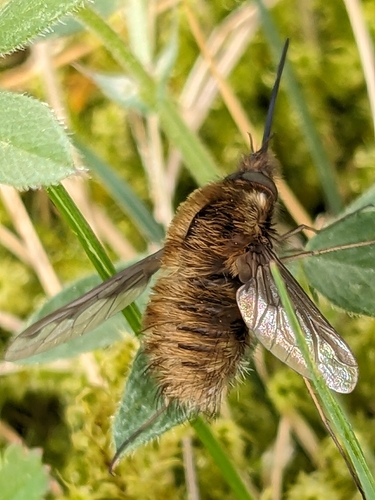
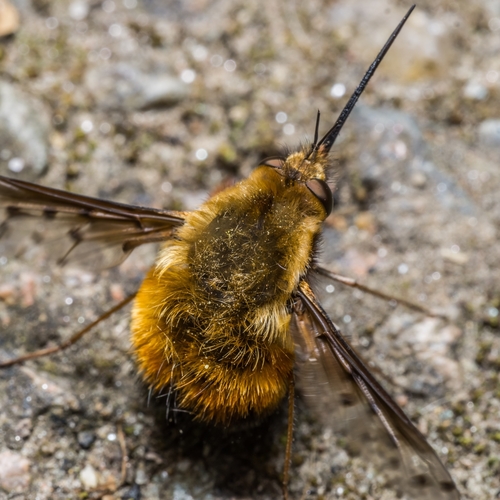
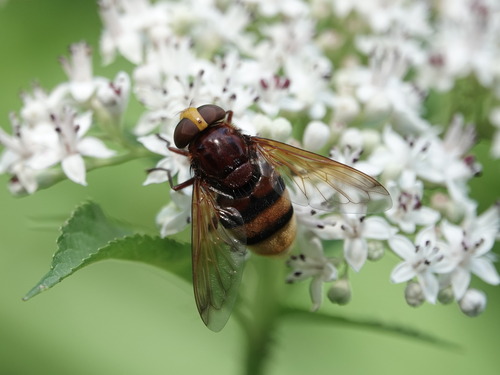
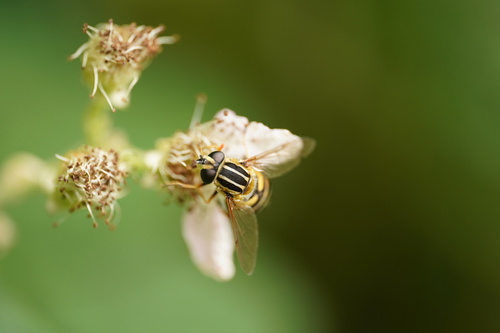
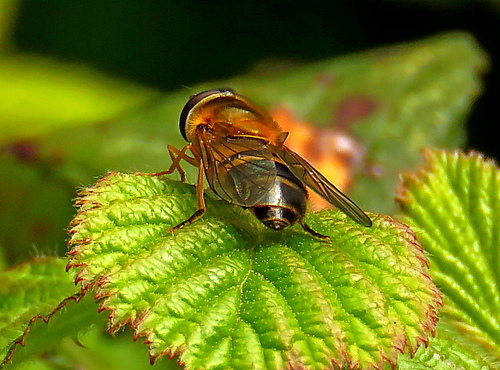
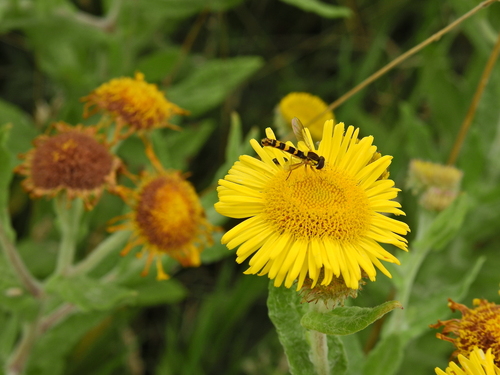
Anthrax anthrax is a species of fly in the family Bombyliidae. Unlike, for example, Bombylius major, this species does not mimic a bee. The eggs are flicked by the adult female toward the entrance of the nests of mason bees. After hatching, the larvae find their way into the nests to feed on the bee larva. A. anthrax can be found in May to August throughout mainland Europe. In the Netherlands A. anthrax is a common visitor of insect hotels. It was first recorded as breeding in Britain in 2019.

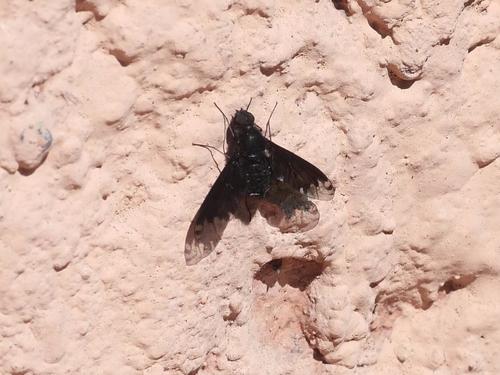
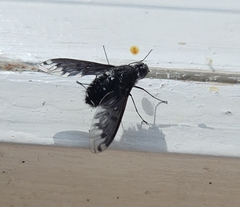
A. anthrax is a fairly large fly, the body length is 10 mm. The body is black with four white markings at tergum 2 and 3 and two white markings at the end of the abdomen. Tergum 1 is black with tufts of white hairs at the side. These tufts are visible in this picture of a hovering fly. The wings are mostly black, only the top is transparent. The veins are dark brown. The following picture was overexposed. Due to the brightly lit background the veins are visible. The newly emerged Anthrax anthrax may be found sitting on a bee hotel. Their body is dull black with more transparent wings.

The females may be found hovering before an insect hotel shooting eggs into... Wikipedia →

Global Distribution

Parks Where Found

# Park Country Daily sighting probability
1 Sierra Nevada National Park 🇪🇸 Spain
~10%
2 Bavarian Forest National Park 🇩🇪 Germany
~10%

Cities Where Found

# City Country Daily sighting probability
1 Berlin 🇩🇪 Germany
~10%
2 Munich 🇩🇪 Germany
~10%
3 Copenhagen 🇩🇰 Denmark
~10%
4 Rotterdam [The Hague] 🇳🇱 Netherlands
~10%
5 Hamburg 🇩🇪 Germany
~10%
6 Essen 🇩🇪 Germany
~10%
7 Cologne 🇩🇪 Germany
~10%
8 Amsterdam 🇳🇱 Netherlands
<5%
9 Stockholm 🇸🇪 Sweden
<5%
10 Brussels 🇧🇪 Belgium
<5%

Before you go

What are the chances of seeing an Anthracite Bee-Fly in Brussels?

Rare

Under 5% of wildlife watchers report an Anthracite Bee-Fly sighting in Brussels on a given day, based on 6 verified sightings from GBIF citizen-science data. It is the 260th most-seen of the 337 insects we can rate there. Over three days the chance rises to about 10%, and over a week to about 30%, if each day is a fresh chance.

When is the best time to see an Anthracite Bee-Fly in Brussels?

April–June and September

In those months about 10% of wildlife watchers report an Anthracite Bee-Fly in Brussels on a given day, against under 5% in July–August and October–March, the lowest months.

What time of day is best to see an Anthracite Bee-Fly?

Between 9 am and noon

Across all the parks we cover, that three-hour window holds the most Anthracite Bee-Fly sightings with a recorded time, and nearly all of them come between 6 am and 6 pm: it is a daytime animal.

Is Brussels the best place to see an Anthracite Bee-Fly?

10th of 14

Of the 14 cities where we can rate Anthracite Bee-Fly sightings, Brussels ranks 10th at under 5%. The best odds are in Berlin (Germany, about 10%), Munich (Germany, about 10%) and Copenhagen (Denmark, about 10%).

Which relatives of the Anthracite Bee-Fly live in Brussels?

Same family: Bombyliidae

The closest relatives of the Anthracite Bee-Fly that you can see in Brussels (family Bombyliidae, Bee Flies) are Greater Bee Fly (about 10%) and Dotted Bee Fly (about 10%), with each one's daily chance of a sighting.

Where does the Anthracite Bee-Fly sighting chance come from?

GBIF citizen-science records

It is estimated from how often the Anthracite Bee-Fly is recorded against all the insects logged in Brussels (6 verified sightings), calibrated against known sighting rates. Figures are rounded to the nearest 10% because citizen-science data supports honest approximations, not decimals, and months with records from fewer than five people show "—". How it works.
← Back to Brussels