

Apalus bimaculatus silhouette

Silhouette: Prespa Research Group · PhyloPic

Apalus bimaculatus

Apalus bimaculatus

Daily sighting probability ~10% · With luck
at Budapest

In 3 days ~20% in a week ~40%

8 Verified sightings at Budapest
February Best month

About the Apalus bimaculatus

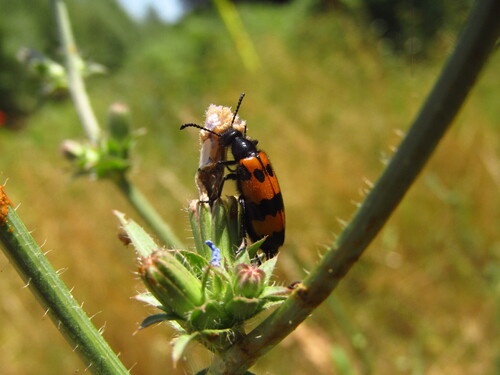
Apalus bimaculatus, the early blister beetle, is a species of blister beetle from the family Meloidae. It is the type species of the genus Apalus. This species is a 1 centimetre (0.39 in) long predominantly black beetle which has distinctive yellow-orange elytra each with a single black dot near the posterior end of each elytron. The females have a swollen abdomen and some of its segments are yellowish in colour.

Apalus bimaculatus is a widespread species over much of Europe, as far north as southern Scandinavia although it is absent from Great Britain. Apalus bimaculatus occurs in sandy area such as coastal dunes and riparian floodplains as well as being found in man made habitats such as sand pits and sand quarries. It is a cleptoparasite of the solitary bee Colletes cunicularius. The adults of this beetle emerge early in the spring to mate and to lay their eggs near the nesting aggregations of their host bee. They are short-lived and the females die after mating and the eggs hatch from the body of their mother and the larvae crawl out of the protection of their mother's corpse. The first instar of larvae, the triungulins... Wikipedia →

Global Distribution

Parks Where Found

# Park Country Daily sighting probability

More parks will be added in future updates.

Cities Where Found

# City Country Daily sighting probability
1 Budapest 🇭🇺 Hungary
~10%
2 Bucharest 🇷🇴 Romania
~10%

Before you go

What are the chances of seeing an Apalus bimaculatus in Budapest?

With luck

About 10% of wildlife watchers report an Apalus bimaculatus sighting in Budapest on a given day, based on 8 verified sightings from GBIF citizen-science data. It is the 231st most-seen of the 404 insects we can rate there. Over three days the chance rises to about 20%, and over a week to about 40%, if each day is a fresh chance.

When is the best time to see an Apalus bimaculatus in Budapest?

February

In that month about 40% of wildlife watchers report an Apalus bimaculatus in Budapest on a given day, against under 5% in March to January, the lowest months.

Is Budapest the best place to see an Apalus bimaculatus?

Yes

Of the 2 cities where we can rate Apalus bimaculatus sightings, Budapest has the highest daily chance: about 10%. Next come Bucharest (Romania, about 10%).

Which relatives of the Apalus bimaculatus live in Budapest?

Same family: Meloidae

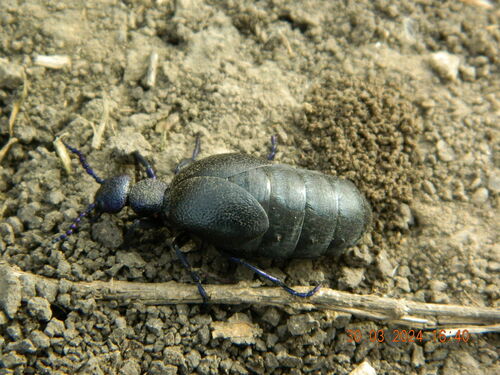
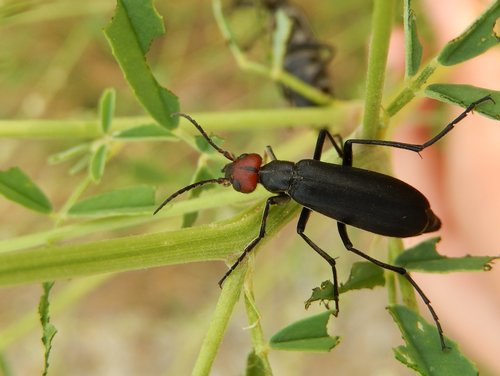
The closest relatives of the Apalus bimaculatus that you can see in Budapest (family Meloidae, Blister Beetles) are Mylabris variabilis (about 10%), Black Oil Beetle (about 10%) and Epicauta rufidorsum (about 10%), with each one's daily chance of a sighting.

Where does the Apalus bimaculatus sighting chance come from?

GBIF citizen-science records

It is estimated from how often the Apalus bimaculatus is recorded against all the insects logged in Budapest (8 verified sightings), calibrated against known sighting rates. Figures are rounded to the nearest 10% because citizen-science data supports honest approximations, not decimals, and months with records from fewer than five people show "—". How it works.

← Back to Budapest