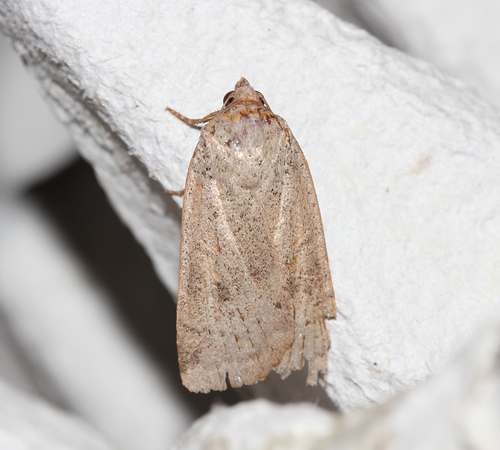
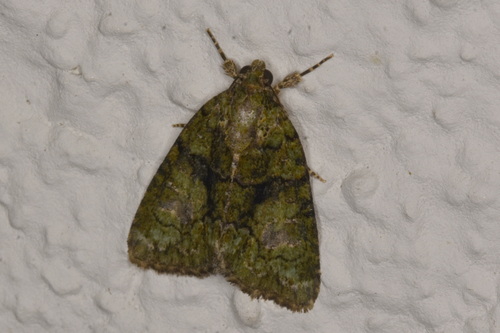
Pale-Lemon Sallow

Pale-Lemon Sallow

Xanthia ocellaris

Daily sighting probability ~10% · With luck
at Budapest

In 3 days ~20% in a week ~30%

7 Verified sightings at Budapest
October Best month

About the Pale-Lemon Sallow

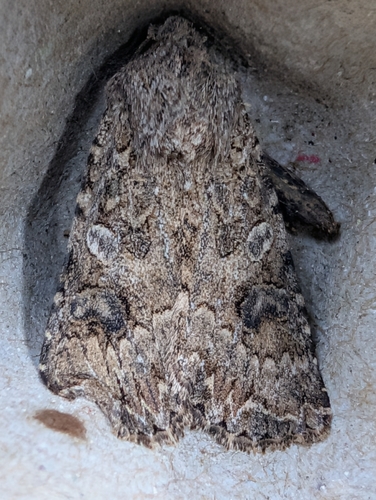
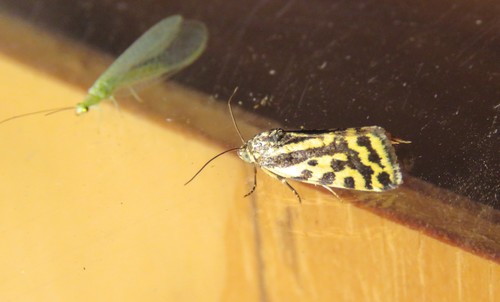
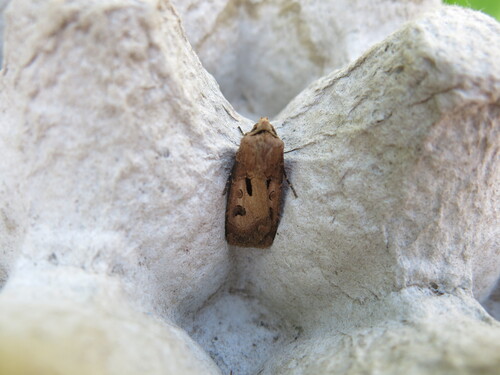
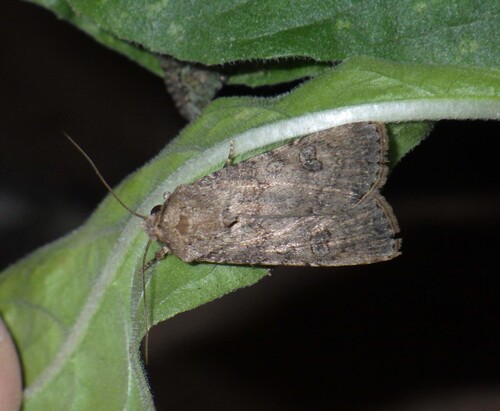
The pale-lemon sallow (Xanthia ocellaris) is a moth of the family Noctuidae. It is found from Europe to Anatolia and Morocco. C. ocellaris Bkh. (28 h). Forewing pale yellowish grey, more or less strongly tinged with reddish grey; the inner and outer lines pale, slightly darker-edged; median shade dark grey, diffuse; submarginal line pale,

preceded by a row of dark dots, often faint or obsolete, except that above vein 6; fringe rufous; stigmata with pale grey-edged annuli, the reniform with a whitish, dark-edged dot at lower extremity; hindwing whitish, the inner marginal third pinkish grey; — the pale form without any red tinge is palleago Hbn. fig. 192 (28 h); — ab. carneago ab. nov. (28 i) is pink, only the basal and terminal areas faintly greyish, the markings very faint, and the fringe pink; — lineago Guen. (= gilvago Hbn. fig. 193) (28 h, i) has the forewing more thickly and darkly suffused with grey, the pale veins and markings coming out more prominently; — intermedia Habich is said to be transitional between typical ocellaris and gilvago; it may be, I think, the same as the yellower form of palleago Hbn. fig. 442; and if so, would supplant the name erythrago for the preceding species. Larva yellowish grey; the dorsal and subdorsal lines fine and faint; spiracular line broadly white. The wingspan is 32–36 mm. Wikipedia →
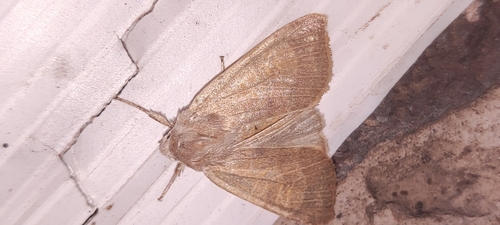
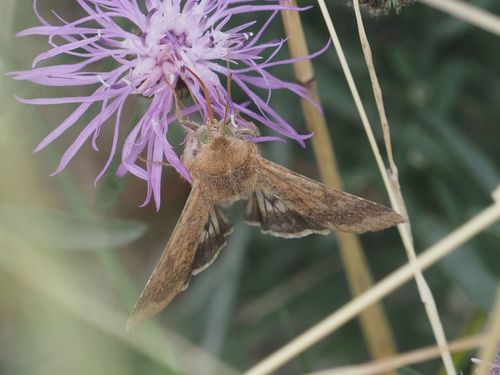
Global Distribution

Parks Where Found

# Park Country Daily sighting probability

More parks will be added in future updates.

Cities Where Found

# City Country Daily sighting probability
1 Kyiv 🇺🇦 Ukraine
~10%
2 Budapest 🇭🇺 Hungary
~10%
3 Novosibirsk 🇷🇺 Russia
<5%
4 Berlin 🇩🇪 Germany
<5%
5 Moscow 🇷🇺 Russia
<5%

Before you go

What are the chances of seeing a Pale-Lemon Sallow in Budapest?

With luck

About 10% of wildlife watchers report a Pale-Lemon Sallow sighting in Budapest on a given day, based on 7 verified sightings from GBIF citizen-science data. It is the 306th most-seen of the 404 insects we can rate there. Over three days the chance rises to about 20%, and over a week to about 30%, if each day is a fresh chance.

When is the best time to see a Pale-Lemon Sallow in Budapest?

October

In that month about 20% of wildlife watchers report a Pale-Lemon Sallow in Budapest on a given day, against under 5% in December to August, the lowest months.

Is Budapest the best place to see a Pale-Lemon Sallow?

Among the best

Of the 5 cities where we can rate Pale-Lemon Sallow sightings, Budapest ranks 2nd at about 10%, level with the leaders once rounded. The best odds are in Kyiv (Ukraine, about 10%).

Which relatives of the Pale-Lemon Sallow live in Budapest?

Same family: Noctuidae

The closest relatives of the Pale-Lemon Sallow that you can see in Budapest (family Noctuidae, Cutworm Moths and Allies) are Cotton Bollworm Moth (about 20%), Silver Υ (about 20%) and Nutmeg Moth (about 20%), with each one's daily chance of a sighting.

Where does the Pale-Lemon Sallow sighting chance come from?

GBIF citizen-science records

It is estimated from how often the Pale-Lemon Sallow is recorded against all the insects logged in Budapest (7 verified sightings), calibrated against known sighting rates. Figures are rounded to the nearest 10% because citizen-science data supports honest approximations, not decimals, and months with records from fewer than five people show "—". How it works.

← Back to Budapest