Cape Mole Rat

Cape Mole Rat

Georychus capensis

Silhouette: Kai R. Caspar · PhyloPic

LCLeast ConcernNTVUENCR
Daily sighting probability ~10% · With luck
at Cape Town

In 3 days ~20% in a week ~40%

47 Verified sightings at Cape Town
61 In 1 park From 2019 to 2026
June Best month
☀️ Diurnal When it's spotted

About the Cape Mole Rat

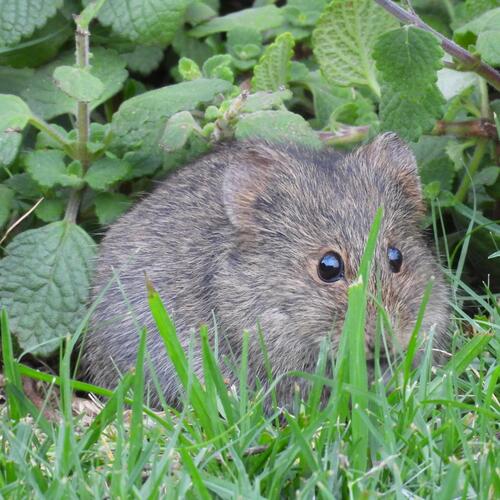
The Cape mole-rat (Georychus capensis) is a species of mole-rat endemic to South Africa. It is the only extant species currently described as belonging to the genus Georychus. Cape mole-rats closely resemble other African mole-rats in physical appearance. They have cylindrical bodies with short limbs, and large feet with leathery soles. The head is large and rounded, and the tail is short, with only a few sparse hairs. As with other mole rats, external ears are absent. The eyes are very small, but they are functional, and when the animals exceptionally leave their tunnels, they see well enough to turn actively and present their powerful incisors to repel approaching attackers. Adults are around 16 centimetres (6.3 in) in head-body length, with a 2 centimetres (0.79 in) tail, and weigh around 180 grams (6.3 oz). Females have three pairs of teats.

Cape mole-rats can most easily be distinguished from other species of mole-rat by the colour pattern of their fur. Most conspicuously, they have prominent white blazes around the ears and eyes, and smaller patches of white fur on the muzzle and often on top of the head. These white patches are the basis for the common name... Wikipedia →

Global Distribution

Parks Where Found

# Park Country Daily sighting probability
1 Table Mountain National Park 🇿🇦 South Africa
~10%

More parks will be added in future updates.

Cities Where Found

# City Country Daily sighting probability
1 Cape Town 🇿🇦 South Africa
~10%

Before you go

What are the chances of seeing a Cape Mole Rat in Cape Town?

With luck

About 10% of wildlife watchers report a Cape Mole Rat sighting in Cape Town on a given day, based on 47 verified sightings from GBIF citizen-science data. It is the 12th most-seen of the 29 mammals we can rate there. Over three days the chance rises to about 20%, and over a week to about 40%, if each day is a fresh chance.

When is the best time to see a Cape Mole Rat in Cape Town?

June

In that month about 20% of wildlife watchers report a Cape Mole Rat in Cape Town on a given day, against under 5% in February–March and October–November, the lowest months. That is one of Cape Town's wettest months, with about 140 mm of rain against 15 mm in February.

What time of day is best to see a Cape Mole Rat?

Between 10 am and 1 pm

Across all the parks we cover, that three-hour window holds the most Cape Mole Rat sightings with a recorded time, and about 9 in 10 of them come between 6 am and 6 pm: it is a daytime animal.

Where else can you see a Cape Mole Rat?

Only Cape Town, in our data

Cape Town is the only city on Wallace's Line with enough records to rate Cape Mole Rat sightings: about 10% of wildlife watchers there report one on a given day.

Where does the Cape Mole Rat sighting chance come from?

GBIF citizen-science records

It is estimated from how often the Cape Mole Rat is recorded against all the mammals logged in Cape Town (47 verified sightings), calibrated against known sighting rates. Figures are rounded to the nearest 10% because citizen-science data supports honest approximations, not decimals, and months with records from fewer than five people show "—". How it works.

← Back to Cape Town