About the Rhubarb Weevil
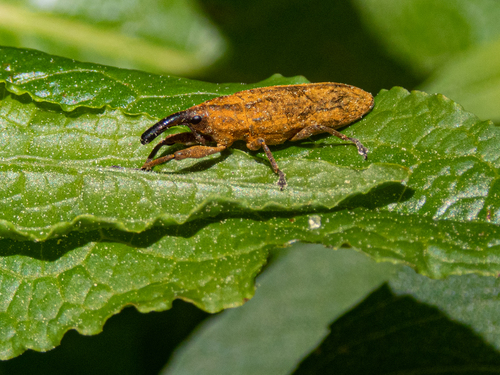
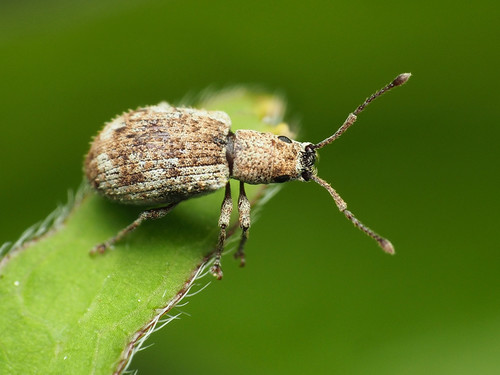
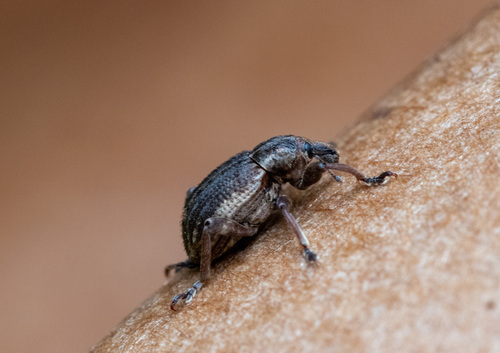
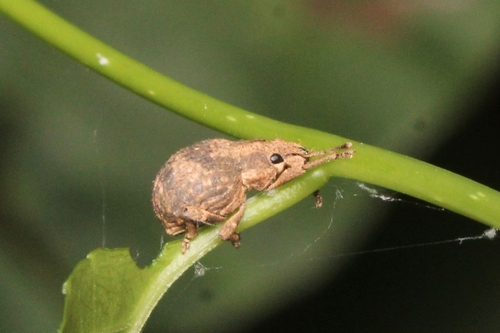
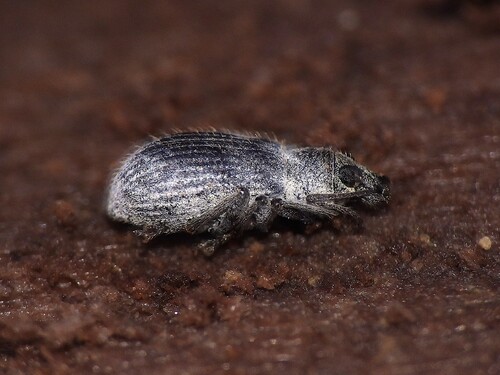
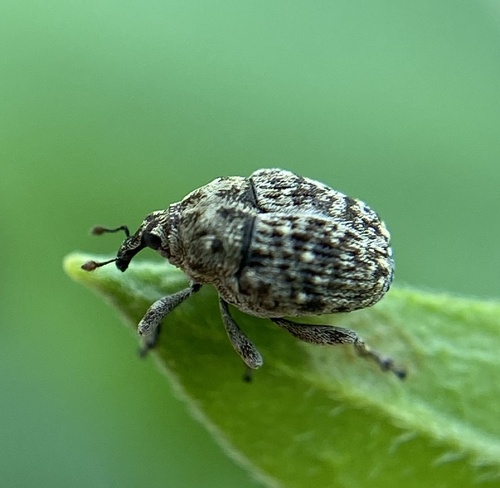
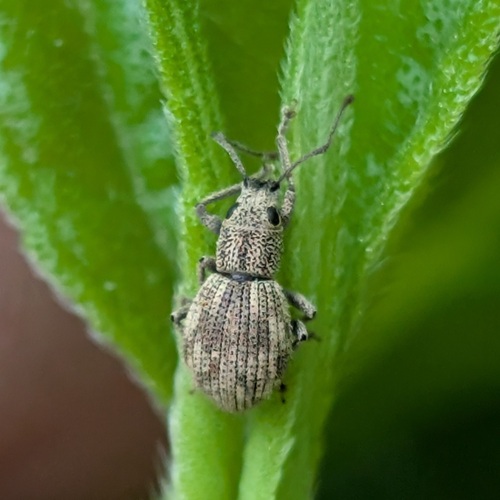
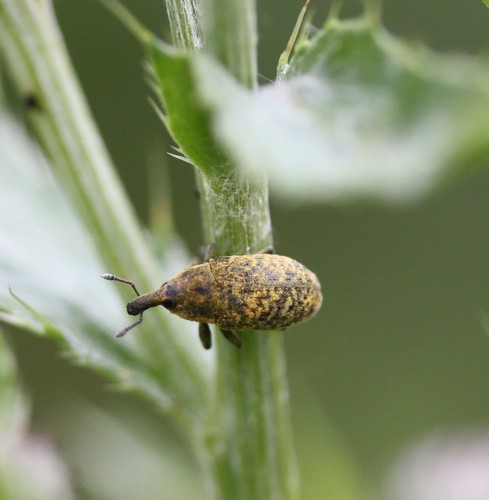
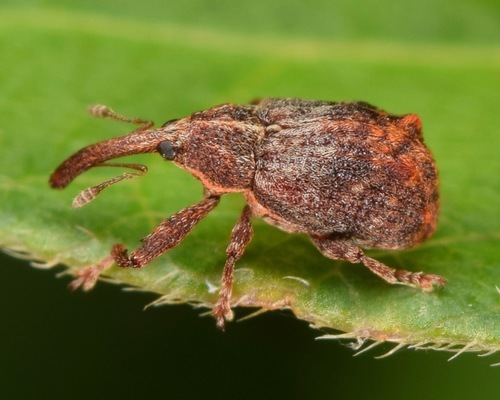
Lixus concavus, commonly called the rhubarb curculio, is a species of weevil. Rhubarb (Rheum species) is a host, together with dock, sunflower, and various species of thistle. L. concavus has a distinctive long snout and geniculate antennae with small clubs. The beetle is about half an inch in length, black, covered with yellow dust, and hibernates as an adult. Eggs are a yellow-white colour and oblong in shape; the legless larva is a grub, about 3/4 inch in length, with a brown head that usually bears an inverted, Y-shaped mark.
The adult rhubarb curculio overwinters in leaf litter or other similar sites and appears in mid-May. The adult makes feeding and egg punctures in the crowns, roots, and stalks; a jelly-like sap exudes from the wounds as glistening drops of gum, often with extraneous material trapped within. The eggs laid in rhubarb do not hatch, but are killed by the sap or crushed by the developing tissues.
Lixus concavus is able to complete its lifecycle in the stalks of curly dock, sunflowers, and thistles; eggs are laid singly in 1⁄8-inch-deep (3.2 mm) cavities, created by feeding activity, and hatch within a week to 10 days. One... Wikipedia →