About the Ross's Gull
Ross's gull (Rhodostethia rosea) is a small gull, the only species in its genus, although it has been suggested the genus should be merged with the closely related Hydrocoloeus, which otherwise only includes the little gull.
This bird is named after the British explorer James Clark Ross. Its breeding grounds were first discovered in 1905 by Sergei Aleksandrovich Buturlin near the village of Pokhodsk in northeastern Yakutia, while visiting the area as a judge. The genus name Rhodostethia is from Ancient Greek rhodon, "rose", and stethos, "breast". The specific rosea is Latin for "rose-coloured".
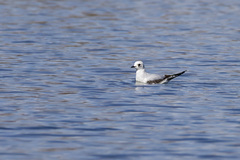
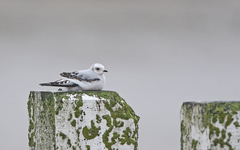
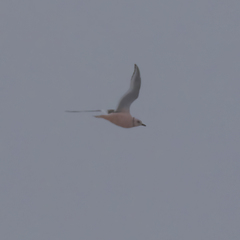
This small bird is similar in size and some plumage characteristics to the little gull. It is slightly larger and longer winged than the little gull, and has more pointed wings and a wedge-shaped tail. Its legs are red. Summer adults are pale grey above and white below, with a pink flush to the body feathering, and a neat black neck ring. In winter, the neck collar is lost, and a small dark crescent develops behind the eye; the pink colour, which is diet-related, is lost in some but not all individuals.
Young birds resemble winter adults, but have a dark "W" pattern on the... Wikipedia →