Puna Teal

Puna Teal

Spatula puna

Silhouette: Sheatherius · PhyloPic

LCLeast ConcernNTVUENCR
Daily sighting probability ~20% · Possible
at Cochabamba

In 3 days ~50% in a week ~80%

60 Verified sightings at Cochabamba
709 In 1 park From 2019 to 2026
July Best month
☀️ Diurnal When it's spotted

About the Puna Teal

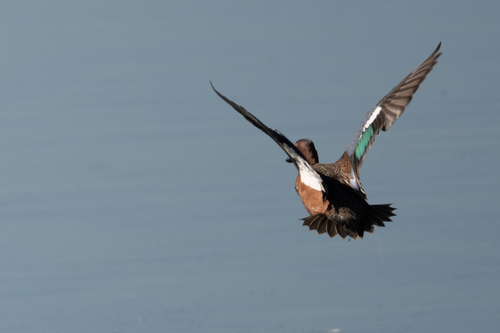
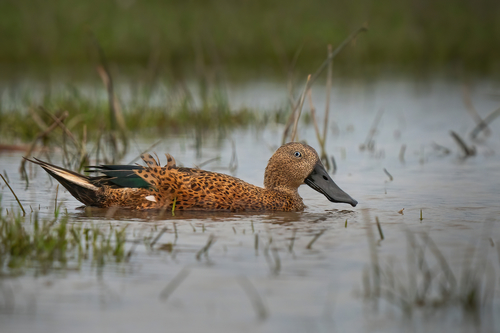
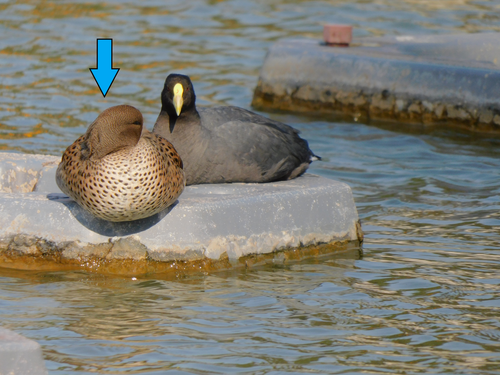
The Puna teal (Spatula puna) is a species of dabbling duck in the family Anatidae. It was at one time regarded as a subspecies of the silver teal (Spatula versicolor). The Puna teal is resident in the Andes of Peru, western Bolivia, northern Chile, and extreme northwestern Argentina. It is found on the larger lakes and pools in the altiplano.

The status of the Puna teal is Least Concern, as listed on the IUCN Red List. The first formal description of the Puna teal was by the Swiss naturalist Johann Jakob von Tschudi in 1844 under the binomial name Anas puna. It was at one time considered a subspecies of the silver teal in the genus Anas.

A molecular phylogenetic study comparing mitochondrial DNA sequences published in 2009 found that the genus Anas, as then defined, was non-monophyletic. This resulted in the split of the genus into four monophyletic genera with ten species, including the Puna teal, which moved into the resurrected genus Spatula. This marked the change of the Puna teal from a subspecies into a monotypic species. The genus Spatula was originally proposed by the German zoologist Friedrich Boie in 1822. The name Spatula is the Latin for a "spoon" or "spatula... Wikipedia →

Sounds

Call0:05

Chile · 2019

© Cristian Pinto · XC498666 · CC BY-NC-SA 4.0

Flight call0:08

Argentina · 1997

© Juan Mazar Barnett · XC15477 · CC BY-NC-ND 2.5

Call0:19

Bolivia · 2015

© Yoann Blanchon · XC289915 · CC BY-NC-SA 4.0

Global Distribution

Parks Where Found

# Park Country Daily sighting probability
1 Lauca National Park 🇨🇱 Chile
~50%

More parks will be added in future updates.

Cities Where Found

# City Country Daily sighting probability
1 Cochabamba 🇧🇴 Bolivia
~20%
2 La Paz 🇧🇴 Bolivia
~10%
3 Lima 🇵🇪 Peru
~10%

Zoos & Centres Where Found

# Zoo / Centre Country
1 Disney's Animal Kingdom 🇺🇸 United States In captivity
2 Busch Gardens Tampa 🇺🇸 United States In captivity
3 San Diego Zoo 🇺🇸 United States In captivity
4 ZooParc de Beauval 🇫🇷 France In captivity
5 Leipzig Zoological Garden 🇩🇪 Germany In captivity
6 Dresden Zoo 🇩🇪 Germany In captivity
7 Zoo Miami 🇺🇸 United States In captivity
8 Minnesota Zoo 🇺🇸 United States In captivity
9 Bronx Zoo 🇺🇸 United States In captivity
10 Brookfield Zoo 🇺🇸 United States In captivity
11 Sedgwick County Zoo 🇺🇸 United States In captivity
12 Chester Zoo 🇬🇧 United Kingdom In captivity
13 Slimbridge Wetland Centre 🇬🇧 United Kingdom In captivity
14 Zoologischer Garten Leipzig 🇩🇪 Germany In captivity
15 Fort Worth Zoo 🇺🇸 United States In captivity
16 Wilhelma 🇩🇪 Germany In captivity
17 Houston Zoo 🇺🇸 United States In captivity
18 Centro Cicogne e Anatidi 🇮🇹 Italy In captivity
19 San Antonio Zoo 🇺🇸 United States In captivity
20 Cologne Zoological Garden 🇩🇪 Germany In captivity
21 Fresno Chaffee Zoo 🇺🇸 United States In captivity
22 Lincoln Park Zoo 🇺🇸 United States In captivity
23 Staten Island Zoo 🇺🇸 United States In captivity
24 Brandywine Zoo 🇺🇸 United States In captivity
25 National Aviary 🇺🇸 United States In captivity
26 Dallas World Aquarium 🇺🇸 United States In captivity
27 Cologne Zoo Aquarium 🇩🇪 Germany In captivity

Before you go

What are the chances of seeing a Puna Teal in Cochabamba?

Possible

About 20% of wildlife watchers report a Puna Teal sighting in Cochabamba on a given day, based on 60 verified sightings from GBIF citizen-science data. It is the 43rd most-seen of the 112 birds we can rate there. Over three days the chance rises to about 50%, and over a week to about 80%, if each day is a fresh chance.

When is the best time to see a Puna Teal in Cochabamba?

May and July

In those months about 40% of wildlife watchers report a Puna Teal in Cochabamba on a given day, against under 5% in February, the lowest month. Those are among Cochabamba's driest months, with about 5 mm of rain a month against 100 mm in January.

What time of day is best to see a Puna Teal?

Between 10 am and 1 pm

Across all the parks we cover, that three-hour window holds the most Puna Teal sightings with a recorded time, and about 9 in 10 of them come between 6 am and 6 pm: it is a daytime animal.

Is Cochabamba the best place to see a Puna Teal?

Yes

Of the 3 cities where we can rate Puna Teal sightings, Cochabamba has the highest daily chance: about 20%. Next come La Paz (Bolivia, about 10%) and Lima (Peru, about 10%).

Which relatives of the Puna Teal live in Cochabamba?

Same genus: Spatula

The closest relatives of the Puna Teal that you can see in Cochabamba (genus Spatula, Shovelers and Allies) are Cinnamon Teal (about 30%) and Red Shoveler (about 10%), with each one's daily chance of a sighting.

Where does the Puna Teal sighting chance come from?

GBIF citizen-science records

It is estimated from how often the Puna Teal is recorded against all the birds logged in Cochabamba (60 verified sightings), calibrated against known sighting rates. Figures are rounded to the nearest 10% because citizen-science data supports honest approximations, not decimals, and months with records from fewer than five people show "—". How it works.

← Back to Cochabamba