Violet Oil Beetle

Violet Oil Beetle

Meloe violaceus

Daily sighting probability <5% · Rare
at Copenhagen

In 3 days ~10% in a week ~20%

5 Verified sightings at Copenhagen
69 In all 4 parks From 2019 to 2026
April Best month
☀️ Diurnal When it's spotted

About the Violet Oil Beetle

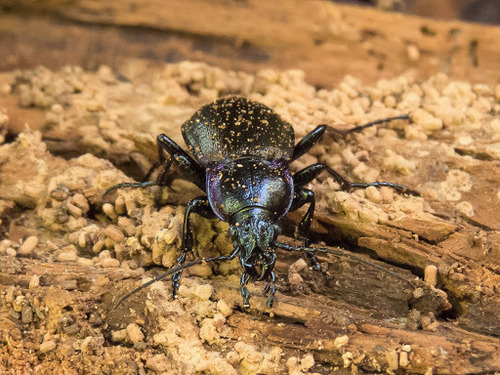
Meloe violaceus, the violet oil beetle, is a species of oil beetle belonging to the family Meloidae subfamily Meloinae. This beetle is present in most of Europe, in the eastern Palearctic realm, in the Near East, and in North Africa.

This species is characterised by hypermetamorphosis, a kind of complete insect metamorphosis in which, in addition to the normal stages of larva, nymph and imago, they have several others, with great differences in appearance and way of life.

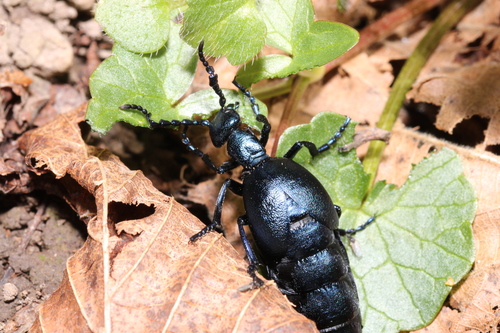
The body of Meloe violaceus is 10–30 millimetres (0.4–1.2 in) long, females are somewhat larger than the males. These beetle are black-blue or violet-blue, head and pronotum are very finely dotted and the elytra are quite shorter than the abdomen, as in other Meloinae species.

The adults live on a sunny, dry area with flowering plants, feeding on pollen. In May–June the female digs into the soil 20–30 millimetres (0.8–1.2 in) deep cylindrical holes, where they lay a very large quantity of eggs (about 2,000–10,000).

After about a month larvae emerge from eggs and climb up on grass or on flowers, waiting to cling to the thorax of approaching potential host insects seeking pollen or nectar. The larvae have an exclusively parasitic life, primarily in the nests of solitary bees, or sometimes of locusts. If the larvae have inadvertently selected a honey bee, they die in the hive and may cause serious damage.

When the host female bee lays eggs in its cells, the first-stage larva of the violet oil beetle eats the eggs of the bee, increases in volume and becomes the second-stage larva, which continues its development eating honey and pollen. The larva, after other two stages, forms the nymph and finally the imago. Wikipedia →

Global Distribution

Parks Where Found

# Park Country Daily sighting probability
1 Bavarian Forest National Park 🇩🇪 Germany
~10%
2 Pyrénées National Park 🇫🇷 France
~10%
3 Cairngorms National Park 🇬🇧 United Kingdom
~10%
4 Fertő-Hanság National Park 🇭🇺 Hungary
~10%

Cities Where Found

# City Country Daily sighting probability
1 Vienna 🇦🇹 Austria
~10%
2 Copenhagen 🇩🇰 Denmark
<5%

Before you go

What are the chances of seeing a Violet Oil Beetle in Copenhagen?

Rare

Under 5% of wildlife watchers report a Violet Oil Beetle sighting in Copenhagen on a given day, based on 5 verified sightings from GBIF citizen-science data. It is the 424th most-seen of the 476 insects we can rate there. Over three days the chance rises to about 10%, and over a week to about 20%, if each day is a fresh chance.

When is the best time to see a Violet Oil Beetle in Copenhagen?

April

In that month about 10% of wildlife watchers report a Violet Oil Beetle in Copenhagen on a given day, against under 5% in May to March, the lowest months. That is one of Copenhagen's driest months, with about 35 mm of rain against 85 mm in August.

What time of day is best to see a Violet Oil Beetle?

Between 2 and 5 pm

Across all the parks we cover, that three-hour window holds the most Violet Oil Beetle sightings with a recorded time, and about 9 in 10 of them come between 6 am and 6 pm: it is a daytime animal.

Is Copenhagen the best place to see a Violet Oil Beetle?

2nd of 2

Of the 2 cities where we can rate Violet Oil Beetle sightings, Copenhagen ranks 2nd at under 5%. The best odds are in Vienna (Austria, about 10%).

Which relatives of the Violet Oil Beetle live in Copenhagen?

Same order: Coleoptera

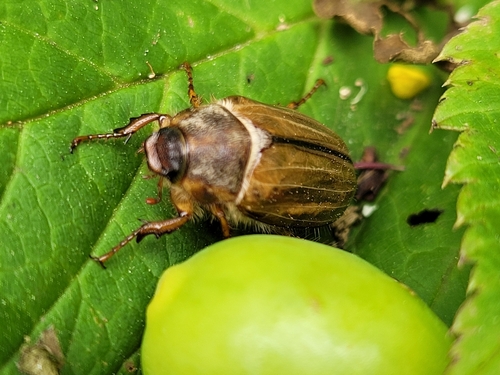
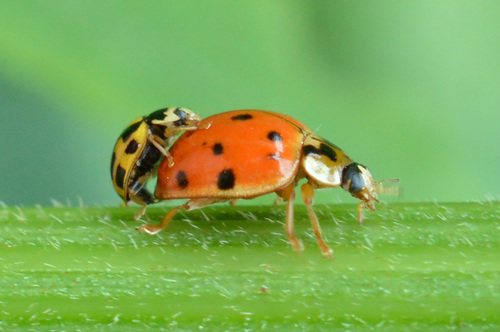
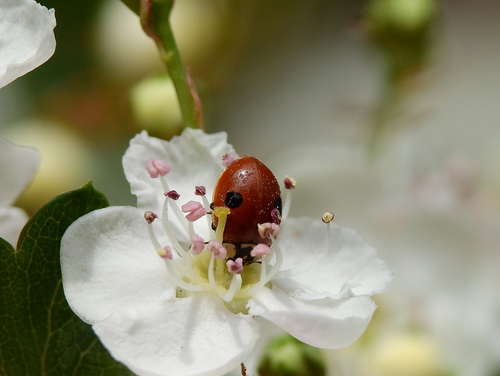
The closest relatives of the Violet Oil Beetle that you can see in Copenhagen (order Coleoptera, Beetles) are Asian Lady Beetle (about 40%), Seven-Spotted Lady Beetle (about 30%) and Summer Chafer (about 20%), with each one's daily chance of a sighting.

Where does the Violet Oil Beetle sighting chance come from?

GBIF citizen-science records

It is estimated from how often the Violet Oil Beetle is recorded against all the insects logged in Copenhagen (5 verified sightings), calibrated against known sighting rates. Figures are rounded to the nearest 10% because citizen-science data supports honest approximations, not decimals, and months with records from fewer than five people show "—". How it works.

← Back to Copenhagen