Douglas-Fir Tussock Moth

Douglas-Fir Tussock Moth

Orgyia pseudotsugata

Daily sighting probability <5% · Rare
at Denver

In 3 days ~10% in a week ~20%

9 Verified sightings at Denver
50 In all 2 parks From 2019 to 2026
August Best month
☀️ Diurnal When it's spotted

About the Douglas-Fir Tussock Moth

Orgyia pseudotsugata, the Douglas-fir tussock moth, is a moth of the subfamily Lymantriinae first described by James Halliday McDunnough in 1921. It is found in western North America. Its population periodically irrupts in cyclical outbreaks. The caterpillars feed on the needles of Douglas fir, true fir, and spruce in summer, and moths are on the wing from July or August to November.

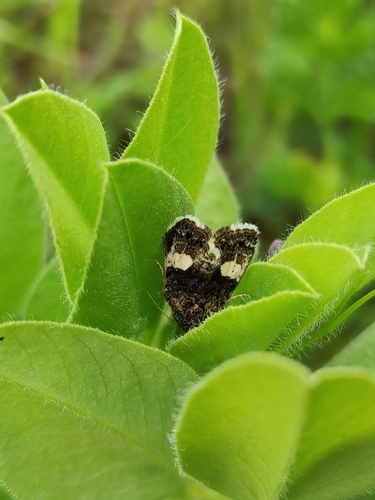
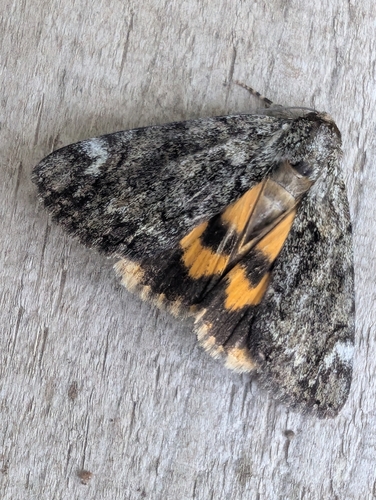
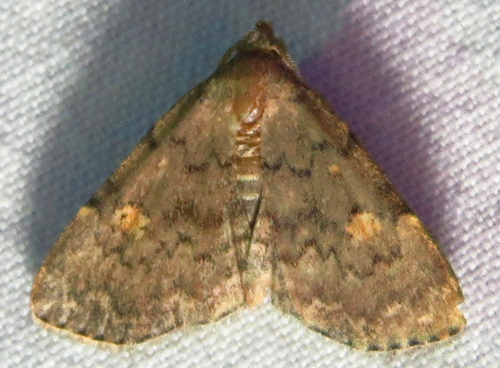
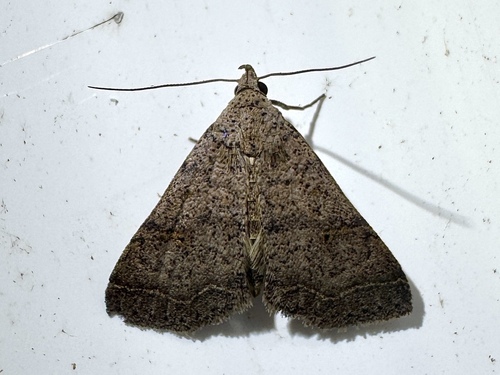
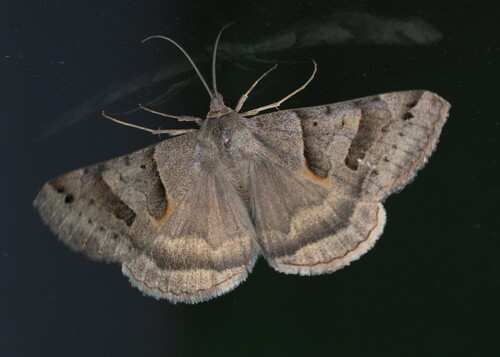
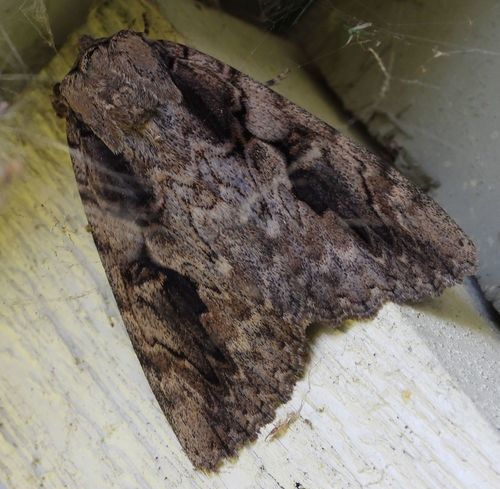
Adult males are grayish brown moths with mottled light and dark markings. The males' wingspread is 25–34 mm (0.98–1.34 in). When the wings are spread open, the brown hindwings can be seen. Individuals in the northern part of its range are darker and southern populations are lighter. Antennae are plumose (feathery). Females are flightless with only rudimentary wings. Larvae (caterpillars) are 20–26 mm (0.79–1.02 in) and colorful with red spots, white spines, conspicuous red-tipped white tufts or "tussocks", and dense bunches of long, black hairs projecting to the front and behind.

The Douglas-fir tussock moth is native to forests of western North America and outbreaks have been identified in British Columbia, Idaho, Washington, Oregon, Nevada, California, Arizona... Wikipedia →

Global Distribution

Parks Where Found

# Park Country Daily sighting probability
1 Sequoia and Kings Canyon National Parks 🇺🇸 United States
~20%
2 Yosemite National Park 🇺🇸 United States
~10%

Cities Where Found

# City Country Daily sighting probability
1 Denver 🇺🇸 United States
<5%

Before you go

What are the chances of seeing a Douglas-Fir Tussock Moth in Denver?

Rare

Under 5% of wildlife watchers report a Douglas-Fir Tussock Moth sighting in Denver on a given day, based on 9 verified sightings from GBIF citizen-science data. It is the 292nd most-seen of the 461 insects we can rate there. Over three days the chance rises to about 10%, and over a week to about 20%, if each day is a fresh chance.

When is the best time to see a Douglas-Fir Tussock Moth in Denver?

Any time of year

In every month with enough records, under 5% of wildlife watchers report a Douglas-Fir Tussock Moth in Denver on a given day, so our monthly data shows no clear season.

What time of day is best to see a Douglas-Fir Tussock Moth?

Between 8 and 11 am

Across all the parks we cover, that three-hour window holds the most Douglas-Fir Tussock Moth sightings with a recorded time, and about 9 in 10 of them come between 6 am and 6 pm: it is a daytime animal.

Where else can you see a Douglas-Fir Tussock Moth?

Only Denver, in our data

Denver is the only city on Wallace's Line with enough records to rate Douglas-Fir Tussock Moth sightings: under 5% of wildlife watchers there report one on a given day.

Which relatives of the Douglas-Fir Tussock Moth live in Denver?

Same family: Erebidae

The closest relatives of the Douglas-Fir Tussock Moth that you can see in Denver (family Erebidae, Underwing, Tiger, Tussock, and Allied Moths) are Four-Spotted Moth (about 20%) and Isabella Tiger Moth (about 10%), with each one's daily chance of a sighting.

Where does the Douglas-Fir Tussock Moth sighting chance come from?

GBIF citizen-science records

It is estimated from how often the Douglas-Fir Tussock Moth is recorded against all the insects logged in Denver (9 verified sightings), calibrated against known sighting rates. Figures are rounded to the nearest 10% because citizen-science data supports honest approximations, not decimals, and months with records from fewer than five people show "—". How it works.

← Back to Denver