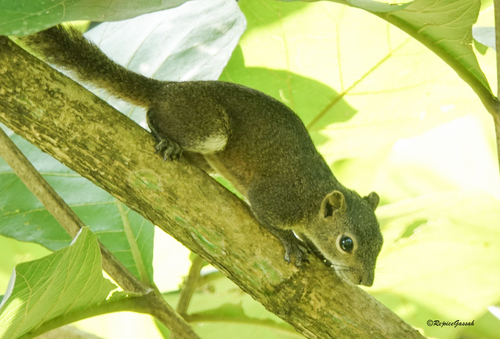
Lesser Bandicoot-rat

Lesser Bandicoot-rat

Bandicota bengalensis

LCLeast ConcernNTVUENCR
Daily sighting probability ~20% · Possible
at Dhaka

In 3 days ~40% in a week ~70%

5 Verified sightings at Dhaka
March Best month

About the Lesser Bandicoot-rat

The lesser bandicoot rat, Sindhi rice rat, Bengal rat or Indian mole-rat (Bandicota bengalensis) is a giant rat of Southern Asia, not related to the true bandicoots which are marsupials. They can be up to 40 cm (16 in) long (including the tail), are considered a pest in the cereal crops and gardens of Bangladesh, India and Sri Lanka, and emit piglike grunts when attacking. The name bandicoot is derived from the Telugu language word pandikokku, which translates loosely to "pig-rat". Like the better known rats in the genus Rattus, bandicoot rats are members of the family Muridae. Their fur is dark or (rarely) pale brown dorsally, occasionally blackish, and light to dark grey ventrally. The head-body length is around 250 mm, and the uniformly dark tail is shorter than the head-body length.

These rats are also known to inhabit houses in villages and are particularly aggressive when threatened. The controls are done by mechanical (mouse trap etc.), rodenticides and biological control (by introducing rodent diseases etc.)

Commonly, it lives in cultivated plains and gardens and is one of the most destructive pests to crops and cultivation... Wikipedia →

Global Distribution

Parks Where Found

# Park Country Daily sighting probability

More parks will be added in future updates.

Cities Where Found

# City Country Daily sighting probability
1 Dhaka 🇧🇩 Bangladesh
~20%
2 Bengaluru 🇮🇳 India
~10%

Before you go

What are the chances of seeing a Lesser Bandicoot-rat in Dhaka?

Possible

About 20% of wildlife watchers report a Lesser Bandicoot-rat sighting in Dhaka on a given day, based on 5 verified sightings from GBIF citizen-science data. It is the 7th most-seen of the 7 mammals we can rate there. Over three days the chance rises to about 40%, and over a week to about 70%, if each day is a fresh chance.

When is the best time to see a Lesser Bandicoot-rat in Dhaka?

March

In that month about 50% of wildlife watchers report a Lesser Bandicoot-rat in Dhaka on a given day, against under 5% in January and April–November, the lowest months. That is one of Dhaka's driest months, with about 50 mm of rain against 440 mm in July.

Is Dhaka the best place to see a Lesser Bandicoot-rat?

Yes

Of the 2 cities where we can rate Lesser Bandicoot-rat sightings, Dhaka has the highest daily chance: about 20%. Next come Bengaluru (India, about 10%).

Which relatives of the Lesser Bandicoot-rat live in Dhaka?

Same order: Rodentia

The closest relatives of the Lesser Bandicoot-rat that you can see in Dhaka (order Rodentia, Rodents) are Northern Palm Squirrel (about 50%) and Irrawaddy Squirrel (about 40%), with each one's daily chance of a sighting.

Where does the Lesser Bandicoot-rat sighting chance come from?

GBIF citizen-science records

It is estimated from how often the Lesser Bandicoot-rat is recorded against all the mammals logged in Dhaka (5 verified sightings), calibrated against known sighting rates. Figures are rounded to the nearest 10% because citizen-science data supports honest approximations, not decimals, and months with records from fewer than five people show "—". How it works.

← Back to Dhaka